Revocation of Anatomical Gift Donation - Minnesota 2026

Get Form
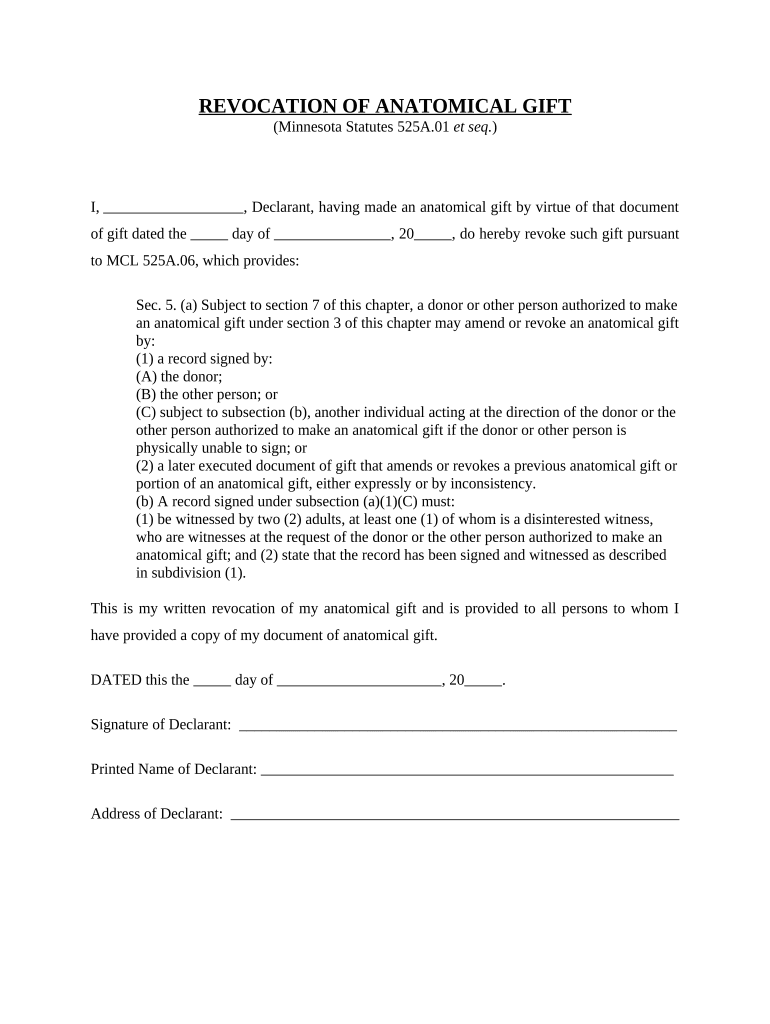
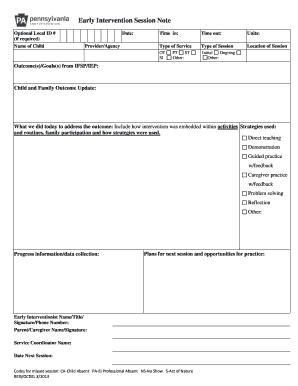
Revocation of Anatomical Gift Donation - Minnesota Preview on Page 1

Here's how it works

01. Edit your form online
Type text, add images, blackout confidential details, add comments, highlights and more.
02. Sign it in a few clicks
Draw your signature, type it, upload its image, or use your mobile device as a signature pad.
03. Share your form with others
Send it via email, link, or fax. You can also download it, export it or print it out.

How to use or fill out Revocation of Anatomical Gift Donation - Minnesota with our platform

Form edit decoration
9.5
Ease of Setup
DocHub User Ratings on G2
9.0
Ease of Use
DocHub User Ratings on G2
  1. Click ‘Get Form’ to open the Revocation of Anatomical Gift Donation in the editor.
  2. Begin by entering your name as the Declarant in the designated field. This identifies you as the individual revoking the anatomical gift.
  3. Next, specify the date of your original anatomical gift document. This is crucial for legal clarity and reference.
  4. In the section that states 'do hereby revoke such gift', ensure you clearly indicate your intention to revoke by checking any necessary boxes or providing additional details if required.
  5. Sign and date the form at the bottom where indicated. If you are unable to sign, follow the instructions for having another individual sign on your behalf, ensuring it is witnessed appropriately.
  6. Lastly, complete the witness section by having two adults sign as witnesses, confirming they have no interest in your estate.

Start using our platform today to easily fill out and manage your Revocation of Anatomical Gift Donation for free!

be ready to get more

Complete this form in 5 minutes or less

Get form

Got questions?

We have answers to the most popular questions from our customers. If you can't find an answer to your question, please contact us.
Contact us
Donation after brain death (DBD) involves donation of organs after the patient meets criteria for death by neurological criteria. Donation after cardiac death (DCD) involves donation of organs after irreversible cessation of circulatory and respiratory function.
(d) A donor may amend or revoke an anatomical gift that was not made in a will by any form of communication during a terminal illness or injury addressed to at least two adults, at least one of whom is a disinterested witness.
The Act was the first legislation enacted by all states in United States to address the donation of organs, tissues, and eyes as gifts to someone who may be in need of an organ for survival. The UAGA was drafted in order to increase organ and blood supplies and donation and to protect patients in the United States.
Introduction. Organ and tissue donation occurs after a person has died. Transplantable organs and tissue can be donated to help the lives of individuals in need. Anatomical gift means a donation of all or part of a human body, after death, for the purpose of transplantation, therapy, research or education.
The act allows a decedent or surviving relatives to donate certain parts of the decedents organs for certain purposes, such as giving to those in need or for medical research. The act was revised in 1987 and again in 2006.

Security and compliance

At DocHub, your data security is our priority. We follow HIPAA, SOC2, GDPR, and other standards, so you can work on your documents with confidence.

Learn more
ccpa2
pci-dss
gdpr-compliance
hipaa
soc-compliance
be ready to get more

Complete this form in 5 minutes or less

Get form