






Definition and Meaning of the MAT 1 Form
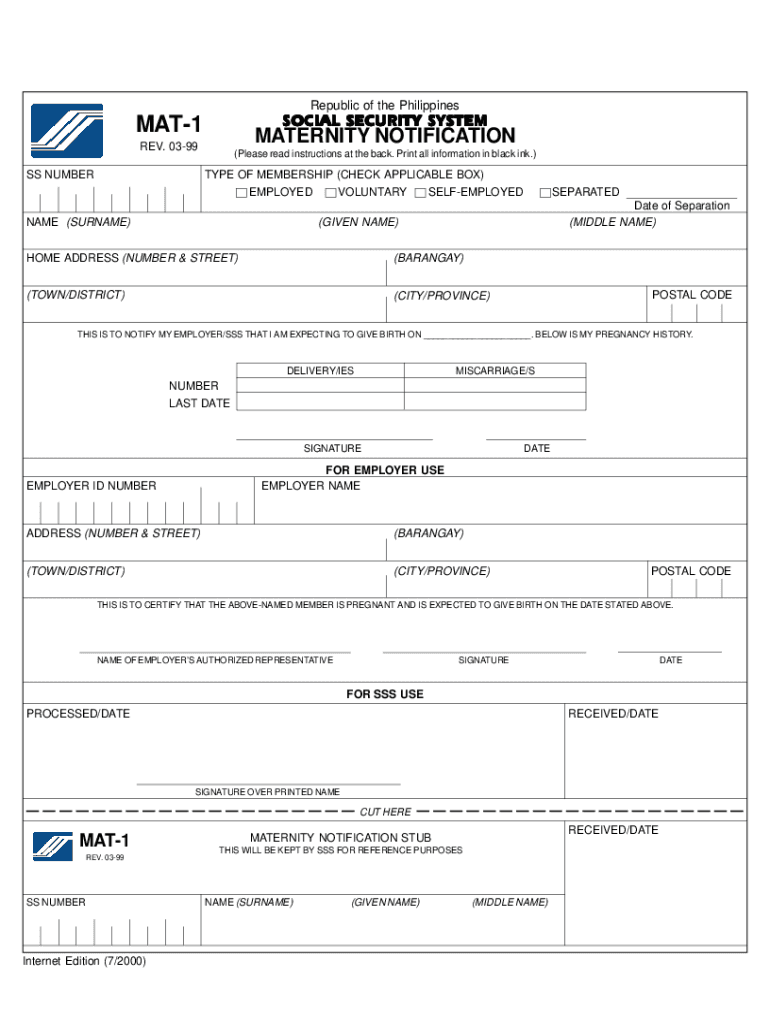
The MAT 1 form, also known as the Maternity Notification form, is utilized primarily for informing employers and the Social Security System (SSS) within the Philippines about an employee's pregnancy and upcoming delivery date. This form serves as a formal notification allowing for the assessment of maternity benefits, which include various support mechanisms for expectant mothers and their employers under the SSS framework.
The MAT 1 form is critical in ensuring that both employees and employers understand their rights and responsibilities concerning maternity leave and related benefits. By submitting this document within the specified time frame, employees can guarantee their access to financial and healthcare benefits during their maternity period. Typically, the submission of the MAT 1 form is a prerequisite for claiming maternity benefits, emphasizing its importance in the broader context of employment rights and social security.
Steps to Complete the MAT 1 Form
Filling out the MAT 1 form requires a systematic approach to ensure that all necessary information is accurately provided. Here are the steps to follow:
- Obtain the Form: Access the MAT 1 form from the designated government or employer portal.
- Personal Information: Enter personal details, including your name, Social Security number, and contact information. This section establishes your identity and eligibility for benefits.
- Pregnancy Details:
- Expected Delivery Date: Clearly state the due date based on medical advice.
- Pregnancy History: If applicable, include information about previous pregnancies or childbirths, as this can aid in processing your application.
- Attach Supporting Documents: Include any required medical certificates, such as a pregnancy test or ultrasound report, to validate the information provided in the form.
- Review and Submit: Double-check all entries for accuracy and completeness before submitting the form either online, in-person, or via mail.
Completing the MAT 1 form accurately is essential for processing maternity benefits and ensuring that you receive appropriate support during your pregnancy.
Important Terms Related to the MAT 1 Form
Understanding specific terminologies associated with the MAT 1 form enhances comprehension of the entire process. Key terms include:
- Maternity Leave: A period during which an employee is permitted to take time off work for childbirth and postpartum recovery.
- Maternity Benefits: Financial and health-related support provided to eligible mothers through the SSS after notification via the MAT 1 form.
- SSS (Social Security System): The Philippine government agency responsible for administering social security benefits, including maternity.
- Required Documents: Evidence needed to support your MAT 1 form submission, such as medical certificates.
- Deadline for Submission: The mandated timeframe within which the MAT 1 form must be filed, typically within 60 days of conception.
These terms frame the context in which the MAT 1 form is used and help clarify the requirements for both employees and employers.
Legal Use of the MAT 1 Form
The MAT 1 form is recognized legally within the context of labor rights and social security in the Philippines. Submitting this form is a crucial step for ensuring compliance with laws governing maternity benefits. It protects both the employee's right to access benefits during the maternity period and the employer's obligation to fulfill these legal requirements.
Employers are also mandated to process this form within a specific timeframe, usually 15 days, upon receipt of a completed MAT 1 form. The legal framework surrounding this form aims to hold employers accountable and provide mothers with reassurance that they can access necessary benefits throughout their pregnancy and after childbirth.
Who Typically Uses the MAT 1 Form?
The primary users of the MAT 1 form are employees within the formal workforce in the Philippines who are anticipating childbirth. This includes:
- Expectant Mothers: Women currently employed who wish to notify their employer of their pregnancy.
- Employers: Companies that must process the MAT 1 form to provide necessary maternity benefits to their employees.
- Human Resource Departments: HR professionals responsible for facilitating and managing employee benefits related to maternity leave.
Understanding this target audience highlights the role of the MAT 1 form in workplace dynamics, ensuring that expectant mothers can effectively manage their entitlement to maternity benefits.


Examples of Using the MAT 1 Form
The MAT 1 form can be used in various scenarios across different industries. Here are a few illustrative examples:
- Corporate Setting: An employed woman in a corporate office submits her MAT 1 form to her HR department after confirming her pregnancy with a healthcare provider. She attaches her ultrasound report to the submission to complete the necessary requirements.
- Healthcare Industry: A nurse working in a hospital completes her MAT 1 form to ensure her maternity leave aligns with hospital policy and government regulations, enabling her to prepare for her upcoming maternity leave.
- Service Industry: An employee in a retail establishment submits her MAT 1 form to guarantee that her maternity benefits are recognized by her employer, thus ensuring financial stability during her leave.
These examples illustrate the practical application of the MAT 1 form, demonstrating its significance across various employment settings.
Filing Deadlines and Important Dates for the MAT 1 Form
Timely submission of the MAT 1 form is essential for maintaining eligibility for maternity benefits. The key dates include:
- Submission Deadline: The MAT 1 form must be submitted within 60 days of conception. Failure to submit within this period can lead to denial of benefits.
- Employer Processing Time: Employers are legally required to process the MAT 1 form within 15 days from receipt, ensuring that the employee is informed of their benefits promptly.
- Expected Delivery Date: Recording the anticipated delivery date is vital for complying with requirements for maternity leave, which typically lasts for 60 days for normal delivery and 78 days for caesarian section.
Awareness of these deadlines can assist expectant mothers and employers in managing their responsibilities and expectations regarding maternity benefits.