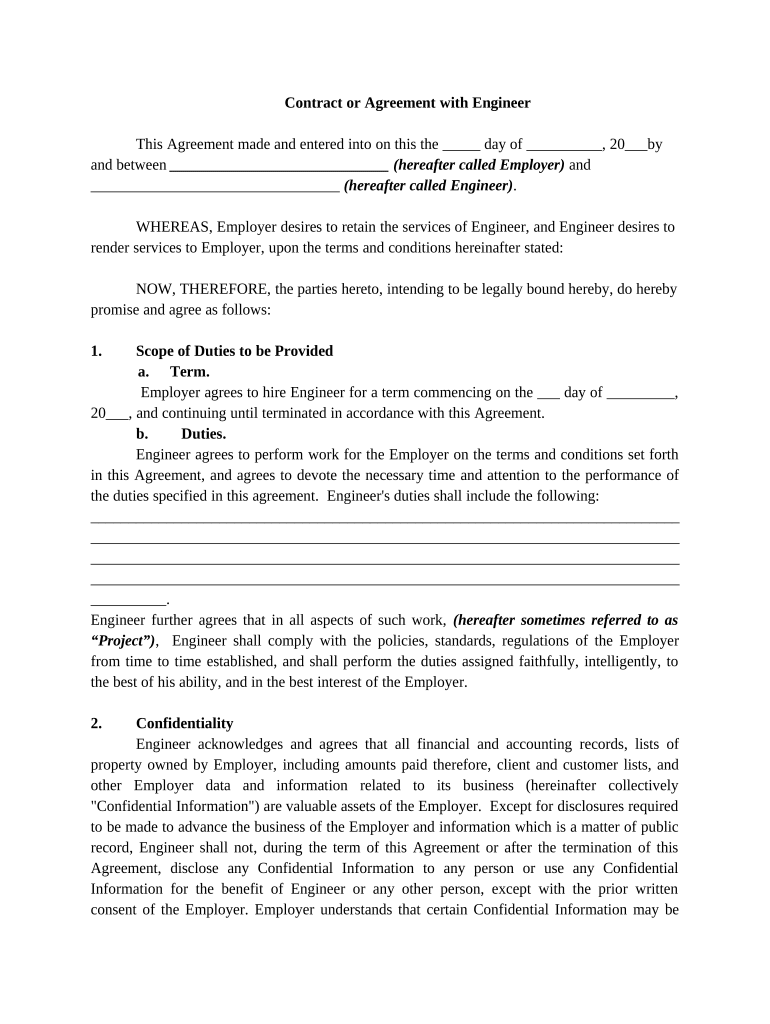







Understanding Contracts and Agreements with Engineers
A contract or agreement with an engineer serves as a formal document that stipulates the parameters of engagement in engineering services. This legally binding document outlines essential elements of the relationship between the parties involved, which typically include the client and the engineer or engineering firm.
Key Components of Engineering Contracts
An engineering services agreement typically consists of several vital components:
-
Scope of Services: This section defines the specific services to be provided by the engineer. It is important for both parties to agree on the exact nature of the work, including any deliverables and timelines.
-
Compensation Structure: Clear specifications regarding payment methods, rates, and schedules are included. This might encompass hourly rates, fixed fees, or progress-based payments based on completed milestones.
-
Confidentiality Provisions: This clause ensures that all shared information remains private. It addresses how sensitive information will be handled and what obligations exist to protect such information.
-
Ownership of Documents: Agreements should clarify who retains ownership of engineering designs and documents produced during the project. This decision can impact subsequent use of the materials.
-
Independent Contractor Status: This identifies that the engineer operates as an independent entity, distinct from full-time employees, which has implications for liability and taxes.
Necessary Legal Framework and Compliance
Ensuring compliance with state and federal regulations is crucial in any engineering agreement. Here are some key points:
-
Licensing Requirements: The engineer must meet all state licensing requirements to legally perform engineering services in their jurisdiction. Verification of credentials can safeguard against legal disputes.
-
Insurance Obligations: Many agreements stipulate that the engineer must maintain professional liability insurance. This protects all parties involved in the event of negligence claims and outlines the required coverage limits.
-
Dispute Resolution Methods: Contracts often include provisions for how disputes will be managed. This can involve arbitration or mediation processes, which may be less costly and time-consuming than litigation.
Form Templates for Engineering Contracts
Utilizing standardized engineering contract templates can streamline the process of creating agreements. Common templates might include:
-
Engineering Services Agreement Template: A customizable document that encompasses all necessary components of an engineering contract.
-
Site Engineer Contract Template: Tailored for specific onsite roles, focusing on site-based responsibilities and expectations.
-
Mechanical Engineering Contract Sample: An example contract detailing services related specifically to mechanical engineering projects, which may require specialized terminology and requirements.
Examples and Case Studies for Clarity
Practical examples can elucidate the importance of a well-drafted agreement:
-
Case of Scope Creep: In one instance, a client requested additional work not outlined in the original contract. Due to the absence of a clear scope definition, disputes arose regarding compensation. This scenario underscores the necessity of comprehensive scope definitions in contracts.
-
Confidentiality Breach: A prior project led to a breach due to inadequate confidentiality clauses, resulting in legal repercussions for both parties. Including robust confidentiality agreements can help protect both the engineer’s and client’s interests.
Final Considerations
When drafting or entering into an engineering contract, both parties must carefully review the document to ensure all elements meet their expectations and legal standards. Adjusting templates to fit unique project requirements can foster a mutually beneficial partnership. Engaging legal expertise can enhance the reliability of the contract, ensuring it stands up to scrutiny and effectively mitigates risks.