






Definition and Meaning
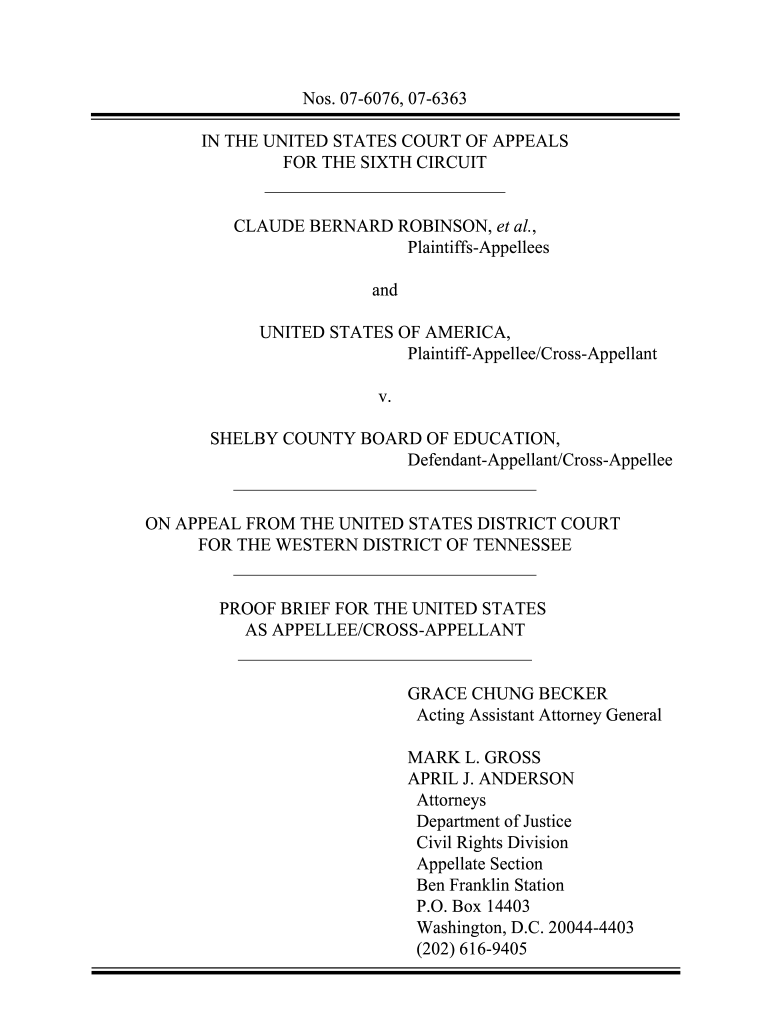
The "Brief as Appellee Cross-Appellant - Department of Justice" is a formal legal document submitted in appellate courts, where the Department of Justice (DOJ) acts as both appellee and cross-appellant. This brief is crucial in cases where the DOJ supports a lower court's decision while simultaneously appealing a component of the ruling. It features a detailed account of the DOJ's legal arguments, including both affirmations and contestations of prior judicial decisions.
How to Use the "Brief as Appellee Cross-Appellant - Department of Justice"
When engaging with appellate litigation, a strategic approach is required to successfully utilize this brief. The document serves as an argumentative tool, structured to present the DOJ's dual role in the appellate process. In one part, the brief supports a lower court decision, and in another, it identifies errors needing correction. Attorneys must carefully draft this brief, ensuring clarity and precision in argumentation to enhance the persuasiveness of the DOJ's position.
Steps to Complete the "Brief as Appellee Cross-Appellant - Department of Justice"
-
Research and Review: Begin with a thorough examination of the case record and relevant statutes.
-
Establish Issues: Clearly identify the appeals to be upheld and the rulings to be contested.
-
Draft Argument Sections: Develop comprehensive sections of the brief, supporting or challenging the lower court decision based on legal standards.
-
Include Precedent Cases: Incorporate case law to substantiate arguments.
-
Revise for Clarity: Ensure all legal arguments are clearly articulated and logically ordered.
-
Submission: File the brief within the designated deadline per appellate court rules.
Who Typically Uses the "Brief as Appellee Cross-Appellant - Department of Justice"
This brief format is primarily utilized by legal professionals within the DOJ tasked with appellate litigation. Their role involves representing the government in cases where strategic support of lower court decisions is necessary, alongside parallel appeals. Other legal practitioners involved in public sector litigation may also refer to this brief as a procedural guide or precedent.


Legal Use of the "Brief as Appellee Cross-Appellant - Department of Justice"
The legal use of this brief lies in its dual functionality. It enables the DOJ to affirm and dispute aspects of a lower court's ruling within a single document framework, focusing on nuanced legal arguments. Use cases typically involve complex civil rights cases, such as those concerning desegregation or civil liberties, requiring both support for and challenges to parts of a ruling.
Key Elements of the "Brief as Appellee Cross-Appellant - Department of Justice"
- Title Page: Includes case title and docket details.
- Table of Contents: Outlines sections for easy navigation.
- Statement of Jurisdiction: Asserts the court's authority to hear the appeal.
- Statement of Issues: Lists the issues presented for appeal.
- Statement of the Case: Provides background details on the case.
- Summary of Argument: Offers a concise overview of arguments made.
- Argument Section: Details specific legal arguments supporting and challenging the lower court's decisions.
- Conclusion: Summarizes the relief sought by the DOJ.
Important Terms Related to the "Brief as Appellee Cross-Appellant - Department of Justice"
- Appellee: The party in an appeal who supports a decision made by a lower court.
- Cross-Appellant: A party that files a cross-appeal within an appellate case.
- Jurisdiction: Authority of the court to hear the case.
- Unitary Status: A legal term often used in desegregation cases to describe when a school district has eliminated segregation.
Who Issues the "Brief as Appellee Cross-Appellant - Department of Justice"
The DOJ, acting through its Office of the Solicitor General or respective legal division, prepares and submits this type of brief in appellate court proceedings. The document is crafted by attorneys representing the interests of the DOJ, aligned with federal legal standards and policies.
Filing Deadlines and Important Dates
Adherence to specific filing timelines is critical in appellate proceedings. The deadlines for submitting this brief are dictated by the appellate court's procedural rules, which can vary by jurisdiction. Attorneys must ensure that the brief is filed within the prescribed time frame to maintain the DOJ's legal position in the appeal process.
Examples of Using the "Brief as Appellee Cross-Appellant - Department of Justice"
Consider a desegregation case where the DOJ agrees with the lower court's general ruling but contends with certain compliance aspects regarding racial composition in faculty assignments. The brief would support the court's overall decision while cross-appealing specific orders requiring faculty ratios to mirror student demographics, citing potential legal and social ramifications.