
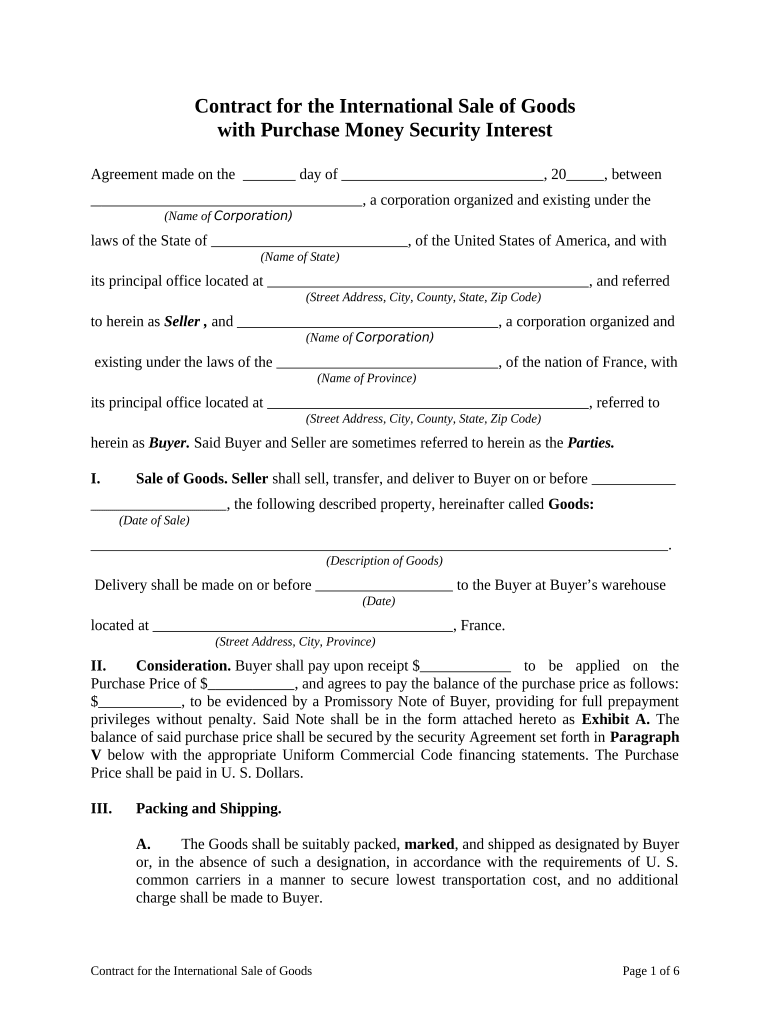







Understanding the International Sales Contract Sample
The international sales contract sample is a formal document that outlines the terms of a transaction between a seller and a buyer from different countries. Its primary purpose is to govern the sale of goods, ensuring legal protection and clarity for both parties involved. This contract typically includes critical elements that define the rights and obligations of each party, thereby minimizing potential disputes.
Key components generally found in an international sales contract sample include:
- Parties Involved: Clearly identifies the seller and buyer, including their legal names and addresses.
- Description of Goods: Detailed specifications of the products being sold, including quantity and quality.
- Payment Terms: Specifies how and when payment will be made, covering aspects such as currency and methods of transfer.
- Delivery Terms: Outlines the logistics of shipping, including the responsibility for costs and the timing of delivery.
- Risk of Loss: Details who holds the risk at different stages of the shipping and delivery process.
- Dispute Resolution: Establishes how disputes will be resolved, such as through arbitration or litigation, and specifies any governing laws.
This comprehensive structure protects both parties by clearly delineating expectations and responsibilities.
How to Use the International Sales Contract Sample
Using an international sales contract sample effectively requires understanding its structure and the specific terms that fit your transaction. Here are steps to guide you through the process:
-
Identify the Transaction Details:
- Begin by clearly defining the goods involved, including their specific attributes, quantities, and delivery dates.
-
Customize Payment Terms:
- Adapt the payment section to reflect the agreed-upon terms. Determine the currency and payment method, such as wire transfers or letters of credit.
-
Specify Delivery Obligations:
- Clearly outline the responsibilities for shipping and delivery. Include details about who bears the costs and the responsibilities during transit.
-
Include Legal Protections:
- Incorporate clauses concerning warranties, liability limits, and the dispute resolution mechanism suited for international contexts.
-
Review and Finalize:
- Both parties should review the contract thoroughly to ensure all terms are mutually agreeable. Seeking legal advice may be beneficial to ensure comprehension of international laws.
By systematically addressing each section, parties can create a tailored contract that effectively meets their specific transaction needs.
Key Elements of the International Sales Contract Sample
Several critical elements compose an effective international sales contract sample. Understanding these components enhances the contract's effectiveness and legal standing.
- Governing Law: Determines which country’s laws will apply in case of a dispute. This is essential in international transactions due to differing legal frameworks.
- Delivery Terms (Incoterms): Specifies the responsibilities of the seller and buyer concerning shipping, insurance, and tariffs, utilizing internationally recognized Incoterms like FOB (Free on Board) or CIF (Cost, Insurance, and Freight).
- Inspection Rights: Allows the buyer to inspect the goods upon arrival to ensure they meet the agreed-upon specifications before accepting delivery.
- Force Majeure Clauses: Addresses unforeseen events that could impede fulfillment of the contract, such as natural disasters or political unrest, and outlines how these circumstances are handled.
- Payment Security Options: Provides avenues for securing payment, such as performance bonds or escrow accounts, which can protect both buyer and seller.
Including these key elements ensures the contract operates smoothly and reduces the likelihood of future disputes.
Examples of Using the International Sales Contract Sample in Practice
International sales contracts find application across various industries. Here are examples demonstrating their practical use:
- Manufacturing: A U.S. company produces machinery and enters into a sales contract with a Brazilian business for the supply of specific equipment. The contract details the machinery specifications, pricing in USD, shipping terms via FOB, and the warranty period.
- Agriculture: A farmer in California sells a shipment of almonds to a distributor in Germany. The contract specifies the quality standards according to international agricultural regulations, payment to be made upon shipment, and allows for inspection rights upon delivery.
- Textiles: An apparel manufacturer in the U.S. contracts with a retailer in Japan for exporting clothing. The sales contract delineates payment in JPY, delivery through air freight, and mutual agreement on liability for damaged goods during transit.
These scenarios illustrate how international sales contracts facilitate smooth transactions while navigating cross-border complexities.
Legal Use of the International Sales Contract Sample
Employing an international sales contract sample legally requires an understanding of associated regulations and compliance standards:
- Compliance with U.S. Export Laws: It is crucial to adhere to regulations regarding exports, including obtaining necessary export licenses and ensuring compliance with the Export Administration Regulations (EAR).
- Adherence to UCC and CISG: Recognize the relevance of the Uniform Commercial Code (UCC) in domestic transactions and the United Nations Convention on Contracts for the International Sale of Goods (CISG) in international dealings. These frameworks guide contractual obligations and rights.
- Document Retention Requirements: Maintain proper records of the contract and related correspondence for audit or potential legal review. Retention policies might differ based on state and international regulations.
Fulfilling these legal considerations helps safeguard parties involved in international sales, thereby enhancing contract enforceability.
Important Terms Related to the International Sales Contract Sample
Familiarity with key terminology is essential for understanding and utilizing an international sales contract sample effectively:
- Incoterms: A set of international standards that define trade terms and responsibilities for shipping goods.
- Letter of Credit (LC): A financial instrument used in international trade to provide an assurance of payment to the seller, contingent upon compliance with stipulated terms.
- Performance Bond: A guarantee provided by one party to ensure the other party will fulfill their contractual obligations.
- Arbitration: A method of dispute resolution where an independent third party makes a binding decision based on the contract terms.
- Acceptance and Rejection: Legal terms defining a buyer's right to accept or reject goods based on conformity to the contract terms.
Understanding these terms allows for clearer communication and better decision-making during the negotiation and transaction processes.




