






Definition and Meaning of a Receipt
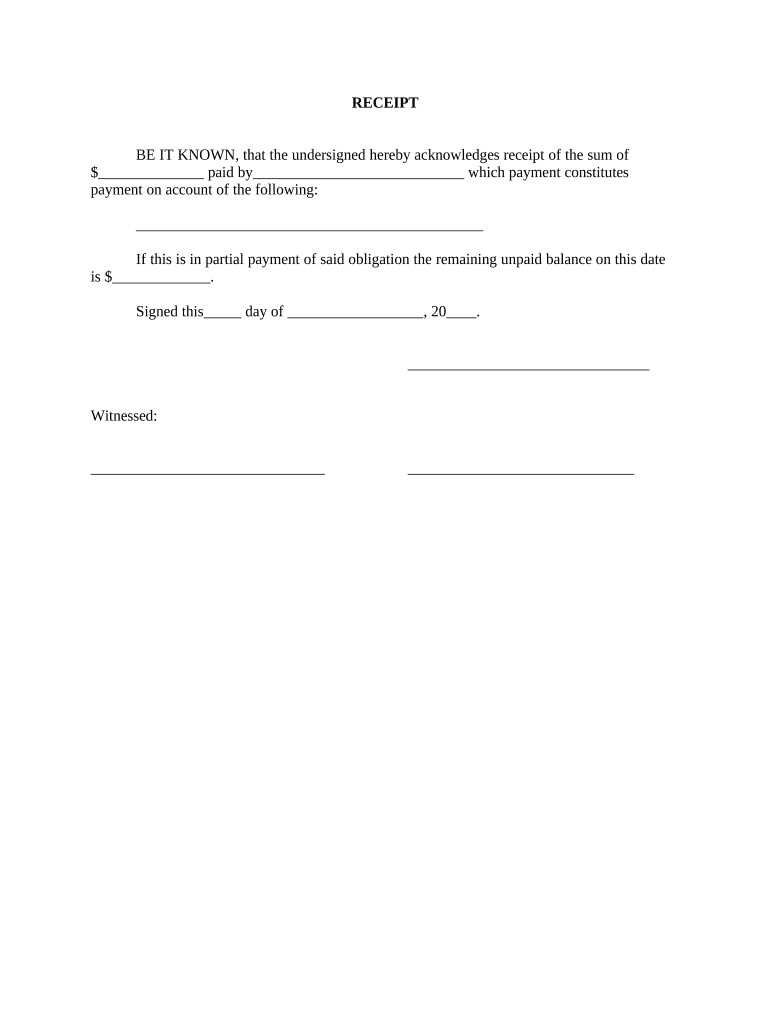
A receipt is a written acknowledgment that a specific payment amount has been received for goods or services rendered. It serves as a proof of transaction either from a seller to a buyer or a service provider to a client. Typically, receipts contain details such as the date of the transaction, the amount paid, the purpose of the payment, and any remaining balance if applicable. They may also include spaces for signatures and dates, thereby enhancing their validity and traceability.
Receipts can be issued in various formats, including paper and digital forms, to accommodate modern business practices. The legal significance of a receipt includes serving as evidence in disputes regarding payments, delineating the terms of a transaction and ensuring compliance with local, state, and federal regulations.
Key Elements of a Receipt
A comprehensive receipt includes several vital components that verify the transaction and ensure the transparency of the payment process. The essential elements typically found on a receipt are:
- Date of Transaction: Indicates when the payment was made.
- Transaction Amount: States the total cost incurred for goods or services.
- Description of Goods/Services: A detailed account of what the payment covers.
- Payee Information: The name and contact information of the business or individual receiving payment.
- Payer Information: The name and contact information of the individual or entity making the payment.
- Payment Method: Specifies how the payment was made, such as credit card, cash, or check.
- Signature and Date: May include a signature from the seller or authorized person and the date of issue.
These elements collectively provide necessary documentation that can be invaluable in record-keeping, auditing, and legal matters.
How to Use a Receipt
Receipts serve various roles depending on the context in which they are issued or received. Understanding how to use a receipt effectively includes:
- Record Keeping: Retaining receipts for business expenses is crucial for tax purposes. Individuals and businesses alike should organize receipts regularly for filing.
- Proof of Payment: Receipts act as confirmatory documents, useful in disputes over payment or in verifying transactions with service providers.
- Budget Tracking: They help in monitoring spending habits which can guide personal finance decisions or business budgeting practices.
- Warranty Claims: Many product warranties require a receipt for service or claims. Having this documentation is essential for potential repairs or replacements.
Utilizing receipts appropriately can enhance efficiency in financial management, tax filings, and budget planning.
Steps to Complete a Receipt
When generating a receipt, ensuring all necessary information is included is critical. The following steps outline how to create a comprehensive receipt:
- Choose the Format: Decide whether to use a digital tool or a handwritten format based on the nature of the transaction.
- Include Basic Information: Insert the date of the transaction, as well as both the payee and payer information.
- List Payment Details: Clearly describe the items or services rendered, along with their respective costs.
- Specify Payment Method: Indicate how the payment was made (e.g., credit card, cash).
- Add Signatures: Include appropriate signatures and dates for validation.
- Provide Copies: If applicable, ensure copies are provided to both the payer and payee for record-keeping.
Following these steps guarantees that the receipt is valid and useful for both parties involved in the transaction.
Legal Use of a Receipt
Receipts hold significant legal weight as they provide proof of transactions and validate claims in case of disputes. Their legal implications include:
- Evidence in Court: A receipt can serve as important evidence when disputes arise about payments or services not rendered.
- Tax Documentation: The IRS requires documented proof of expenses, making receipts essential for businesses and individuals during tax reporting.
- Consumer Protection: Receipts protect consumers, providing them with a formal record of their purchase in adherence to consumer rights laws.
Understanding the legal utility of receipts helps in safeguarding both consumer and business rights, assuring compliance with applicable regulations.
Examples of Using a Receipt
Various scenarios highlight the practical applications of receipts:
- Retail Purchases: A customer buying clothing from a store receives a receipt that details the items purchased and the total payment. This documentation is crucial for returns or exchanges.
- Service Contracts: A client hiring a consultant receives a receipt after payment. This serves as proof for both parties in case of contractual disagreements.
- Tuition and Fees: Educational institutions issue receipts to students for tuition payments. This documentation clarifies outstanding balances or payment agreements, such as a school promissory note for tuition fee with partial payment.
These examples illustrate the receipt's role in establishing transparent and accountable transactions across different sectors.
Important Terms Related to Receipts
Understanding key terms associated with receipts can enhance comprehension and practical usage:
- Payment Confirmation: The acknowledgment that a payment has been successfully processed.
- Transaction Record: Documentation reflecting detailed information about a financial exchange.
- Refund Policy: Specific guidelines dictating how returns or exchanges are handled, often specified on a receipt.
Familiarity with these terms aids in the effective navigation of transactions, ensuring all parties are well-informed of their rights and obligations.
IRS Guidelines
When it comes to tax reporting, the IRS provides specific guidelines regarding the use of receipts:
- Documentation Requirements: Receipts must be maintained for any expenses claimed on tax returns, particularly for business deductions.
- Record Retention: Businesses should keep their receipts for a minimum of three years from the date a tax return is filed, or two years from the date the tax is paid, whichever is longer.
- Electronic Receipts: Digital formats of receipts are accepted, provided they are accessible and accurate reproductions of the original document.
Adhering to IRS guidelines helps individuals and businesses avoid potential penalties related to tax compliance.