







Definition and Meaning of a Mechanics Lien
A mechanics lien is a legal claim against a property filed by contractors, subcontractors, or suppliers in the United States who have provided labor or materials for a construction project but have not received payment. The lien serves as a security interest, ensuring that the claimant can demand compensation for their contribution. Typically, it can lead to foreclosure on the property if the debt remains unpaid. This powerful tool protects those in the construction industry from not receiving due payment for their services or supplies.
Purpose Behind a Mechanics Lien
Primarily, a mechanics lien aims to safeguard professionals in the construction sector by enforcing payment obligations. It creates a legal avenue for contractors and suppliers to secure owed compensation, thereby enhancing their bargaining power. The lien operates as a protection mechanism, emphasizing the financial obligations tied to property improvements. For property owners, understanding this lien is crucial, as it affects ownership rights and can limit the ability to sell or refinance the property.
How to Use a Mechanics Lien Effectively
Using a mechanics lien involves several key steps to ensure its effectiveness. Initially, it's important to maintain thorough documentation of all services rendered and materials supplied. This documentation serves as evidence if the lien becomes contested. If payment disputes arise, issuing a preliminary notice is crucial in many states, as it informs all parties of potential lien actions. After ensuring compliance with state-specific notices, the lien can be filed with the appropriate local recording office.
- Document services and materials.
- Issue a preliminary notice (when applicable).
- File the lien with the relevant authority.
- Serve the lien to the involved parties.
Crucial Steps in Completing a Mechanics Lien
Completing a mechanics lien requires precision to withstand legal scrutiny. Property identification details must be accurate; incorrect information could invalidate the lien. Additionally, it's essential to adhere to filing deadlines specific to each state's regulations, as delays could nullify the claim. After filing, ensure the lien is served to the property owner and, if necessary, other involved parties, facilitating awareness of the claim.
Key Elements of a Mechanics Lien Form
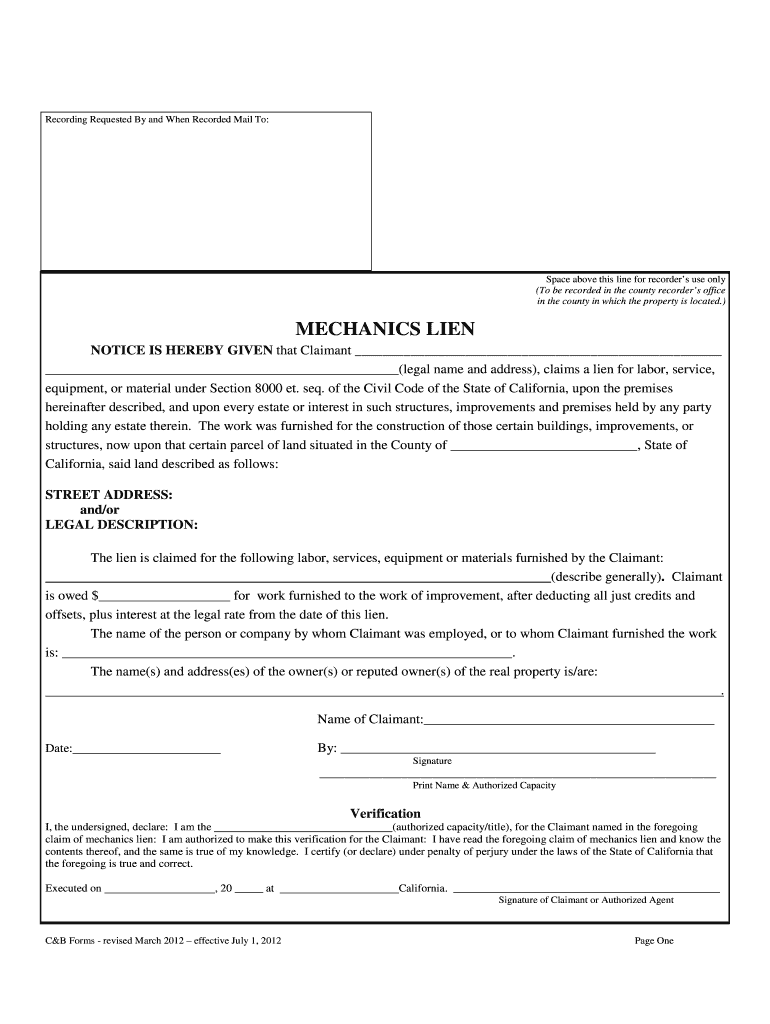
The primary components of a mechanics lien form include identification of the property owner, claimant information, a detailed description of labor and materials provided, the amount owed, and a legal statement affirming the validity of the claim. These elements collectively demonstrate the basis and validity of the claimant's argument, thereby establishing a legitimate claim against the property.
Important Terms Related to Mechanics Liens
A thorough understanding of the terminology associated with mechanics liens is essential for navigating the process successfully. Critical terms include:
- Claimant: The party filing the lien, typically a contractor or supplier.
- Owner: The property owner against whom the lien is filed.
- Preliminary Notice: A notification some states require before filing a lien.
- Perfection: The act of filing and serving the lien to make it enforceable.
- Foreclosure: Legal proceedings initiated to enforce the lien and secure payment.
Legal Use of the Mechanics Lien
Mechanics liens are legally enforced under state-specific lien laws, which dictate the procedures and requirements for filing. The legal use of a mechanics lien involves adhering to these regulations to maintain the lien’s validity. Failure to comply with statutory requirements, such as sending timely notices or correctly filing the lien, may render the claim unenforceable. Proper legal use ensures the lien can be effectively used to secure payment or initiate foreclosure if necessary.
State-Specific Rules for Mechanics Liens
Each U.S. state has its own set of rules governing the use of mechanics liens, affecting elements such as notice requirements, filing deadlines, and enforcement procedures. For instance, California requires a preliminary notice followed by a 90-day filing period after project completion for enforcing a lien. Understanding these variations is critical for stakeholders to ensure compliance and uphold the lien’s enforceability.
Examples of Mechanics Lien Usage in Practice
Real-world applications of mechanics liens demonstrate their significance in obtaining unpaid dues within the construction industry. In one instance, a subcontractor submitted a lien against a commercial building for unpaid materials. After the lien was filed and served, the property owner resolved the payment dispute promptly, underscoring how liens can expedite settlements. Another case involved a contractor perfecting a lien, leading to foreclosure proceedings and eventually securing owed payments through property sale proceeds.
Filing Deadlines and Important Dates
Timing is critical when dealing with mechanics liens, as states impose strict filing deadlines. Contractors and suppliers typically need to file the lien within a specific period after work completion, often ranging from 60 to 120 days. Understanding these timelines is crucial, as missed deadlines may result in forfeiting lien rights. Keeping track of these deadlines safeguards the claimant's ability to enforce payment.
Required Documents for Filing a Mechanics Lien
Filing a mechanics lien necessitates specific documents to substantiate the claim. Fundamental requirements include a completed mechanics lien form detailing the services and amounts owed, proof of service for sending a preliminary notice where needed, and any relevant contracts or agreements. Proper documentation fortifies the lien’s legitimacy and increases the likelihood of a favorable outcome if contested.
Form Submission Methods: Online, Mail, or In-Person
The method of submitting a mechanics lien varies by jurisdiction, with options including online portals, mailing services, or personal delivery to the county recorder’s office. Selecting the appropriate method requires understanding local procedures and ensuring compliance with submission requirements. For many, online filing offers convenience, but some regions still necessitate physical submission to fulfill legal stipulations.
Penalties for Non-Compliance
Non-compliance with mechanics lien regulations can lead to severe consequences, including the invalidation of the lien and loss of legal recourse for unpaid work. Claimants failing to meet notice or filing deadlines, or providing inaccurate information, risk losing their lien rights. Additionally, misuse or incorrect filing can result in legal challenges, potentially leading to financial penalties. Proper adherence to all relevant requirements ensures enforceability and mitigates these risks.




