
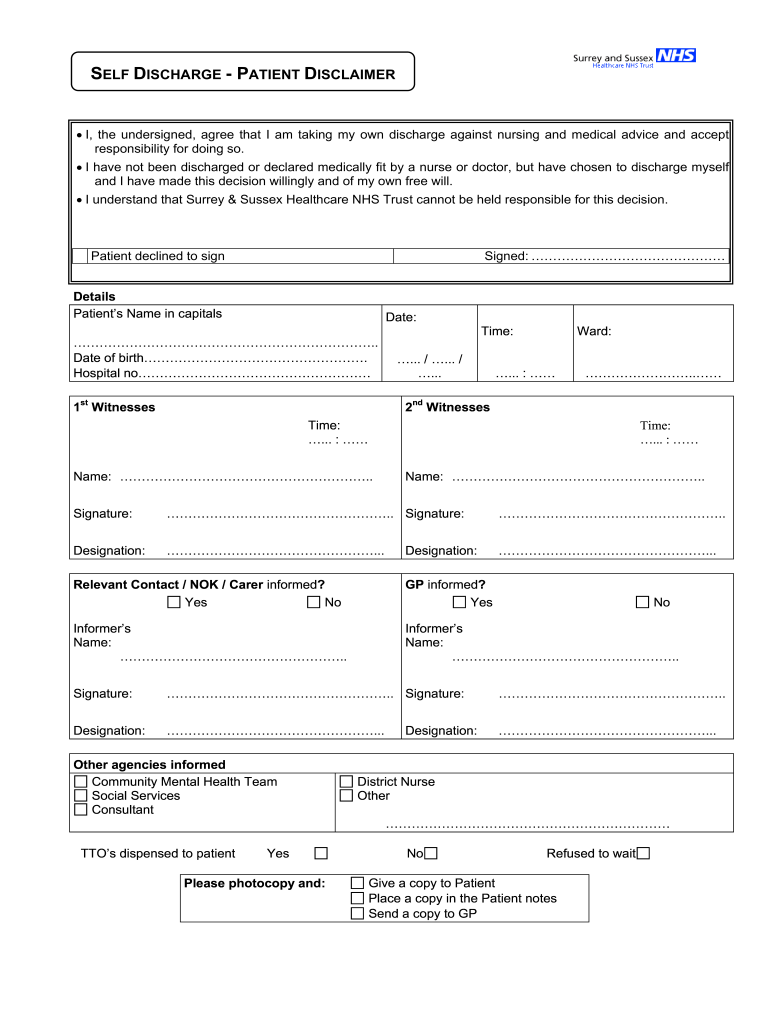







Definition and Purpose of the NHS Discharge Form
The NHS discharge form serves as an official document that records essential information pertaining to a patient’s discharge from a healthcare facility. This form ensures a smooth transition from hospital to home or another care setting. Key components typically include:
- Patient Details: This section captures critical information about the patient, such as full name, date of birth, and NHS number.
- Medical History: Summarizes the patient’s condition, interventions, and treatments received during their hospital stay.
- Discharge Instructions: Outlines follow-up appointments, medication regimens, and any necessary home care protocols.
By formalizing the discharge process, the NHS discharge form mitigates risks associated with patient transitions and supports continuity of care.
Key Elements of the NHS Discharge Process
The NHS discharge process involves multiple essential components aimed at safeguarding patient health during their transition from hospital settings. Important elements include:
- Assessment of Readiness: Medical professionals evaluate if the patient is physically and mentally ready to leave the hospital.
- Educational Counseling: Patients and their families receive information about ongoing care needs, demonstrating the importance of understanding post-discharge instructions.
- Follow-up Care Coordination: Arrangements for follow-up consultations or home health services are confirmed to ensure ongoing support.
Effective discharge planning reduces the likelihood of readmission and empowers patients to manage their health post-discharge.
Types of NHS Discharge Forms
Various types of discharge forms may be utilized depending on the patient's circumstances. These include:
- Self Discharge Forms: Utilized when patients choose to leave the hospital against medical advice, acknowledging associated risks.
- Regular Discharge Forms: Issued when patients are discharged following standard procedures, ensuring all protocols are met.
- Discharge Letters: These provide a summary to the patient and their primary care provider about the treatment received, follow-up recommendations, and medications prescribed.
Each form type plays a distinct role in maintaining patient safety and continuity of care.
Legalities Surrounding Discharge Forms
Understanding the legal implications of signing a discharge form is crucial for patients. Key points include:
- Legal Accountability: By signing the form, patients acknowledge the risks associated with their decision to discharge, especially in self-discharge scenarios.
- Protection for Healthcare Providers: The form serves to protect medical institutions from liability arising from potential complications resulting from early discharges.
- Right to Information: Patients have the right to receive comprehensive information about their care and implications of discharge, ensuring informed decision-making.
These legal considerations help ensure that the discharge process is transparent and accountable.
Importance of Accurate Documentation
Accurate documentation within the discharge process is fundamental for several reasons:
- Continuity of Care: Clear records assist ongoing care providers in understanding the patient's history and treatment, facilitating informed decisions.
- Preventing Readmissions: Comprehensive discharge documentation can help identify follow-up needs, which in turn lowers readmission rates.
- Regulatory Compliance: Compliance with healthcare regulations mandates precise records, which can also affect hospital funding and institutional accreditation.
Thorough documentation ultimately improves patient outcomes and fortifies the accountability of healthcare providers.
Best Practices for Completing NHS Discharge Forms
To enhance the efficacy of the NHS discharge process, adherence to best practices is essential, including:
- Clarity and Precision: Ensure all patient details and instructions are clear and unambiguous to prevent misunderstandings.
- Comprehensive Review: Multiple parties, including healthcare providers and patients, should review the form for accuracy before it is finalized.
- Patient Involvement: Encourage patients to participate actively in the form completion process, fostering a sense of ownership over their healthcare journey.
These practices not only improve the quality of care but also strengthen patient-provider relationships.
Common Scenarios Where Discharge Forms Are Utilized
Several instances illustrate the diverse applications of NHS discharge forms, including:
- Post-Surgery Discharges: Patients undergoing elective or emergency surgery who meet health criteria for discharge must carefully review their discharge instructions.
- Patient Transfers: When patients are moved from the hospital to rehabilitation facilities or other care settings, discharge forms facilitate the transfer of necessary medical information.
- Care Coordination for Chronic Illnesses: Patients requiring ongoing management for chronic conditions may have discharge forms that specifically outline care plans tailored to their needs.
These scenarios highlight the critical role of discharge forms in varied healthcare contexts.




