
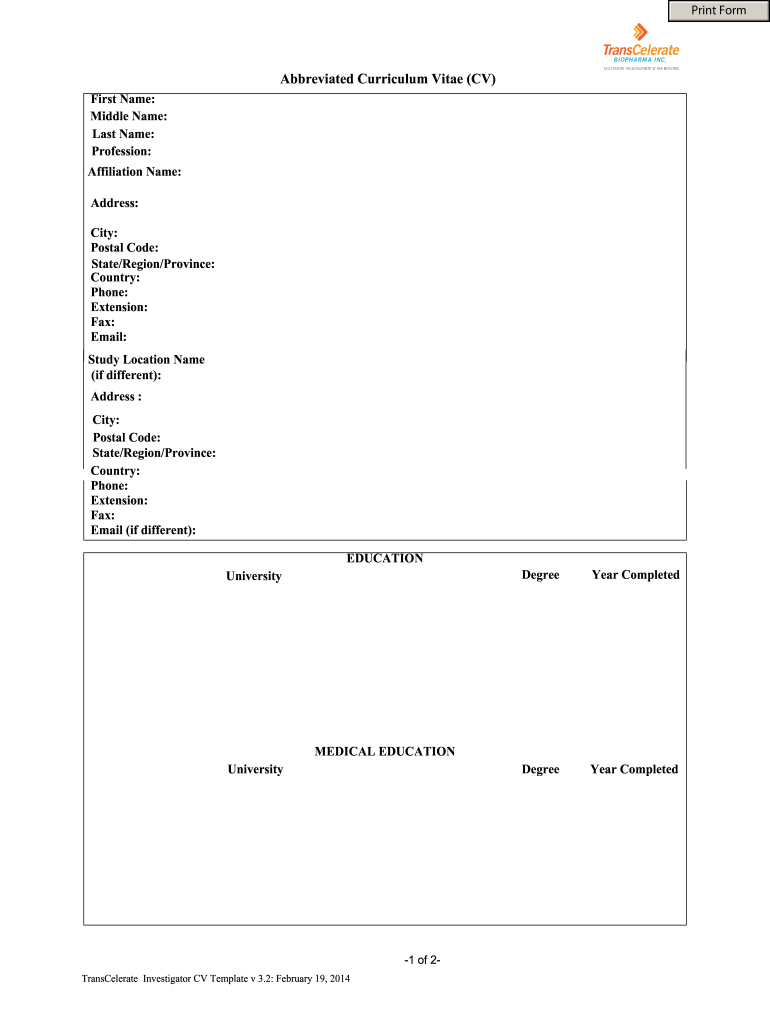







Definition and Meaning of Transcelerate CV
The transcelerate CV (Curriculum Vitae) is a structured document that outlines the qualifications, experiences, and training of professionals, particularly in the medical and clinical research fields. It serves as an essential tool for sharing critical information with sponsors, regulatory bodies, and other stakeholders in clinical trials. This abbreviated CV typically emphasizes details relevant to Good Clinical Practice (GCP) and the investigator's contributions to clinical research initiatives, including education, research interests, and roles in clinical study phases.
How to Use the Transcelerate CV
Using the transcelerate CV involves several clear steps to ensure that all necessary information is accurately represented:
- Collect Required Information: Gather details regarding personal information, educational background, employment history, and relevant certifications in clinical research.
- Utilize the Template: Download the transcelerate CV template. This structured format helps present the information logically and coherently.
- Fill Out Essential Sections:
- Personal Information: Name, contact details, and current employer.
- Education: List degrees obtained, including institutions and years attended.
- Professional Experience: Include roles relevant to clinical research, with an emphasis on investigator roles and contributions.
- Highlight Certifications and Training: Document any certifications pertinent to GCP, clinical trials, or other regulatory requirements.
- Review and Finalize: Ensure that the CV is free of errors and that all information is up-to-date. This is crucial for maintaining professional credibility.
The structured approach of filling out the transcelerate CV makes it simpler to compile information and ensure that it meets the regulatory standards required in clinical research settings.
Key Elements of the Transcelerate CV
The transcelerate CV includes specific key elements that are crucial for presenting a comprehensive overview of a professional’s qualifications in the clinical research domain:
- Personal Information: This section contains the name, contact information (email, phone number), and current position of the investigator.
- Educational Background: Details about all degrees achieved, including the names of institutions, graduation years, and specific fields of study.
- Professional Experience: A chronological listing of jobs held, emphasizing roles and responsibilities related to clinical trials and research activities.
- Research Interests: A brief overview of specific areas in which the investigator has focused research efforts, helping sponsors understand alignment with ongoing studies.
- GCP Training Documentation: A record of completed training in Good Clinical Practice, which is essential for compliance with regulatory standards.
Each element is tailored to provide a clear snapshot of the professional’s qualifications, making it easier for regulatory bodies and sponsors to assess competencies quickly.
Steps to Complete the Transcelerate CV
Completing the transcelerate CV requires adherence to a systematic process:
- Download the Template: Start by acquiring the latest version of the transcelerate CV template to ensure compliance with current standards.
- Gather Supporting Documents: Compile relevant educational transcripts, certificates, and employment verification letters as these may support your entries.
- Input Personal Details: Fill in your full name, address, and appropriate contact information prominently at the beginning of the CV.
- List Educational Attainment: Start with the most recent degree, noting the institution and year of completion.
- Detail Work Experience:
- Job Title and Organization: Starting from the most recent role, detail relevant positions held.
- Responsibilities and Achievements: Use bullet points to outline specific responsibilities and accomplishments in each role.
- Include Research Interests: Describe areas you are interested in, highlighting relevance to clinical studies or trials.
- Add GCP Training: Document completed GCP training courses, including any refresher courses.
- Final Review: Before submission, ensure the CV is formatted correctly, free of typographical errors, and accurately reflects your professional journey.
By following these steps, an investigator can create a compelling and functional CV suited for the clinical research environment.
Examples of Using the Transcelerate CV
The transcelerate CV can be utilized in various contexts, including:
- Clinical Trial Applications: When applying to conduct clinical trials, the transcelerate CV serves as a key document that outlines the investigator’s credentials.
- Regulatory Submissions: Regulatory bodies often require a CV to assess the qualifications of investigators when approving clinical study protocols.
- Grant Applications: Researchers seeking funding for studies may include the transcelerate CV to demonstrate their expertise and the capacity to manage grants effectively.
- Collaborative Research Proposals: When entering partnerships with other institutions or companies, the CV can be used to establish credibility and experience levels of key personnel involved in the research.
Each scenario emphasizes the importance of a structured, detailed CV that meets the expectations of stakeholders in the research field, contributing to the success of clinical studies.
Important Terms Related to Transcelerate CV
Understanding key terminology is essential for effective use of the transcelerate CV. Important terms include:
- Good Clinical Practice (GCP): A set of international ethical and scientific quality standards that govern the conduct of clinical trials.
- Investigator: A qualified individual responsible for conducting a clinical trial, often a researcher or clinician involved in study design and execution.
- Clinical Trial Phases: The different stages in the life cycle of a clinical trial, typically ranging from Phase I (safety) to Phase IV (post-marketing studies).
- Abbreviated CV: A condensed version of a standard curriculum vitae, highlighting only the most relevant experiences and qualifications.
- Delegation Log: A record that outlines the specific responsibilities delegated to study team members, integral for compliance in clinical research.
These terms are critical in accurately interpreting the content within the transcelerate CV and ensuring adherence to industry standards.




