
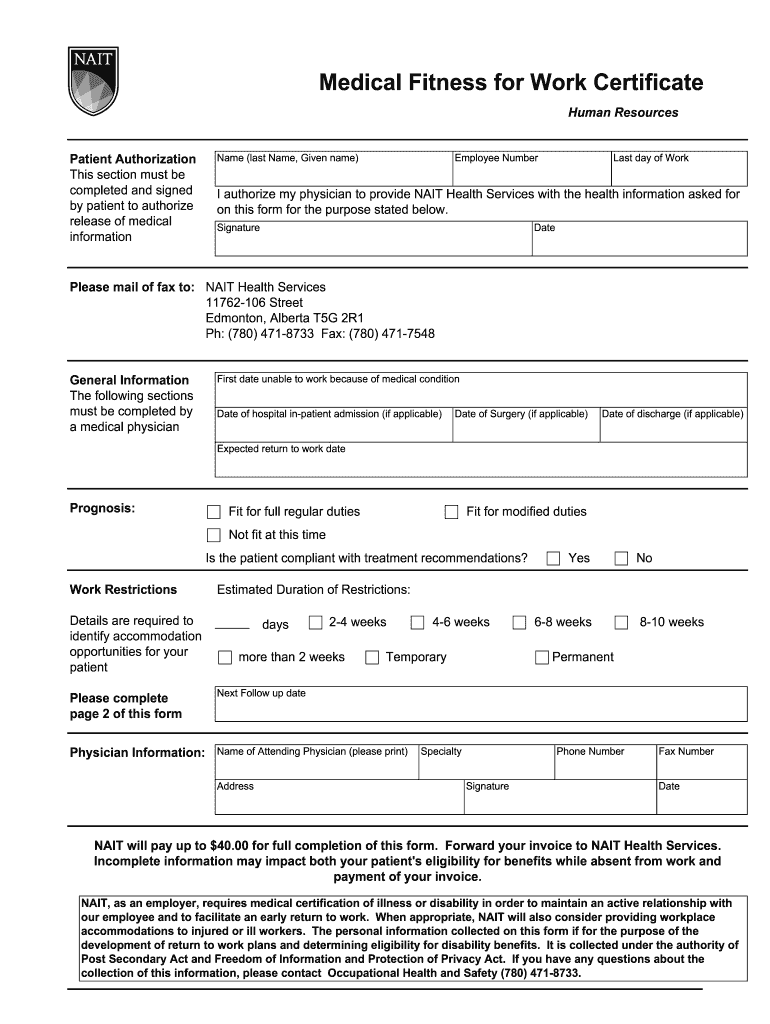







Definition and Meaning of Fit to Work Certificate
A fit to work certificate is a formal document issued by a healthcare professional, declaring that an individual is medically fit to perform specific job-related tasks. It serves as evidence that the individual has undergone a health assessment and meets the physical and mental capabilities required for their role. Typically, this certificate is necessary after an illness, injury, or prolonged absence to ensure that the employee can safely return to the workplace.
Purpose of the Fit to Work Certificate
- Employer Assurance: Employers require this document to confirm that an employee is capable of performing their job duties without endangering themselves or others.
- Health Compliance: Many industries, especially those involving physical labor or hazardous environments, mandate this certificate to comply with health and safety regulations.
- Reassurance for Employees: It offers employees peace of mind, confirming that they are in good health and fit to resume their work responsibilities.
Medical Evaluation Process
The issuance of a fit to work certificate usually involves:
- Medical History Review: The healthcare provider reviews the employee's medical history and current health status.
- Physical Examination: A thorough physical assessment is conducted, often including tests relevant to the job requirements (e.g., vision, strength, hearing).
- Assessment of Workplace Risks: The clinician evaluates any potential risks related to the employee's job duties to ensure safety.
How to Obtain the Fit to Work Certificate
Obtaining a fit to work certificate typically requires several steps:
- Schedule an Appointment: The individual must book an appointment with a licensed healthcare provider.
- Prepare for the Evaluation: It is advisable to gather relevant medical records and information about the job that may affect the medical assessment.
- Attend the Medical Assessment: The healthcare provider will perform the necessary evaluations to determine fitness for work.
- Receive the Certificate: If deemed fit, the provider will issue the certificate for the individual to present to their employer.
Examples of Medical Providers
- General practitioners
- Occupational health physicians
- Specialist doctors depending on the nature of the job or prior health issues
Key Elements of the Fit to Work Certificate
A fit to work certificate includes essential details that validate the individual's medical fitness:
- Patient Information: Name, age, and relevant contact details.
- Provider Information: Name and contact details of the issuing healthcare professional.
- Assessment Date: The date of the medical examination.
- Findings: Summary of the medical evaluation, including any limitations or restrictions.
- Expiration: If applicable, the duration for which the certificate is valid.
Common Restrictions Noted
- Physical limitations, such as lifting restrictions
- Recommendations for job modifications or accommodations
- Follow-up medical evaluations if necessary
Legal Use of the Fit to Work Certificate
The fit to work certificate serves not only as a medical validation but also has legal implications regarding workplace safety and employee rights. Employers must understand the legal framework surrounding its use:
- Compliance with Employment Laws: Companies are often required to adhere to federal and state health regulations, particularly in industries like construction, healthcare, and manufacturing.
- Confidentiality: The details regarding an employee's health status are confidential and should not be disclosed without consent.
- Discrimination Protections: Employees cannot be discriminated against based on their health status; the certificate is merely a guideline for safety and compliance.
Relevant Legislation
- The Americans with Disabilities Act (ADA)
- Occupational Safety and Health Administration (OSHA) guidelines
- Federal and state labor laws regarding workplace health
Important Terms Related to Fit to Work Certificate
Familiarity with specific terms is crucial for understanding the fit to work certificate process:
- Medical Review: An evaluation by a healthcare provider to assess health status.
- Occupational Medicine: A medical specialty focusing on workplace health and safety.
- Return to Work (RTW) Programs: Programs designed to facilitate the safe return of employees to their jobs following health issues.
Related Certifications
- Return to Work Report: Document that outlines job-specific duties and potential hazards after an absence.
- Health Clearance Certificate: Similar documentation often required in schools and sports settings.
Steps to Complete the Fit to Work Certificate
Completing the fit to work certificate involves concise and carefully structured procedures:
- Document Necessities: Ensure all required documentation, including prior health records, is collected before the assessment.
- Engagement with the Provider: Maintain open lines of communication with the healthcare provider throughout the evaluation process.
- Review and Sign: Once the certificate is issued, review all information for accuracy and sign to confirm receipt.
Checklist for Employees
- Ensure the appointment with the healthcare provider is scheduled.
- Prepare any necessary medical history or job details.
- Follow up on any recommendations provided by the healthcare provider post-assessment.
Examples of Using the Fit to Work Certificate
Using the fit to work certificate can encompass various scenarios:
- An employee returning to a physically demanding job after surgery may be required to present their certificate to confirm they can lift heavy loads without risk.
- A healthcare worker returning after a prolonged illness must provide evidence of their fitness to ensure patient safety and compliance with health regulations.
Workplace Scenarios
- Construction Industry: Workers must provide a fit to work certificate before onboarding to validate they can meet the job's physical demands.
- Office Settings: Even in less physically intensive roles, the certificate may be necessary after extended medical leave to confirm readiness to return.
By understanding the various facets of the fit to work certificate, individuals and employers can navigate the requirements effectively, ensuring workplace safety and compliance with health standards.




