Type text, add images, blackout confidential details, add comments, highlights and more.
02. Sign it in a few clicks
Draw your signature, type it, upload its image, or use your mobile device as a signature pad.
03. Share your form with others
Send it via email, link, or fax. You can also download it, export it or print it out.
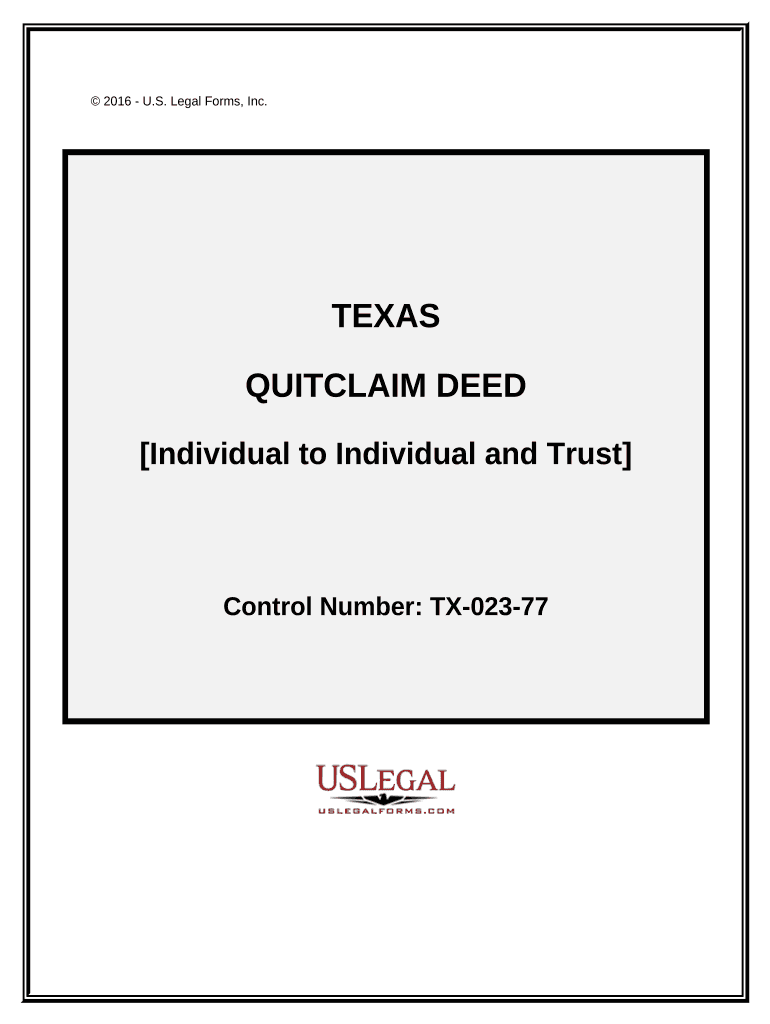
How to use or fill out Quitclaim Deed - Individual to Individual and Trust - Texas
Ease of Setup
DocHub User Ratings on G2
Ease of Use
DocHub User Ratings on G2
Click ‘Get Form’ to open it in the editor.
Begin by entering the effective date of the deed at the top of the form.
Fill in the Grantor's name, followed by the names and addresses of all Grantees. Ensure accuracy as this information is crucial for property transfer.
Specify how the Grantees will hold the property: as Tenants in Common, Joint Tenants with Right of Survivorship, Community Property, or Community Property with Right of Survivorship.
Provide a detailed legal description of the property in the designated section. This may require referencing Exhibit A attached to your document.
Complete any necessary reservations or exceptions related to taxes and encumbrances that may affect the property.
Finally, have the Grantor sign and date the deed, ensuring it is notarized for legal validity.
Start using our platform today to complete your Quitclaim Deed effortlessly and for free!
Fill out Quitclaim Deed - Individual to Individual and Trust - Texas online It's free
The quitclaim deed simply transfers any interest they may have to the other party. Because of the lack of title guarantees, quitclaim deeds are most often used to transfer property between two parties who know and trust each other, such as family members.
Can a quit claim deed transfer property from a trust?
A quit claim deed is a type of deed that transfers an interest in real property, like a house, vacant land to another. Quit claim deeds are often used instead of warranty deeds when transferring property out of the trust.
Can you transfer assets out of a trust?
Trusts may be revocable or irrevocable. A revocable trust (sometimes known as a living trust) allows trustees to easily transfer assets and property into and out of the trust, but an irrevocable trust is less flexible. In general, assets placed into an irrevocable trust must remain there until a court dissolves it.
Does a quit claim deed transfer ownership in Texas?
Good to know: When used appropriately, Quitclaims are used to give up or relinquish any claims or interest in a property. A Quit Claim Deed does not transfer TITLE to real estate property in Texas.
What are the disadvantages of a quit claim deed?
Using a quitclaim deed could trigger unwanted tax consequences, such as gift taxes or capital gains taxes. Additionally, a quitclaim deed can introduce confusion about who truly owns a property after a transfer, which could lead to disputes later.
Related Searches
Quitclaim deed individual to individual and trust texas templateQuitclaim deed individual to individual and trust texas pdfQuitclaim deed individual to individual and trust texas sampleQuitclaim deed individual to individual and trust texas onlineQuitclaim deed individual to individual and trust texas formQuitclaim deed TexasQuitclaim deed individual to individual and trust texas freeTexas Quit claim deed pdf
Security and compliance
At DocHub, your data security is our priority. We follow HIPAA, SOC2, GDPR, and other standards, so you can work on your documents with confidence.
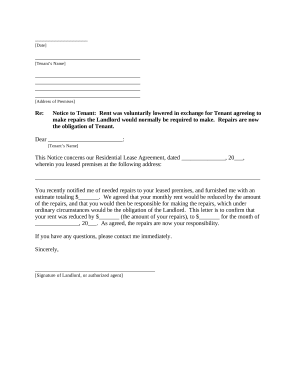
Letter from Landlord to Tenant as Notice that rent was voluntarily lowered in exchange for tenant agreeing to make repairs normally required of landlord - Hawaii
Letter from Landlord to Tenant as Notice that rent was voluntarily lowered in exchange for tenant agreeing to make repairs normally required of landlord - Hawaii
This document is a notice to the tenant confirming a mutual agreement where the tenant's rent was voluntarily lowered in ...
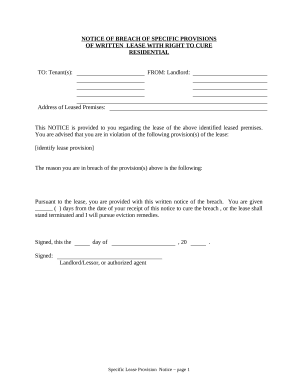
Notice of Breach of Written Lease for Violating Specific Provisions of Lease with Right to Cure for Residential Property from Landlord to Tenant - Hawaii
Notice of Breach of Written Lease for Violating Specific Provisions of Lease with Right to Cure for Residential Property from Landlord to Tenant - Hawaii
This document is a formal notice from a landlord to a tenant regarding a breach of specific provisions in their written ...
Potential for Fraud or Duress: If a grantor is coerced or tricked into signing, the deed can later be voided. Difficulty Proving Ownership: Without warranties or title insurance, the grantee may struggle to prove valid ownership in future disputes.
What is the difference between a quitclaim deed and a trust deed?
A quit claim deed, on the other hand, is a legal document that transfers property ownership without warranties or guarantees about the title. While irrevocable trusts focus on asset protection and control, quit claim deeds primarily deal with quick ownership transfers.
Can you transfer property from trust to beneficiary?
A beneficiary is absolutely entitled to an asset of a trust if they have a vested and indefeasible interest in the entire trust asset that is, they can direct the trustee to immediately transfer the asset to themselves or to someone else.
Related links
FAQs Can I accept a quit claim deed when I purchase a pi
In easiest terms a Quit Claim Deed just means one person is selling whatever title they might/may have to a piece of property to you. A title policy is almost
Is One Claiming Title Under a Quitclaim Deed a Bona Fide
by LW Carr 1906 They are separate contracts intended only as guaranties against future contingencies. The character of bona fide purchaser must depend upon attending
Deed. A quitclaim deed substantially in the form of Exhibit C attached hereto and incorporated herein by this reference (. Deed) executed and acknowledged
Cookie consent notice
This site uses cookies to enhance site navigation and personalize your experience.
By using this site you agree to our use of cookies as described in our Privacy Notice.
You can modify your selections by visiting our Cookie and Advertising Notice.