
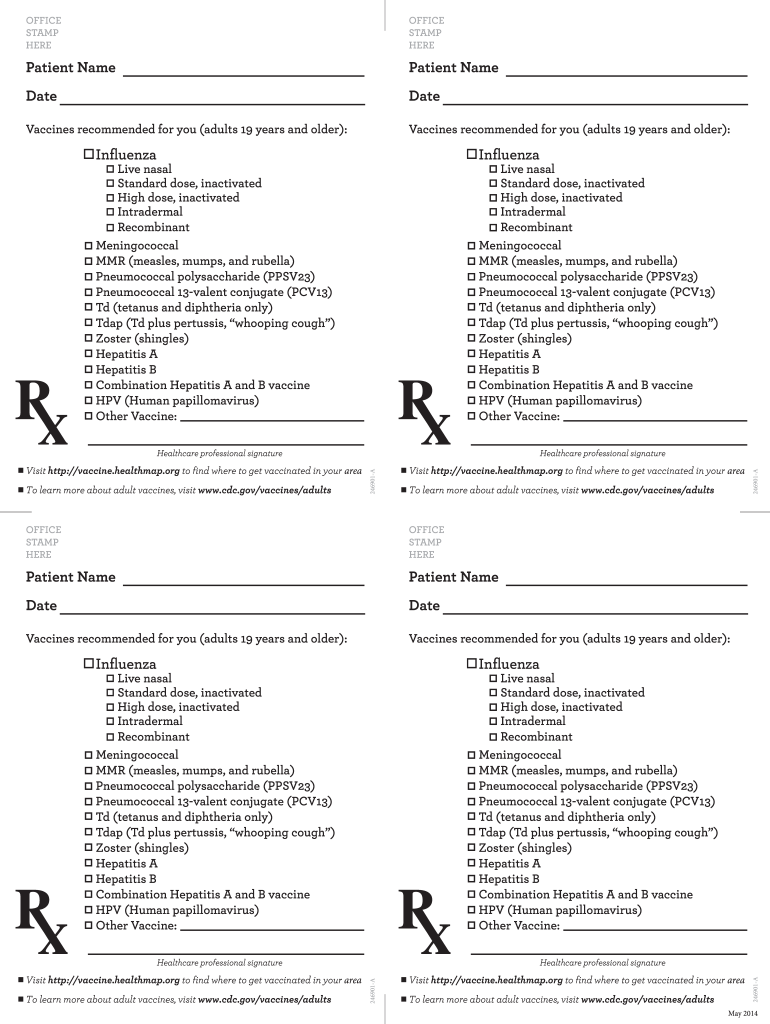







Definition and Meaning of Vaccine Prescription
A vaccine prescription is an officially crafted document that allows individuals to receive vaccinations authorized by healthcare practitioners. It outlines the specific vaccines recommended, adherence to guidelines, and potential health considerations for the patient. This form serves as a critical component in the process of immunization, ensuring that patients receive appropriate vaccines based on their health status and medical history.
Importance of Vaccine Prescriptions
- Medical Oversight: They provide an essential link between patients and healthcare providers, ensuring vaccinations are administered safely and effectively.
- Record Keeping: These prescriptions maintain accurate medical records for patients, tracking which vaccines have been administered.
- Legal Compliance: They confirm that vaccinations adhere to federal and state regulations, providing documentation for schools, employers, or other institutions requiring proof of immunization.
Steps to Obtain a Vaccine Prescription
Acquiring a vaccine prescription involves a series of steps designed to ensure proper medical evaluation and compliance with health regulations.
- Schedule an Appointment: Begin by consulting with a licensed healthcare provider—this could be a general practitioner, pediatrician, or specialist.
- Medical Evaluation: During the visit, the healthcare professional will assess your health history, current medications, allergies, and vaccination history to determine which vaccines are necessary.
- Prescription Issuance: If appropriate, the provider will write the vaccine prescription detailing the specific vaccines, issuance date, and dosage.
- Submission to Vaccine Provider: Present the prescription to a vaccine administration site, such as a pharmacy or clinic, to receive the vaccines.
Considerations
- Timing: Some vaccines may require specific timing based on age, health status, or previous vaccinations.
- Insurance Coverage: It's advisable to check with your insurance regarding coverage for vaccine prescriptions and the vaccinations themselves.
Key Elements of a Vaccine Prescription
A comprehensive vaccine prescription includes various critical elements that ensure clarity and effectiveness.
- Patient Information: Full name, date of birth, and contact details.
- Vaccine Details: The name(s) of the vaccine(s) prescribed.
- Dosage Instructions: Clear guidance on the number of doses required and the schedule.
- Provider Credentials: The name, signature, and license number of the healthcare provider issuing the prescription.
- Date of Issue: The precise date when the prescription was written.
Example Format
- Patient Name: John Doe
- DOB: January 1, 1990
- Vaccines: Influenza, MMR
- Doses/Timing: Influenza – one dose annually; MMR – two doses, 28 days apart
- Provider Information: Dr. Jane Smith, MD, License #123456
Legal Use of Vaccine Prescriptions
Compliance with Regulations
Vaccine prescriptions must adhere to federal and state laws, such as the Health Insurance Portability and Accountability Act (HIPAA), which ensures patient privacy and data security.
- Documentation: Prescriptions should be retained for legal and medical purposes while ensuring confidentiality.
- State Laws: Different states may have additional requirements regarding who can issue vaccine prescriptions or how they must be documented.
Liability Considerations
If there are adverse reactions to a vaccine given under a prescription, it is crucial for healthcare providers and facilities to maintain comprehensive documentation of consent and administration to mitigate liability.
Procedure for Updating Vaccine Prescriptions
Updating a vaccine prescription may be necessary due to changes in health status, new vaccines becoming available, or changes in legal guidelines.
- Reevaluation Appointment: Schedule a follow-up appointment with the healthcare provider.
- Analyze Changes: Discuss any changes in medical history since the last prescription and determine necessary updates.
- Issue Updated Prescription: The provider will revise and reissue the prescription reflecting the current recommendations.
Importance of Updates
- Health Changes: If a patient develops new health concerns or allergies, their vaccine regimen may need to be adjusted accordingly.
- New Vaccines: As vaccines evolve with new health challenges and emerging diseases, updated prescriptions ensure that patients receive the latest recommendations.
Common Scenarios Requiring Vaccine Prescriptions
Different Patient Populations
- Adults: The prescription is important for adults needing vaccines for travel, work, or activities involving vulnerable populations.
- Children: Schools often require proof of vaccinations, necessitating a prescription for school-aged children.
- High-Risk Individuals: Those with chronic health conditions might need specific vaccines as dictated by their healthcare provider.
Case Study
Consider a college student traveling abroad who needs specific immunizations. The student consults with a healthcare provider who issues prescriptions for the recommended vaccines, ensuring compliance with both university and travel health advisories.
Important Terms Related to Vaccine Prescriptions
Familiarity with vaccine-related terminology is vital for understanding and effectively managing vaccine prescriptions.
- Vaccination Schedule: The recommended timetable for administering vaccines based on various health guidelines.
- Immunization Record: A document detailing all vaccines received by a patient, often required in schools or for employment.
- Adverse Effects: Potential side effects from vaccines that patients should be informed about during the prescription process.
Each element of the vaccine prescription process plays a crucial role in public health by promoting immunization while ensuring individual safety and compliance with healthcare regulations.




