Type text, add images, blackout confidential details, add comments, highlights and more.
02. Sign it in a few clicks
Draw your signature, type it, upload its image, or use your mobile device as a signature pad.
03. Share your form with others
Send it via email, link, or fax. You can also download it, export it or print it out.
How to use or fill out Estate Planning Questionnaire and Worksheets - South Dakota with our platform
Ease of Setup
DocHub User Ratings on G2
Ease of Use
DocHub User Ratings on G2
Click ‘Get Form’ to open the Estate Planning Questionnaire and Worksheets in the editor.
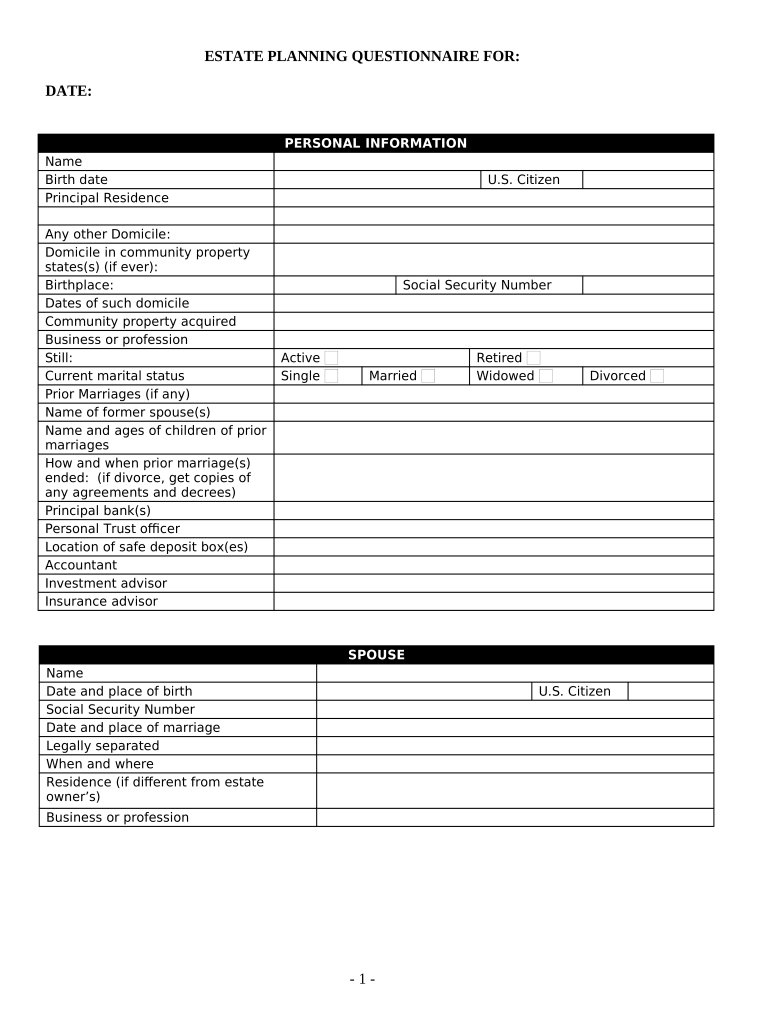
Begin by filling out the 'Personal Information' section. Enter your name, birth date, principal residence, and any other domicile details. Be sure to include your marital status and information about prior marriages if applicable.
Proceed to the 'Children and Grandchildren' section. Clearly designate which children or grandchildren are adopted or from prior marriages, along with their names and birth dates.
In the 'Who Will Benefit Under Will' section, list beneficiaries along with their addresses, ages, and relationship to you.
Complete the 'Fiduciaries' section by providing names and addresses for executors, trustees, and guardians.
Fill out the 'Financial Information' sections meticulously. Include details about real estate, stocks, bonds, cash accounts, life insurance policies, and any liabilities.
Finally, review all entries for accuracy before saving or sharing your completed questionnaire using our platform's features.
Start filling out your Estate Planning Questionnaire today for free on our platform!
Fill out Estate Planning Questionnaire and Worksheets - South Dakota online It's free
What are the 7 steps in the estate planning process?
What Are the 7 Steps in the Estate Planning Process? List Your Assets and Liabilities. Define Your Estate Planning Goals. Draft Essential Estate Planning Documents. Consider Non-Probate Options. Update Beneficiaries. Plan for Taxes. Review and Update Your Estate Plan. Securing Your Legacy with a Thoughtful Estate Plan.
What are the six basic steps to the estate planning process?
Here are 6 steps to help get your estate plan going: Make a list of your possessions. You may question if you have enough to justify an estate plan. Review your beneficiaries. Protect what you have. Establish your directives. Enlist the help of a professional. Plan on adjustments.
How to avoid probate in South Dakota?
There are some ways to avoid probate in South Dakota, including having a living trust, payable-on-death (POD) bank accounts, transfer-on-death (TOD) deeds, and joint ownership of properties. Living trusts can help avoid probate because the assets they hold belong to the trust, not the estate.
What are the major steps involved in estate planning?
7 Common Inheritance Mistakes to Avoid Not Factoring in Potential Inheritance Taxes. Failing to Make a Budget. Spending Too Much. Not Paying Off Debts. Losing Other Income Sources. Not Saving Enough. Not Getting Expert Advice.
Can I write my own will in South Dakota?
The law requires that the maker of the will be at least 18 years old and of sound mind. The will must be written, signed, and witnessed by two or more individuals. No witnesses are necessary if the will is dated and if the signature and material portions of the will are in the handwriting of the person making the will.
Related Searches
Estate planning questionnaire and worksheets south dakota templateFree estate planning questionnaire and worksheets south dakotaEstate planning questionnaire and worksheets south dakota pdfEstate planning questionnaire and worksheets south dakota pdf freeEstate planning questionnaire and worksheets south dakota free downloadFree printable estate planning forms pdfFree printable estate planning WORKSHEET templateBest free printable estate planning forms pdf
Security and compliance
At DocHub, your data security is our priority. We follow HIPAA, SOC2, GDPR, and other standards, so you can work on your documents with confidence.
Many funeral homes have worksheets to assist a person in making decisions. Your preplanned funeral document should be kept with your will or other estateRead more
Jun 14, 2024 End of life documents indicate medical treatments we may or may not want, funeral arrangements we have made and how our estate is to be managed and distributedRead more
Cookie consent notice
This site uses cookies to enhance site navigation and personalize your experience.
By using this site you agree to our use of cookies as described in our Privacy Notice.
You can modify your selections by visiting our Cookie and Advertising Notice.