Type text, add images, blackout confidential details, add comments, highlights and more.
02. Sign it in a few clicks
Draw your signature, type it, upload its image, or use your mobile device as a signature pad.
03. Share your form with others
Send last will and testament form connecticut via email, link, or fax. You can also download it, export it or print it out.
How to use or fill out Legal Last Will and Testament Form with All Property to Trust called a Pour Over Will - Connecticut
Ease of Setup
DocHub User Ratings on G2
Ease of Use
DocHub User Ratings on G2
Click ‘Get Form’ to open it in the editor.
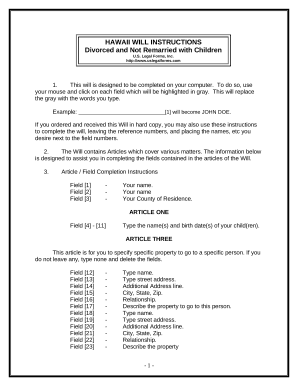
Begin by filling in your name and county of residence at the top of the form. This personalizes the document and establishes your identity.
In Article One, specify the date you created your Living Trust and its name. This section ensures that any assets not transferred during your lifetime will be directed to your trust upon death.
Proceed to Article Two, where you will outline how debts and expenses should be handled. Clearly state that these will be paid by your Personal Representative or trustee if funds are unavailable.
If applicable, complete Article Three regarding guardianship for minor children. Indicate whether you have minors and designate a guardian if necessary.
In Article Four, appoint a Personal Representative who will manage your estate. Include a successor in case the primary cannot serve.
Review Articles Five through Seven for additional provisions regarding bond waivers, powers of the Personal Representative, and general intentions for interpretation of the will.
Finally, sign the document in front of witnesses as required by Connecticut law to validate your will.
Start using our platform today to easily complete your Pour Over Will online for free!
Fill out Legal Last Will and Testament Form with All Property to Trust called a Pour Over Will - Connecticut online It's free
Does a pour-over will avoid probateBest legal last will and testament form with all property to trust called a pour over will connecticutPour-over will examplePour-over Will example PDFPour-over will templateFree Pour-Over Will templateLegal forms for Wills and TrustsFree trust and will template
Security and compliance
At DocHub, your data security is our priority. We follow HIPAA, SOC2, GDPR, and other standards, so you can work on your documents with confidence.
by BES Fogel 2014 Cited by 19 The usual method is through a pour- over will. As shown in Figure Two, the pour-over will provides that the decedents entire probate estate (all of theRead more
These matters include the following: probating wills and the administration of estates;; overseeing testamentary trusts;; determining title to real and personalRead more
Natural Attenuation for Groundwater Remediation is available from the National Academy. Press, 2101 Constitution Ave., N.W., Box 285, Washington, DC 20055; (800)Read more
Cookie consent notice
This site uses cookies to enhance site navigation and personalize your experience.
By using this site you agree to our use of cookies as described in our Privacy Notice.
You can modify your selections by visiting our Cookie and Advertising Notice.