Interrogatories to Plaintiff for Motor Vehicle Occurrence - Connecticut 2026

Get Form
Interrogatories to Plaintiff for Motor Vehicle Occurrence - Connecticut Preview on Page 1

Here's how it works

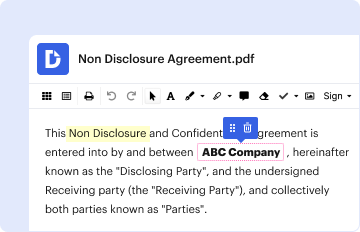
01. Edit your form online
Type text, add images, blackout confidential details, add comments, highlights and more.
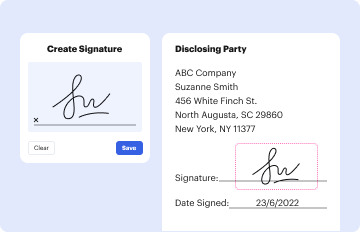
02. Sign it in a few clicks
Draw your signature, type it, upload its image, or use your mobile device as a signature pad.
03. Share your form with others
Send it via email, link, or fax. You can also download it, export it or print it out.

How to use or fill out Interrogatories to Plaintiff for Motor Vehicle Occurrence - Connecticut with DocHub

Form edit decoration
9.5
Ease of Setup
DocHub User Ratings on G2
9.0
Ease of Use
DocHub User Ratings on G2
  1. Click ‘Get Form’ to open it in the editor.
  2. Begin by entering the case style at the top of the form, including the names of the parties involved.
  3. Proceed to answer each interrogatory. Start with Interrogatory No. 1, providing your full name, current address, date of birth, marital status, driver's license number and issuing state, and social security number.
  4. Continue through each interrogatory systematically. For example, in Interrogatory No. 2, list all witnesses to the occurrence along with their addresses.
  5. For questions regarding medical treatment (Interrogatories No. 6 and No. 7), ensure you provide detailed information about healthcare professionals and any treatments received.
  6. Review your answers for accuracy before finalizing the document. Utilize our platform's features to save or share your completed form easily.

Start using our platform today for free to streamline your document editing and completion process!

be ready to get more

Complete this form in 5 minutes or less

Get form

Got questions?

We have answers to the most popular questions from our customers. If you can't find an answer to your question, please contact us.
Contact us
What Are The Most Common Objections To Interrogatories? The most common discovery objection our lawyers see is the objection that the interrogatories are not relevant to the litigation or are too burdensome to answer.
There is no form for your answer, but you typically have to respond in a specified format, using paper with numbers down the left-hand side, with your name and address at the top left, the name of the court and of the case, and the case number.
Draft Interrogatories Strategically Be specific Avoid general questions that invite objections or unclear answers. Follow a logical sequence Structure questions so they build on one another. Target missing details Use interrogatories to gather facts that cant be found in available documents or witness statements.
In California, you have 30 days to respond to an interrogatory. If you do not respond within this time, the opposing side can file a motion to compel with the court. The court may require them to first consult with you about your failure to respond before officially filing a motion to compel.
When responding to interrogatories, simply stating I dont understand the question is insufficient. The proper approach is to specify which part is unclear and request clarification from the opposing party. Courts expect clear, complete, and truthful answers.

Security and compliance

At DocHub, your data security is our priority. We follow HIPAA, SOC2, GDPR, and other standards, so you can work on your documents with confidence.

Learn more
be ready to get more

Complete this form in 5 minutes or less

Get form

People also ask

For the interrogatories, answer them as best you can. Dont volunteer information. If the question is answer with a Yes or No, then do that. If you dont know, then you can put that for youre answer. For the admission, you either admit to it or deny it, very similar to the answer to the complaint.
Interrogatories are written questions sent by one party to another, which the responding party must answer under penalty of perjury. Interrogatories allow the parties to ask who, what, when, where and why questions, making them a good method for obtaining new information.
Interrogatories should be brief, simple, particularized, unambiguous, and capable of being understood by jurors when read in conjunction with the answer. They should not be argumentative nor should they impose unreasonable burdens on the responding party.

Related links