






Definition & Meaning
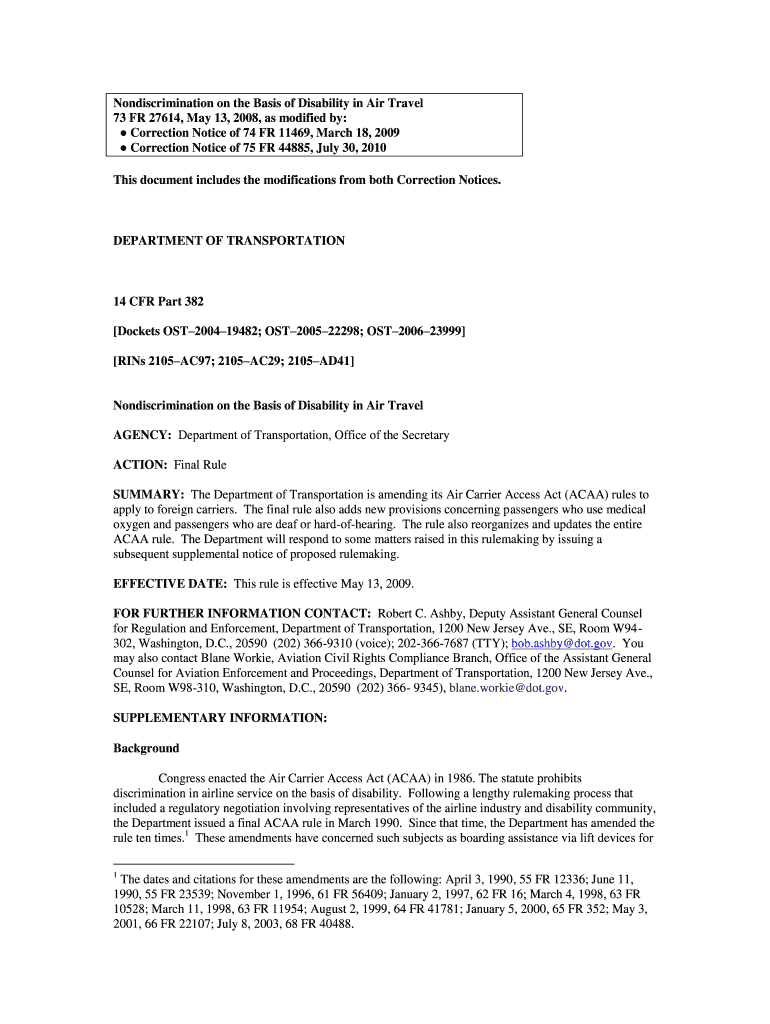
"This document includes the modifications from both Correction Notices" refers to a formal update or revision of a document that incorporates changes outlined in two separate correction notices. Correction notices are typically issued to amend, clarify, or correct errors in existing documents. These modifications ensure that the document reflects the most current and accurate information. Such procedures are common in legal, regulatory, or bureaucratic contexts where maintaining document precision is crucial.
Importance of Understanding Document Modifications
- Accuracy: Ensuring the document incorporates required changes prevents misinterpretation or errors.
- Compliance: Adhering to correction notices ensures compliance with relevant laws and policies.
- Record-Keeping: Accurate documentation is essential for auditing, historical records, and future reference.
How to Use the Document
When handling a document that includes modifications from correction notices, it is essential to comprehend and apply the revisions accurately. This involves reading the entire document, highlighting the sections that were amended, and understanding the rationale behind each change. The aim is to ensure that these changes are implemented in relevant processes or systems affected by the document.
Practical Usage Steps
- Identify Modifications: Clearly mark the sections of the document affected by the correction notices.
- Understand Changes: Read any accompanying notes or explanations provided with the corrections for context.
- Implement Adjustments: Make the necessary updates to procedures, systems, or communications that rely on the document's accuracy.
- Communicate Updates: Inform relevant stakeholders about the changes, ensuring everyone is aligned with the latest information.
Steps to Complete the Document Process
Completing the process of incorporating corrections from notices involves methodical steps to ensure that the document is updated accurately. This reduces the risk of errors and maintains the integrity of the document.
Detailed Steps
- Gather Correction Notices: Obtain all relevant correction notices that apply to the document.
- Review Changes: Closely examine the details in the correction notices to understand the scope of modifications.
- Update Document: Make the necessary changes to the document, ensuring all corrections are accurately reflected.
- Verify Changes: Cross-check the amended sections with the correction notices to confirm accuracy.
- Finalize Document: Once verified, finalize the document for official use or distribution.
Key Elements of the Document
The document's key elements include the sections where changes were made, along with annotations or notes indicating the details and reasons for these modifications. Understanding these elements is crucial for ensuring the document's integrity and relevance.
Components to Note
- Amended Sections: Specific parts of the document that have been changed.
- Correction Notes: Annotations explaining the nature and purpose of each change.
- Effective Date: The date from which the modified document is valid.
Legal Use of the Document
In situations where legal compliance is required, utilizing a document updated with correction notices ensures adherence to regulations and standards. This is particularly relevant in industries where legal documents, contracts, or policies are regularly updated.
Legal Compliance Benefits
- Avoiding Penalties: Using the most accurate version of a document helps avoid legal and financial penalties.
- Ensuring Validity: Compliance with updated legal standards ensures that the document remains enforceable.
- Audit Readiness: Accurate documents are crucial for audits or legal reviews.
Required Documents for Correction Inclusion
To incorporate changes from correction notices, certain original documents are often needed to provide context and ensure that modifications align with existing information.
Essential Documents
- Original Document: The document that is subject to modification.
- Correction Notices: Official notices detailing the required changes.
- Supplementary Information: Any additional materials that support the changes, such as explanatory notes or regulatory guidelines.
Digital vs. Paper Version
In modern documentation practices, both digital and paper versions of documents might include modifications from correction notices. Each format has its benefits and challenges when implementing updates.
Comparison
- Digital Version: Allows easier updates, distribution, and storage. Changes are more accessible for future modifications.
- Paper Version: May require manual annotation and distribution, posing a risk of overlooking changes if not carefully tracked.
Benefits of Digital Formats
- Efficiency: Faster updates and distribution.
- Searchability: Easy to locate changes and corrections in the document.
- Environmental Impact: Reduced paper use and storage requirements.
Software Compatibility
Ensuring that digital documents are compatible with commonly used software like TurboTax or QuickBooks is crucial for seamless integration and utilization of the updated information.
Software Considerations
- Compatibility: Check if the document's formats align with specific software to prevent errors.
- Integration: Ensure that updates are smoothly reflected in connected software systems.
- User Training: Provide guidance on using updated documents within software platforms.
By carefully following these comprehensive guidelines, users can ensure accurate integration and implementation of modifications from correction notices into their documents. This not only maintains document integrity but also supports compliance and operational efficiency.