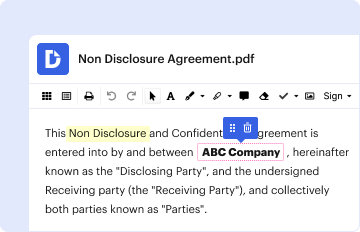
Type text, add images, blackout confidential details, add comments, highlights and more.
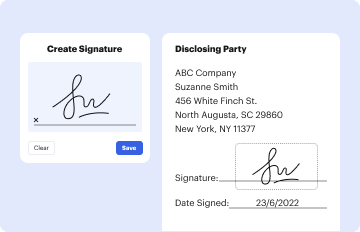
02. Sign it in a few clicks
Draw your signature, type it, upload its image, or use your mobile device as a signature pad.
03. Share your form with others
Send it via email, link, or fax. You can also download it, export it or print it out.
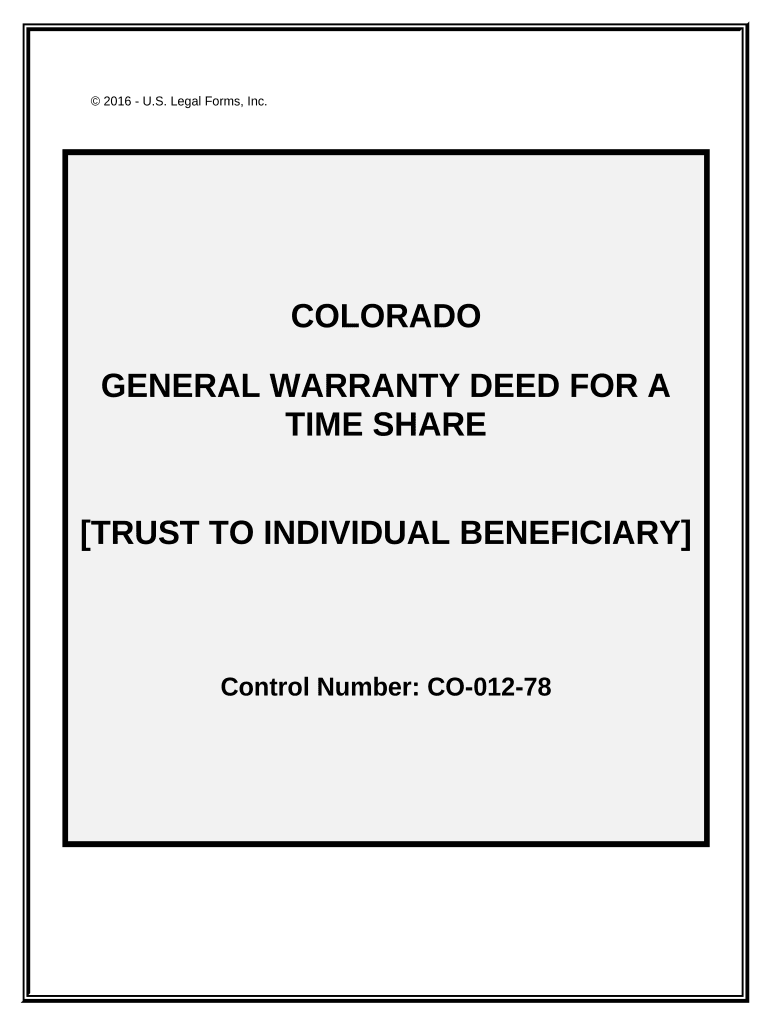
How to use or fill out General Warranty Deed for a Time Share from a Trust to an Individual Beneficiary - Colorado
Ease of Setup
DocHub User Ratings on G2
Ease of Use
DocHub User Ratings on G2
Click ‘Get Form’ to open it in the editor.
Begin by entering the date of the deed at the top of the form. This is crucial as it establishes when the transfer takes place.
Fill in the Grantor's information, including their legal address and details about their role as Trustee under the trust agreement.
Next, provide the Grantee's name and legal address. Ensure accuracy here, as this identifies who will receive the time share.
In the property description section, specify the Time Share Unit and its registration details. This includes referencing any relevant declarations or instruments that pertain to the time share.
Complete any additional information regarding limitations or encumbrances on the property, if applicable.
Finally, have the Grantor sign and date the document in front of a Notary Public to ensure its validity.
Start using our platform today to easily complete your General Warranty Deed for free!
Fill out General Warranty Deed for a Time Share from a Trust to an Individual Beneficiary - Colorado online It's free
by ES Miller 2010 Cited by 1 to avoid foreclosure under a trust deed encumbering the LLCs property on the basis that the individual who executed the trust deed, Kwon, was not a memberRead more
Cookie consent notice
This site uses cookies to enhance site navigation and personalize your experience.
By using this site you agree to our use of cookies as described in our Privacy Notice.
You can modify your selections by visiting our Cookie and Advertising Notice.