






Definition and Meaning of Citizenship
Citizenship refers to the legal status of being a recognized member of a specific country, with associated rights, duties, and privileges. It signifies a bond between the individual and the state, granting the individual access to government services, the right to vote, and the opportunity to participate in the civic life of their community. In contexts like the Philippines, the concept of citizenship can be reflected in various forms, including naturalization, acquisition at birth, and retention, all catering to the specific legal frameworks of the country.
Understanding Citizenship in Different Contexts
-
Philippine Citizenship: In the Philippines, citizenship can be a complex issue due to historical policies and various legal provisions. For instance:
- A person born in the Philippines to Filipino parents is automatically a Filipino citizen.
- Naturalization allows foreigners who meet specific criteria to become citizens after residing in the Philippines for a required period.
- Retaining or reacquiring citizenship is often sought by citizens who have dual nationality or have moved abroad.
-
Citizenship Examples: A "citizenship example" can encompass a range of situations, such as:
- A child born to Filipino parents living overseas may qualify for citizenship under laws allowing citizenship by descent.
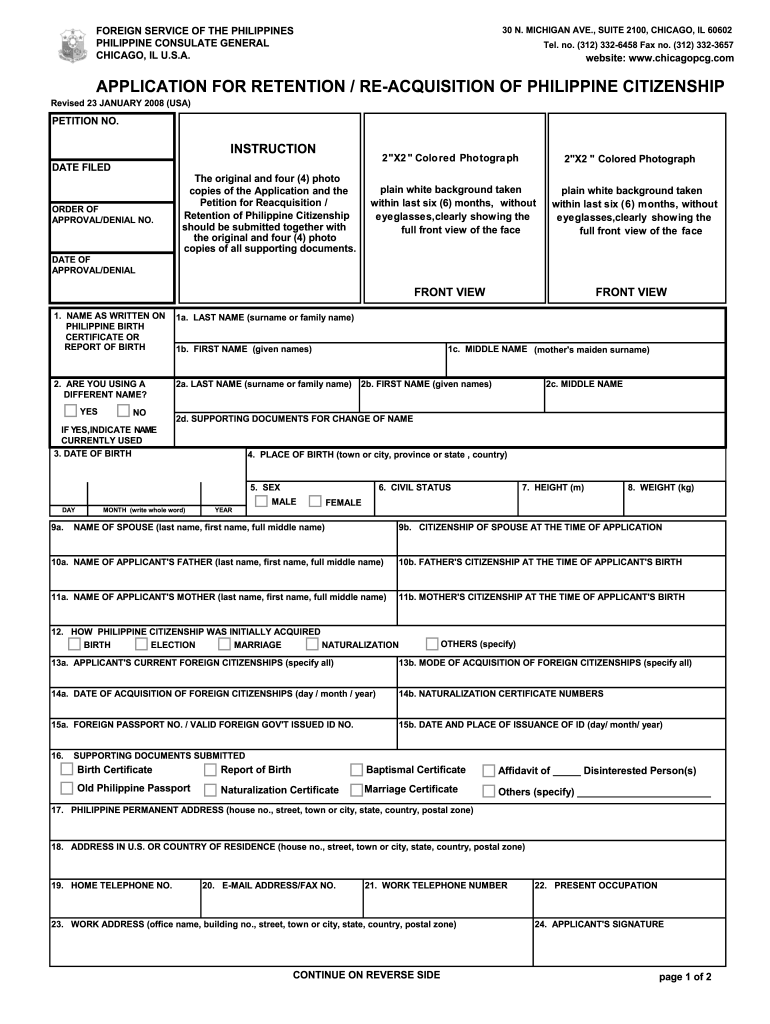
- A former Filipino citizen may fill out a specific application form, such as the one issued by the Philippine Consulate, to request retention or reacquisition of their citizenship.
How to Use the Citizenship Application Form
The application for citizenship retention or reacquisition, particularly in the Philippine context, often contains designated sections requiring personal details, supporting documents, and declarations. Accurate completion of this form is essential for the application process.
Essential Sections of the Citizenship Application Form
-
Personal Information: Applicants need to provide:
- Full name
- Birthplace and birthdate
- Current address and contact information
-
Supporting Documents: Required documents typically include:
- Birth certificate
- Proof of Filipino descent (e.g., parent’s birth certificate)
- Identification proofs, such as a passport
-
Certification and Declarations: There may be sections where applicants must certify that the information provided is truthful and complete. Most forms will include a statement affirming the accuracy of the details submitted.
Steps to Complete the Citizenship Form
The process of filling out the citizenship application form requires careful attention to detail to avoid common pitfalls. Here are the essential steps:
-
Gather Required Documents: Sample documents generally needed include the birth certificate, identification, and any correspondence from government officials.
-
Fill Out the Application: Complete sections honestly and clearly. Pay attention to required fields and avoid leaving any blanks unless instructed.
-
Review for Accuracy: Double-check all entries to ensure they match supporting documents precisely. A mistake can lead to delays.
-
Submit the Application: Determine the method of submission, whether by mail, in-person, or online depending on the consulate's procedures.
-
Follow Up: After submission, it is advisable to inquire about processing timelines and any additional steps required.
Legal Aspects of Citizenship Applications
The citizenship application process is governed by specific national laws and regulations. Understanding these legal frameworks helps applicants navigate their rights and obligations.
Key Legal Considerations
-
Eligibility Criteria: Different criteria apply based on whether the applicant is seeking naturalization, reacquisition, or retention of citizenship. This often includes age, residency, and moral character evaluations.
-
Process Review: Citizenship applications undergo a vetting process which may include interviews and background checks to ensure compliance with legal requirements.
-
Legal Rights: Once citizenship is granted, the individual enjoys protections under the law, including the right to petition for family members to immigrate and participate fully in civic duties.
Real-World Examples of Citizenship Applications
Real-life examples often clarify the requirements and processes involved in citizenship applications. These scenarios can aid prospective applicants in understanding the practical implications of their applications.
Examples Illustrating Citizenship Applications
-
Naturalization Case: A U.S. resident from the Philippines files an N-400 form for naturalization after three years of permanent residency. She successfully completes the process, showcasing her language skills and knowledge of U.S. government through an interview.
-
Reacquisition Scenario: A dual citizen returning to the Philippines wishes to reacquire citizenship. He completes the appropriate form, securing documents proving his Filipino descent and paying the related fees.
Supporting Documents Required
When applying for citizenship or citizenship-related services, specific documentation is mandatory to validate the application. The nature and extent of documents can vary widely between jurisdictions.
Common Supporting Documents
- Identity Proofs: Valid forms of ID, such as passports or government-issued identification.
- Citizenship Certificates: If applicable, evidence of previous citizenship status may be required.
- Residency Evidence: Applicants must show proof of residency if the application is for naturalization, encompassing utility bills or lease agreements.
Variability in Document Requirements
Different jurisdictions may require different documentation. It is crucial for applicants to verify the exact requirements with the appropriate governmental bodies prior to submission. Crafting an accurate and comprehensive citizenship application begins with thorough documentation that reflects one's unique circumstances.