




01. Edit your what is order of protection online
Type text, add images, blackout confidential details, add comments, highlights and more.

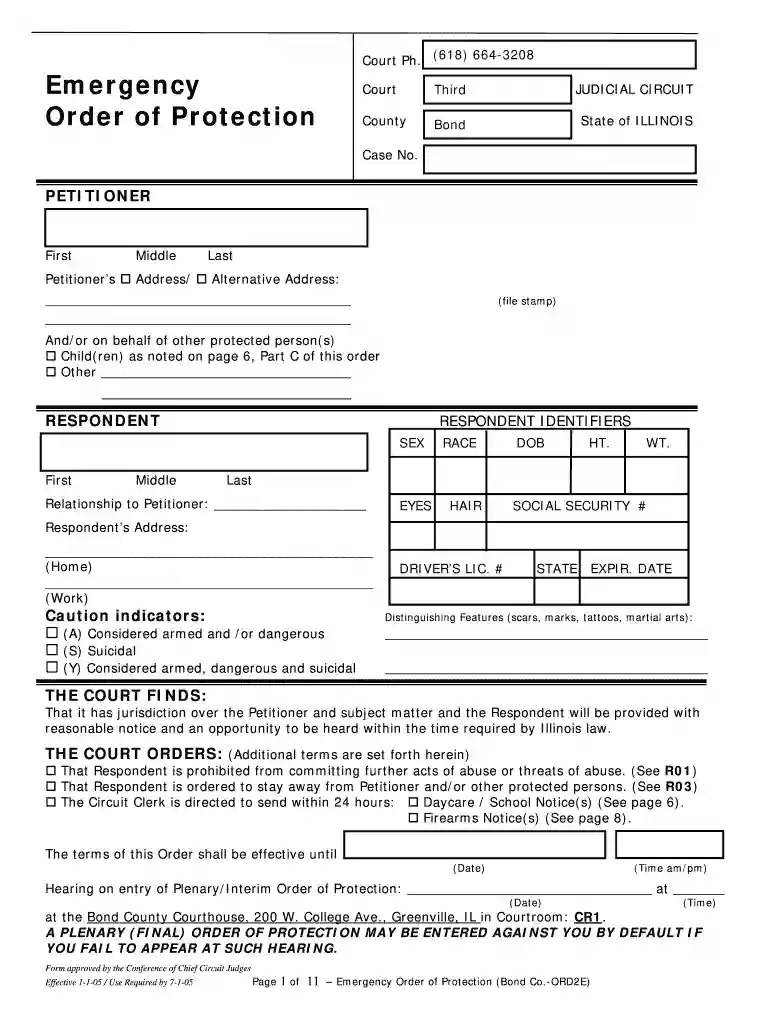
Type text, add images, blackout confidential details, add comments, highlights and more.

Draw your signature, type it, upload its image, or use your mobile device as a signature pad.

Send illinois order of protection form via email, link, or fax. You can also download it, export it or print it out.
An Illinois order of protection form is a legal document designed to provide protection to individuals facing domestic violence, harassment, or threats from another person. This form is used to request a court order aimed at preventing further acts of abuse, ensuring the safety of the petitioner and any protected individuals, including children.
The process typically begins with the petitioner filing the form at their local courthouse, where they can describe the incidents of abuse or threats encountered. The court will evaluate the evidence provided, which can include direct accounts from the petitioner and third-party witness statements. If granted, the order outlines specific restrictions on the respondent, such as prohibiting them from contacting or approaching the petitioner.
Filing for an Illinois order of protection involves several critical steps that ensure the legal process is properly followed.
Gather Information: Collect all relevant details regarding the incidents of abuse, including dates, locations, and any witnesses. This information is essential in justifying the need for protection.
Fill Out the Form: Obtain the Illinois order of protection form from the local courthouse or online resources. Complete all sections, ensuring clarity and accuracy in your descriptions.
File the Form: Submit the completed form to the court clerk at your local courthouse. Keep copies of everything submitted for your records.
Attend the Hearing: A court hearing will be scheduled where both the petitioner and respondent can present their cases. It’s important to prepare for this hearing, bringing all relevant documentation and possible witnesses.
Receive the Court Order: If the court finds sufficient evidence, it will issue the order of protection, specifying its terms and duration.
To apply for an Illinois order of protection, the petitioner must meet specific eligibility criteria. This usually includes:
Relationship to the Respondent: The law requires that the petitioner have a qualifying relationship with the respondent, such as being a spouse, former spouse, or someone with whom the petitioner shares a child.
Recent Incidents of Abuse: The petitioner must provide evidence of recent abusive behavior. This could be a one-time incident or a pattern of behavior demonstrating ongoing danger.
Current Threat: There must be a reasonable belief that the petitioner is at risk of imminent harm if the order is not issued.


The Illinois order of protection form is a legally binding document. Failure to comply with its provisions can have serious consequences for the respondent.
Criminal Charges: Violating an order of protection can lead to criminal charges, including arrests and potential jail time.
Impact on Custody Arrangements: Breaching the order can also negatively affect custody decisions in family court, further complicating the respondent's legal situation.
Civil Liabilities: The petitioner may pursue civil remedies against the respondent for any harm caused during the violation of the order, including claims for damages.
An effective Illinois order of protection serves not only as a shield against violence but also as a critical legal step in navigating the complexities of abusive relationships. It instills a sense of security for petitioners and emphasizes the legal system's commitment to protecting individuals in need.
While the Illinois order of protection form is essential for ensuring safety, petitioners may face several challenges during the process:
Proving Abuse: It is sometimes difficult to provide sufficient evidence of abuse, particularly if incidents have not been reported to law enforcement or documented by third parties.
Retaliation by the Respondent: Respondents may retaliate when they become aware of the petitioner's actions, which can deter individuals from seeking an order of protection.
Complex Court Procedures: Navigating the legal system can be overwhelming for individuals, especially without legal guidance. Understanding each step in detail is critical to successfully obtaining protection.
Documentation: Keeping detailed records of any abusive interactions can provide necessary evidence.
Support Networks: Engaging with support groups or local domestic violence organizations can offer both emotional support and practical assistance throughout the process.
Legal Representation: Seeking assistance from attorneys experienced in domestic violence cases can greatly enhance the likelihood of a successful outcome.
The Illinois order of protection form is a vital tool for individuals seeking safety from domestic violence and abuse. Understanding its structure, the process to obtain one, and its legal implications can empower petitioners to take the necessary steps to protect themselves and their loved ones. By addressing common challenges and utilizing available resources, individuals can navigate the complexities of obtaining an order of protection effectively.
We've got more versions of the what is order of protection form. Select the right what is order of protection version from the list and start editing it straight away!
At DocHub, your data security is our priority. We follow HIPAA, SOC2, GDPR, and other standards, so you can work on your documents with confidence.
Download and complete the Order of Protection forms from the Illinois Office of the Courts.
Use this court form to ask for an Order of Protection. Court forms are available in the Letters/Forms section. You are asked to write a description about pastRead more
Each paper form must be accompanied by a check or money order in the appropriate amount made payable to the Illinois State Police. Electronic requests can beRead more


