




01. Edit your what is proof of employment online
Type text, add images, blackout confidential details, add comments, highlights and more.

Type text, add images, blackout confidential details, add comments, highlights and more.

Draw your signature, type it, upload its image, or use your mobile device as a signature pad.

Send certification of employment via email, link, or fax. You can also download it, export it or print it out.
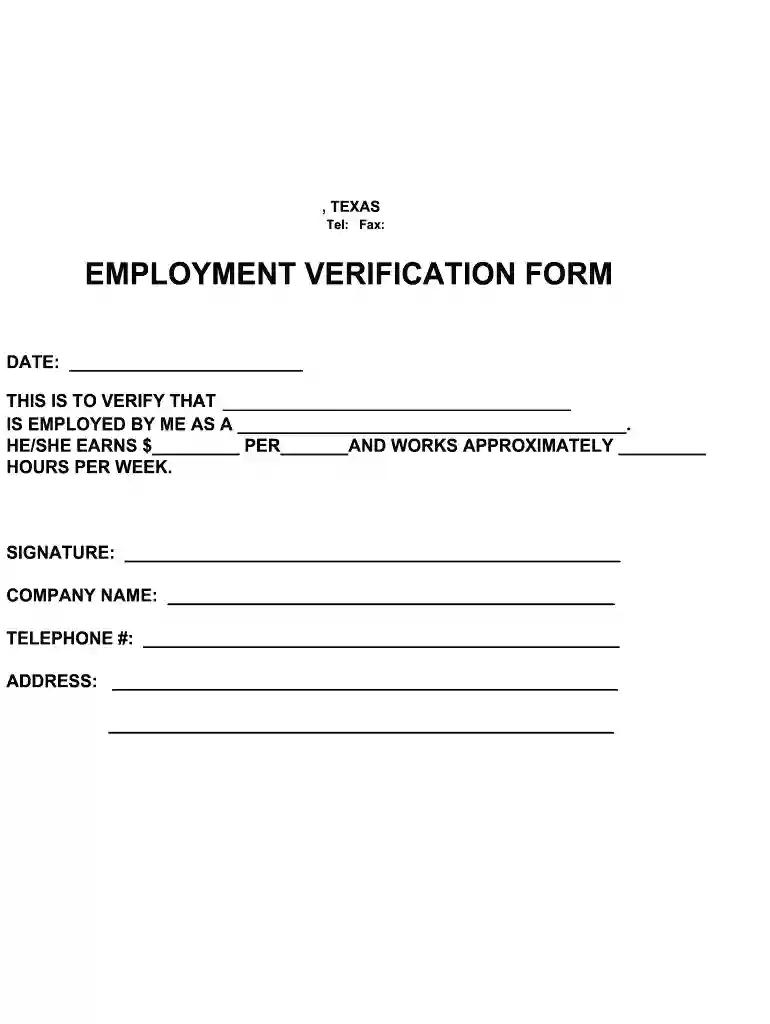
An employment verification form is a crucial document used to confirm an individual's employment status and essential work-related details. This form typically captures various pieces of information, including:
The purpose of this form is to provide proof of employment for various circumstances, such as securing loans, applying for housing, or verifying income for benefits programs. Depending on the context, the information gathered might also help employers manage employee records more effectively.
Obtaining an employment verification form can vary depending on the institution or organization providing it. Below are some common methods to acquire this form:
Employer's HR Department: The most straightforward way is to request the form directly from your employer’s human resources department. They typically have standardized forms ready for use.
Digital Downloads: Many organizations offer the employment verification form in PDF format for free download online. Websites focused on employment resources or templates can be good sources.
Official Government Websites: For jobs that require specific certifications or documentation, official government or state agency websites can provide access to standardized forms.
Template Providers: Online platforms offer template forms that can be customized according to specific requirements. Ensure the template adheres to the local laws.
Filling out the employment verification form accurately is essential, ensuring that all required information is provided. The steps generally include:
Gather Necessary Information: Collect all relevant data such as the employee's full name, position, employment dates, and salary details.
Enter Employee Details: Fill in the employee’s full name, job title, and employment start and end dates (if applicable).
State Earnings: Clearly indicate the employee’s current salary, including any bonuses or additional compensation.
Specify Work Schedule: Mention the average number of hours worked weekly to provide insight into the employee's working hours.
Provide Employer Information: Enter the employer's name, company address, and contact information for verification purposes.
Review for Accuracy: Double-check all entries for correctness before submitting the form.
Submit the Form: Follow the specific submission procedures outlined, whether online, by mail, or in person.
Several essential components are typically found on an employment verification form. Understanding these elements is vital for both employers and employees:
Identification Section: This includes basic personal information about the employee, ensuring proper identification.
Employment Status: This section confirms whether the employee is currently active, on leave, or separated from the company.
Financial Information: Details about salary, bonuses, and other compensations are included to affirm the financial aspect of employment.
Contact Information: This is crucial for third parties needing to verify the information provided; it connects to the employer who issues verification.
Signature and Date: The form often requires the signature of an authorized representative confirming the authenticity of the information.
The employment verification form serves vital legal functions, particularly in contexts involving:
Loan Applications: Financial institutions commonly require proof of employment to assess creditworthiness.
Rental Agreements: Landlords may ask for employment verification to confirm the applicant's ability to make monthly rent payments.
Government Benefits: Various programs, including unemployment or social services, often necessitate verification of employment for eligibility assessment.
Background Checks: Employers may use the form to conduct background checks during the hiring process, ensuring the accuracy of an applicant's work history.
In conclusion, ensuring compliance with legal standards during the use of the employment verification form safeguards both employers and employees from potential liabilities associated with false or misleading information.
At DocHub, your data security is our priority. We follow HIPAA, SOC2, GDPR, and other standards, so you can work on your documents with confidence.




Apr 2, 2025 Use Form I-9, Employment Eligibility Verification, to verify the identity and employment authorization of individuals hired for employment in the United States.Read more
You must prove that you are eligible to work. Employers are required to complete a Form I-9, Employment Eligibility Verification, to record verification thatRead more
Instructions. Updated: 7/2022. Purpose. To provide: An employer-completed verification of employment, wages, mandatory withholdings and deductions.Read more


