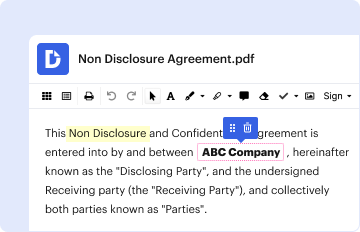
Type text, add images, blackout confidential details, add comments, highlights and more.
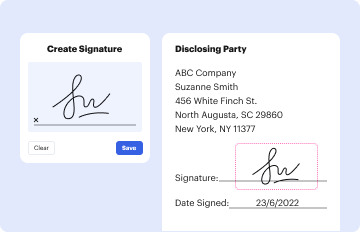
02. Sign it in a few clicks
Draw your signature, type it, upload its image, or use your mobile device as a signature pad.
03. Share your form with others
Send it via email, link, or fax. You can also download it, export it or print it out.
How to Use or Fill Out Theft with Our Platform
Ease of Setup
DocHub User Ratings on G2
Ease of Use
DocHub User Ratings on G2
Click ‘Get Form’ to open the theft document in the editor.
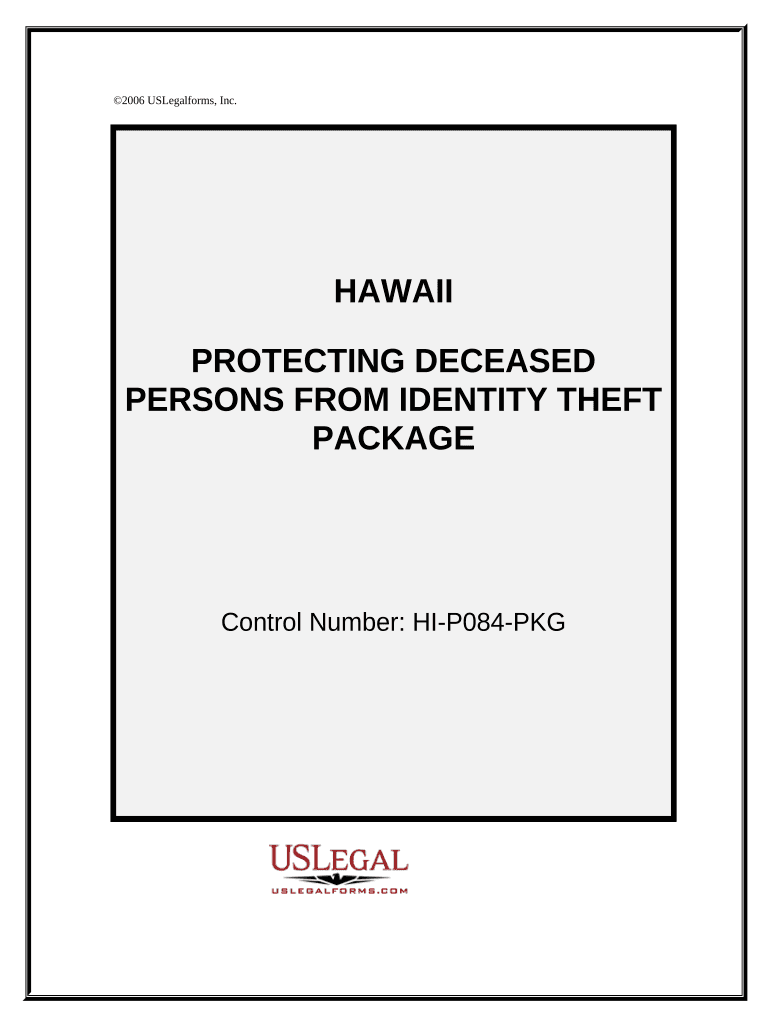
Begin by reviewing the 'Guide for Protecting Deceased Persons from Identity Theft.' This section provides essential information on safeguarding a deceased individual's identity.
Next, fill out the 'Checklist for Remedying Identity Theft of Deceased Persons.' This checklist will help you document necessary steps and communications with various entities.
Proceed to complete the 'Identity Theft Contact Table' to keep track of all relevant contacts, including creditors and law enforcement agencies.
Utilize the provided letters to notify different organizations about the deceased's passing. Customize each letter as needed, ensuring all pertinent details are included.
Finally, review your entries for accuracy before saving or printing your completed forms. Ensure that all fields are filled correctly to facilitate smooth communication with involved parties.
Start using our platform today to efficiently manage and protect against identity theft!
What is the difference between theft and stealing?
(1)A person is guilty of theft if he dishonestly appropriates property belonging to another with the intention of permanently depriving the other of it; and thief and steal shall be construed ingly. Cross Heading: Definition of theft - Theft Act 1968 legislation.gov.uk ukpga definition-of-th legislation.gov.uk ukpga definition-of-th
What is the difference between theft and robbery?
What is the difference between stealing and theft? Stealing is a general term for taking someone elses property without permission, while theft is a legal term that specifically refers to the unlawful and intentional taking of someone elses property with the intent to permanently deprive them of it.
What is the lowest form of theft?
The minimum type of theft charge is called, Petty Larceny, which means stealing something up to the value of $1,000.
What is a theft legal definition?
California Penal Code [CPC] 484(a)[1] describes theft as stealing the personal property of another or fraudulently appropriating property. The definition includes defrauding another or causing others to falsely report wealth in order to obtain credit, money, property, labor, or the service of another person.
What is the full meaning of theft?
Theft is the act of stealing. An instance of stealing can also be called a theft. A person who commits theft is called a thief. The word especially refers to a person who steals in secret and without using force or violence. In general, intentionally taking something that doesnt belong to you is theft.
Related Searches
Theft vs robberyTheft definitionTheft punishmentTheft examplesWhat is theft crimeTheft orcTheft personTheft pronunciation
Security and compliance
At DocHub, your data security is our priority. We follow HIPAA, SOC2, GDPR, and other standards, so you can work on your documents with confidence.
theft | Wex | US Law | LII / Legal Information Institute
Theft is the taking of another persons personal property with the intent of depriving that person of the use of their property. Also referred to as larceny.
Cookie consent notice
This site uses cookies to enhance site navigation and personalize your experience.
By using this site you agree to our use of cookies as described in our Privacy Notice.
You can modify your selections by visiting our Cookie and Advertising Notice.