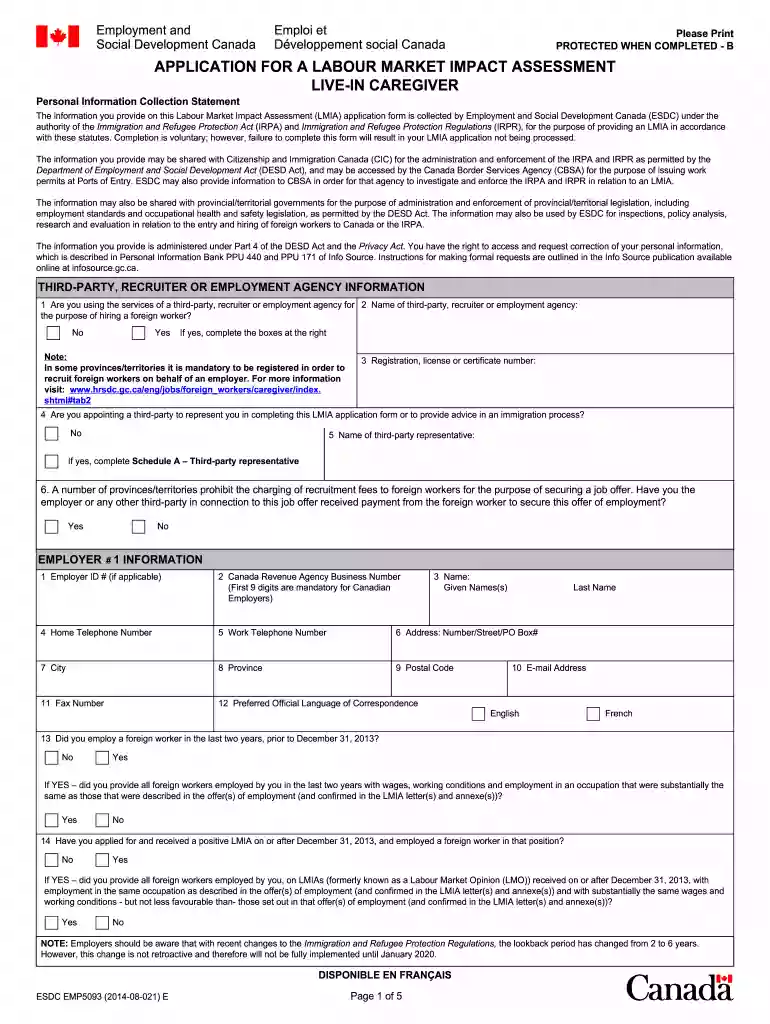
Definition & Meaning
The Labour Market Impact Assessment (LMIA) is a crucial document required by employers in Canada who wish to hire foreign workers. It is a process used to ensure that there is a genuine need for hiring foreign labour and that no qualified Canadians or permanent residents are available to fill the position. The LMIA serves as a proof for employers, confirming that hiring an international worker will not negatively impact the Canadian job market.
Key Components of LMIA
- Application Purpose: The LMIA assesses the impact of hiring a foreign worker on local employment and wages. Employers must demonstrate that they have made sufficient efforts to recruit Canadian citizens or permanent residents prior to seeking foreign labour.
- Government Role: The Employment and Social Development Canada (ESDC) is the body that evaluates LMIA applications, ensuring compliance with labour market regulations.
- Types of LMIA: Employers can apply for different types of LMIA, such as high-wage, low-wage, or LMIA for specific programs like the Temporary Foreign Worker Program (TFWP).
Application Process & Approval Time
Understanding the LMIA application process is vital for employers seeking to hire foreign workers.
- Preparation of Documents: Employers need to gather required documents, including business details, job descriptions, and evidence of recruitment efforts.
- Filing the Application: Applications can be submitted online or via mail, depending on the specific program. Each submitted application must be accompanied by a completed LMIA form and any supplementary documents.
- ESDC Review: Once submitted, the ESDC reviews the application. The standard processing time for LMIA applications can range from two weeks to several months, depending on the type of LMIA and the completeness of the application.
- Receiving the Decision: Applicants will receive a decision from the ESDC. If approved, employers will be issued an LMIA letter, which they can present to the prospective foreign worker to apply for a work permit.
Required Documents for LMIA Application
Gathering the correct documentation is essential for a successful LMIA application. Employers must provide various forms of proof and information, including:
- Business Information: Legal name, business number, and financial statements that depict the business’s stability and capacity.
- Job Description: Detailed job descriptions that outline the responsibilities, qualifications, and wages associated with the position.
- Recruitment Evidence: Documentation showcasing recruitment efforts, including job ads, lists of applicants, and reasons for hiring a foreign worker.
- Wages Offered: Information regarding wages, including comparison with average wage rates in the province for similar roles.
Key Elements of LMIA Approval Criteria
The decision to grant an LMIA relies on several key factors that assess the employer's intent and the potential impact on the job market:
- Labour Market Needs: The ESDC will analyze whether there is a legitimate need for a foreign worker in the specified position.
- Impact Assessment: A thorough assessment of how hiring a foreign worker will affect local job opportunities, wages, and working conditions is conducted.
- Compliance with Conditions: Employers must also assure that they will follow all conditions attached to the LMIA, including providing suitable working conditions, salaries, and addressing any complaints from workers.
Important Terms Related to LMIA
Familiarity with key terminology helps employers navigate the LMIA process effectively.
- TFWP: Temporary Foreign Worker Program, which allows employers to hire foreign nationals for temporary positions.
- Labour Market Opinion (LMO): A previous term used before LMIAs were established, still commonly recognized in informal contexts.
- Sponsorship: Employers may need to sponsor workers for their immigration process, ensuring compliance with immigration laws.
- Job Bank: A resource for employers to post job advertisements and search for candidates, which can be referenced in LMIA applications to demonstrate recruitment efforts.
Examples of Using the LMIA for Hiring
Employers can benefit from LMIA in various scenarios where domestic workforce availability is insufficient. Common instances include:
- Seasonal Jobs: Employers in agriculture or tourism sectors may need to hire foreign workers when local individuals are unavailable for seasonal work.
- Skilled Positions: Companies in specialized industries may require specific expertise that cannot be filled by the domestic labour pool.
- Labor Shortages: Economic situations that lead to shortages in particular sectors can necessitate the hiring of foreign workers, supported by an approved LMIA.
Conclusion
The LMIA process plays a critical role in managing the employment landscape in Canada, ensuring that foreign worker employment does not displace local job opportunities. Understanding the definition, eligibility criteria, application process, required documents, and key terms is fundamental for employers seeking to navigate this complex but necessary procedure effectively.