






Understanding the CIS Statement Template in Excel
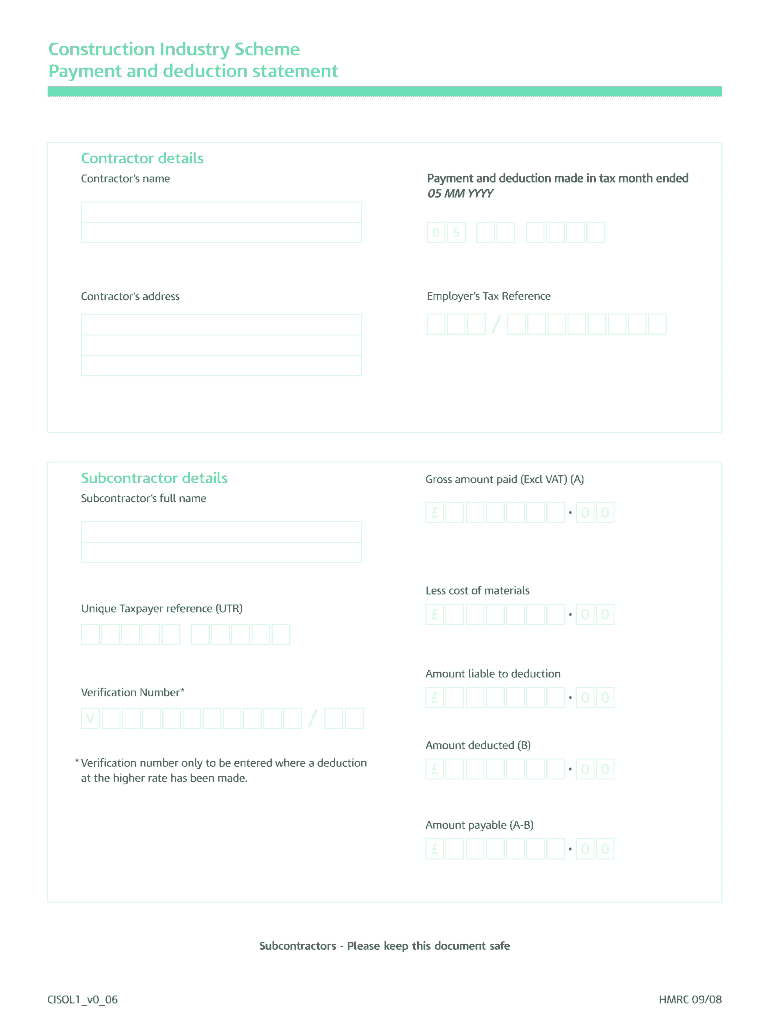
The CIS statement template in Excel serves as a crucial document designed to help contractors and subcontractors effectively communicate payment details, deductions, and overall financial transactions within the UK's Construction Industry Scheme (CIS). This template not only standardizes the information presented but also aids in ensuring compliance with tax regulations, making it essential for those operating within the construction sector.
Key Components of the CIS Statement
A well-structured CIS statement template includes several essential elements to ensure clarity and completeness. These components typically comprise:
- Contractor Details: Information about the contractor or principal, including their name, address, and unique tax reference number.
- Subcontractor Details: Including the subcontractor's name and their relevant tax reference.
- Payment Information: Total payment amount, detailing gross payment versus any deductions made.
- Deductions Applied: A transparent display of tax deductions applicable under CIS regulations, indicating the withholding amounts for tax purposes.
- Final Amount Payable: The resultant figure after deductions are made, reflecting what the subcontractor will receive.
How to Create a CIS Statement in Excel
Creating a CIS statement template in Excel can streamline the process of preparing payment and deduction statements. Follow these steps:
- Open Excel: Launch the Excel application and select a blank workbook.
- Set Up the Header: Create a header row for your template. Include columns for contractor details, subcontractor information, payment amounts, and deductions.
- Input Data Types: For better user experience, format cells to match expected data types (e.g., currency for payment amounts, text for names).
- Formatting for Clarity: Utilize bold lettering for headings, and consider alternating row colors for easier reading.
- Formulas for Calculation: Implement basic formulas to automatically calculate totals, deductions, and the final amount payable. For example, you could use
=SUM(B2:B10)to sum a range of values. - Save the Template: Once completed, save your spreadsheet as a template for future use.
Benefits of Using an Excel Template
Deploying a CIS statement template in Excel offers numerous advantages, such as:
- Efficiency: Quickly generate repeated documents by utilizing the template, ensuring that any future statements maintain consistency in format and information.
- Accuracy: Using built-in formulas helps reduce the risk of human error in calculations, promoting more reliable financial reporting.
- Customizability: Tailor the template to meet specific operational needs, allowing for the incorporation of custom fields as required.
Compliance and Legal Considerations
Understanding the legal facets of CIS statements is vital. The document must adhere to HM Revenue and Customs (HMRC) guidelines, ensuring that all deductions are justifiable and correctly calculated. Non-compliance may lead to penalties for both contractors and subcontractors, emphasizing the importance of accuracy in reporting.
Potential Challenges and Solutions
While using a CIS statement template in Excel can enhance workflow, challenges may arise, such as:
- Data Management: Maintaining accurate and up-to-date subcontractor information can be daunting. Regular audits of the data can mitigate this risk.
- Variability in Contracts: Different subcontractors might have unique agreements, necessitating flexibility in the template. Custom fields can be added for specific contract terms or notes.
Use Cases for the CIS Statement Template
Several scenarios illustrate the value of using an Excel CIS statement template:
- Monthly Payroll Processing: Contractors can issue CIS statements monthly to ensure subcontractors are aware of their earnings and deductions, contributing to financial clarity.
- Tax Filing Preparation: During the tax season, having well-organized payment and deduction records simplifies the reconciliation process with HMRC.
- Auditing: In case of an audit, having standardized CIS statements readily available can streamline the review process and validate compliance.
Conclusion
The CIS statement template in Excel is an indispensable tool for contractors and subcontractors within the construction industry. By understanding its components, benefits, and application methods, users can ensure efficient document handling that promotes compliance and transparency in financial reporting.