
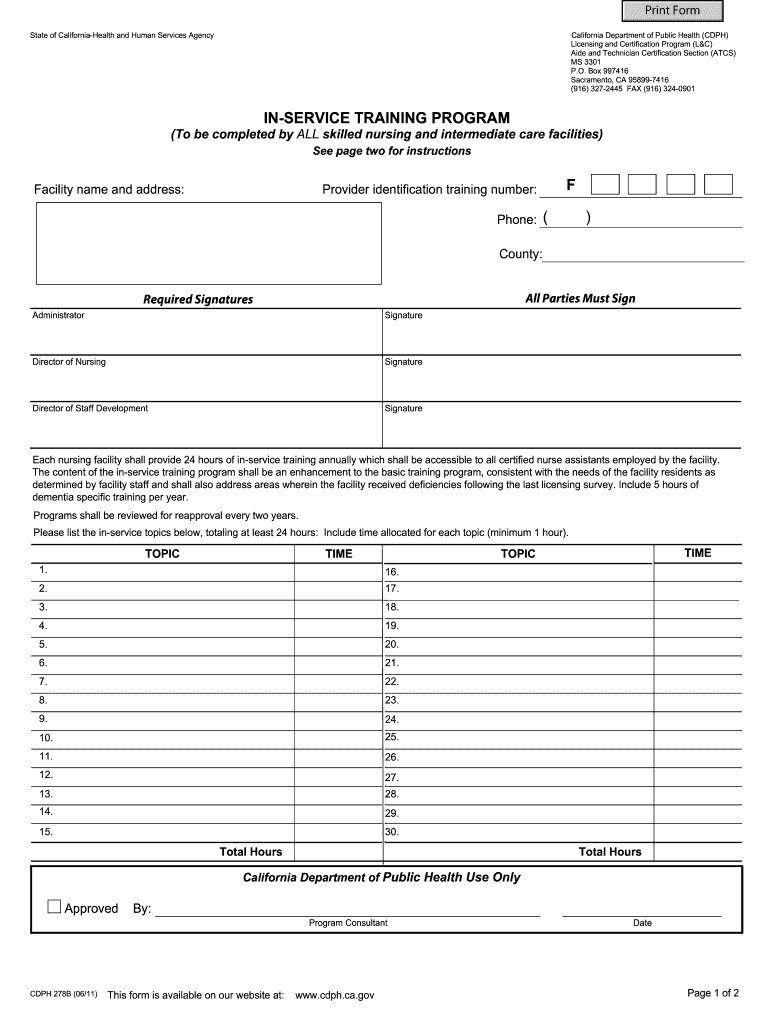







Definition and Purpose of CDPH In-Service Training
The CDPH in-service training, particularly for certified nurse assistants (CNAs) in California, is a mandated program designed to enhance the skills and knowledge of healthcare workers in skilled nursing and intermediate care facilities. The California Department of Public Health (CDPH) specifies that CNAs must complete twenty-four hours of annual training, which includes a minimum of five hours focused specifically on dementia care. This training ensures that CNAs remain compliant with state regulations while effectively contributing to the quality of care provided to residents.
Importance of In-Service Training
In-service training is crucial for:
- Maintaining Compliance: Staying current with state-mandated training requirements helps facilities avoid penalties and ensures that CNAs meet the necessary educational standards.
- Enhancing Skills: The training provides valuable updates on best practices in patient care, including recent developments in medical procedures, safety protocols, and caregiving techniques.
- Addressing Critical Issues: Specific areas such as dementia care are emphasized to equip CNAs with the skills needed to assist residents with cognitive impairments effectively.
Requirements for Training Documentation
Compliance with CDPH regulations necessitates accurate record-keeping of in-service training sessions. Facilities must prepare lesson plans that align with training goals and maintain a three-month training schedule to ensure employees can attend their sessions conveniently.
Key Documentation Components
Facilities should ensure:
- Lesson Plans: Detailed outlines of training topics that cover all required subjects.
- Training Schedule: A clear plan outlining session dates and times to accommodate various employee shifts.
- Attendance Records: Documentation of attendance to verify completion of required training hours.
Key Forms Related to CDPH In-Service Training
Several forms play an essential role in the documentation and compliance process for CDPH in-service training. Key among these are the CDPH 280A and CDPH 283A forms, which facilitate verification and reporting of training completion.
Overview of Relevant Forms
- CDPH 280A: This form is critical for reporting the in-service training completed by CNAs. It captures necessary details, including the topics covered and hours spent in training.
- CDPH 283A: This form is used to apply for approval of training programs. Facilities must submit this form along with their training proposals to receive official certification.
- CDPH 278 Form Series: Variants such as CDPH 278A, 278B, and 278C serve various purposes from verification of CNA training to documenting training results and outcomes.
Best Practices for In-Service Training Implementation
Implementing effective in-service training for CNAs involves several best practices to ensure compliance and enhance the overall quality of care.
Strategies for Successful Training Programs
- Develop Comprehensive Lesson Plans: These should cover all required topics, including specific content on dementia care. Engaging materials and interactive elements can enhance learning.
- Flexible Scheduling: Training should be offered at various times to accommodate different shifts, ensuring all staff members can participate.
- Regular Assessment and Feedback: Following training sessions, feedback mechanisms should be in place to assess the effectiveness of the training and identify areas for improvement.
Compliance with Legal and Regulatory Standards
Ensuring that the training meets legal requirements is vital for the ongoing legitimacy of a facility's operations. This involves strict adherence to the guidelines set forth by the CDPH.
Legal Framework Surrounding In-Service Training
- Adherence to the ESIGN Act: Electronic documentation of training sessions must comply with the ESIGN Act to ensure they are legally binding.
- Retention of Records: Facilities must maintain training records for a specified duration, as required by state regulations, to facilitate inspections and audits.
The Role of CDPH in Training Oversight
The CDPH plays an integral role in overseeing CNA training programs, ensuring that all training adheres to state standards.
CDPH Oversight Mechanisms
- Approval of Training Programs: The CDPH reviews training programs to ensure they meet educational standards and regulatory requirements.
- Site Visits and Inspections: Regular site evaluations are conducted to verify compliance with training mandates and assess the quality of care being provided.
Challenges and Considerations in Training Implementation
While implementing CDPH in-service training, facilities may face various challenges that require careful consideration and proactive strategies.
Common Challenges
- Resource Limitations: Limited financial resources may impact the availability and quality of training programs.
- Staffing Issues: High turnover rates among CNAs can complicate training efforts, making it difficult to ensure all staff members remain compliant with training requirements.
Conclusion on CDPH In-Service Effectiveness
Overall, the effectiveness of CDPH in-service training is directly linked to careful planning, execution, and adherence to regulatory standards. By prioritizing comprehensive training programs, organizations can enhance care quality while ensuring compliance with state regulations.




