Waiver release liability form 2026

Get Form
waiver release liability form Preview on Page 1

Here's how it works

01. Edit your form online
Type text, add images, blackout confidential details, add comments, highlights and more.
02. Sign it in a few clicks
Draw your signature, type it, upload its image, or use your mobile device as a signature pad.
03. Share your form with others
Send it via email, link, or fax. You can also download it, export it or print it out.

How to use or fill out waiver release liability form with our platform

Form edit decoration
9.5
Ease of Setup
DocHub User Ratings on G2
9.0
Ease of Use
DocHub User Ratings on G2
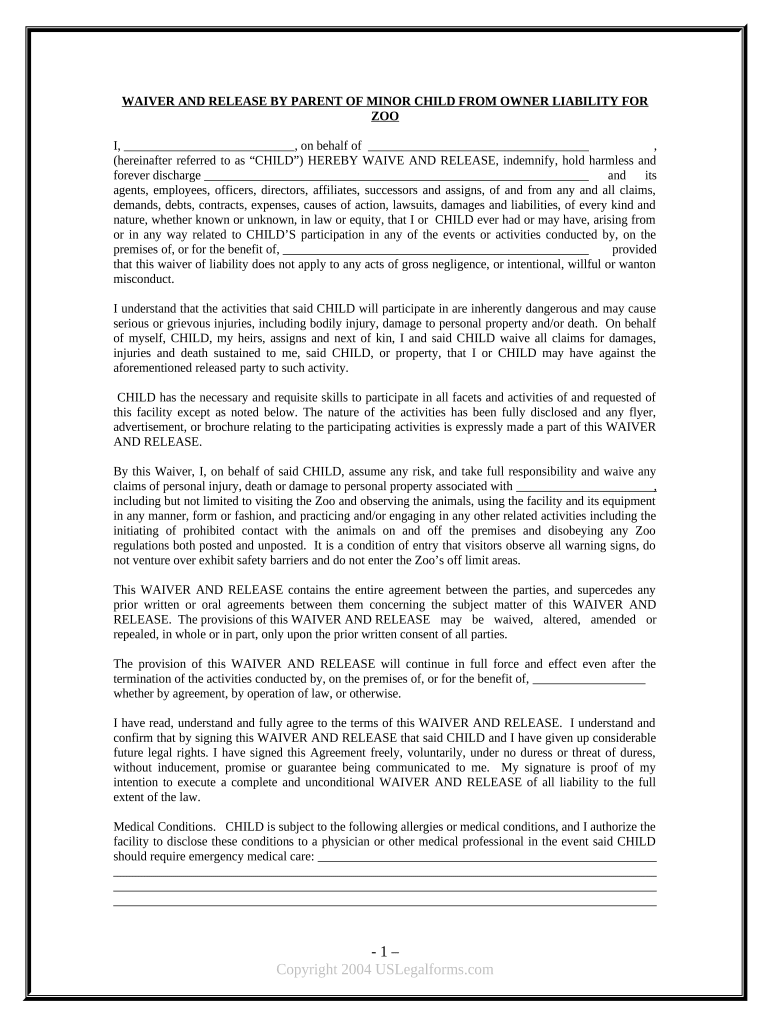
  1. Click ‘Get Form’ to open the waiver release liability form in the editor.
  2. Begin by entering your name and the name of the child in the designated fields. This identifies who is waiving liability on behalf of the minor.
  3. Review the section detailing the inherent risks associated with activities at the facility. Acknowledge your understanding by checking any required boxes if applicable.
  4. In the 'Medical Conditions' section, list any allergies or medical conditions that may affect your child's participation. This ensures safety during activities.
  5. Specify any prohibited activities based on medical conditions in the provided space to inform staff of necessary precautions.
  6. Finally, sign and date the form as a parent or guardian, confirming that you understand and agree to all terms outlined in the waiver.

Start using our platform today for free to complete your waiver release liability form effortlessly!

be ready to get more

Complete this form in 5 minutes or less

Get form

Got questions?

We have answers to the most popular questions from our customers. If you can't find an answer to your question, please contact us.
Contact us
Allowing employees to intimidate or coerce participants or customers into signing your liability waivers. A mistake that many businesses make is pressuring employees to get liability waivers signed.
Liability waiver validity Hold harmless agreements are not always valid, so it is important to work with an attorney or liability waiver template when creating yours. Situations where such documents may not be valid include: If your state prohibits them, whether completely or in some situations.
The waiver should: List the names and addresses of the parties. Give the date of the agreement and how long it is in effect for. List the location of the event or activity. Describe the activity or event the customer is going to participate in. List the possible risks and injuries.
The process of creating a waiver should be taken seriously. Waivers are legal documents that list specific terms for your participants to agree to, so its crucial that they are complete and legally sound. Professional help from a lawyer is strongly recommended any time you are working with legal documents.
A release of liability, also known as a liability waiver or a hold harmless agreement, is a contract in which one party agrees not to hold another party liable for damages or injury.

Security and compliance

At DocHub, your data security is our priority. We follow HIPAA, SOC2, GDPR, and other standards, so you can work on your documents with confidence.

Learn more
ccpa2
pci-dss
gdpr-compliance
hipaa
soc-compliance

People also ask

The release of liability form or waiver should provide a detailed description of the risks surrounding the particular activity or service provided. This ensures participants are informed of the risks they are assuming before the activity takes place.
How to Write a Release of Liability Form Fill in the information of both parties, including each persons name and address. Include the details of the event. Add if there is a payment required by the releasee. Write a section for signatures, which will contain the names and dates of both parties.

Related links