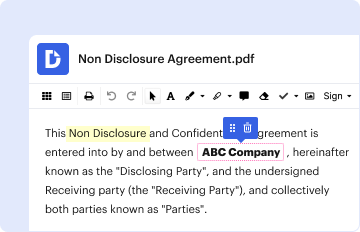
Type text, add images, blackout confidential details, add comments, highlights and more.
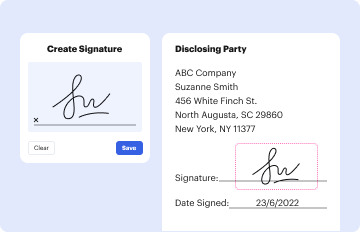
02. Sign it in a few clicks
Draw your signature, type it, upload its image, or use your mobile device as a signature pad.
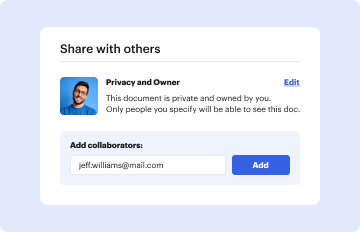
03. Share your form with others
Send it via email, link, or fax. You can also download it, export it or print it out.
How to use or fill out Mutual Wills containing Last Will and Testaments for Unmarried Persons with No Children - California
Ease of Setup
DocHub User Ratings on G2
Ease of Use
DocHub User Ratings on G2
Click ‘Get Form’ to open it in the editor.
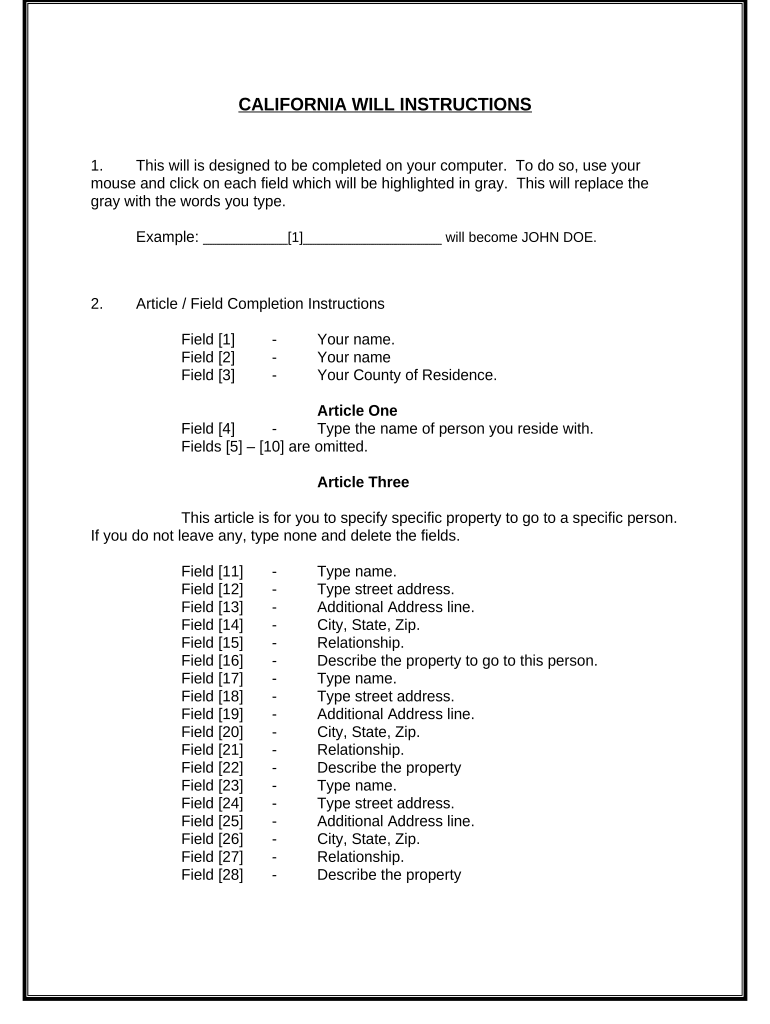
Begin by entering your name in Field [1] and your county of residence in Field [3]. This personal information is essential for identifying the testator.
In Article One, specify the name of the person you reside with in Field [4]. This establishes your living situation.
For Article Three, list specific bequests. Fill out Fields [11] to [28] with names, addresses, relationships, and descriptions of property you wish to bequeath.
In Article Four, designate who will receive your homestead by filling out Field [29]. If applicable, check the box for heirs.
Complete Article Five by naming a person to receive all remaining property in Field [31], ensuring clarity on your estate's distribution.
Designate a Personal Representative in Article Six by filling out Fields [34] and [35]. This individual will manage your estate after your passing.
Review all entries carefully before printing. Ensure that you sign the document in front of two witnesses as required for legal validity.
Start using our platform today to effortlessly complete your Mutual Wills online for free!
Fill out Mutual Wills containing Last Will and Testaments for Unmarried Persons with No Children - California online It's free
Will for single person no dependentsBest mutual wills containing last will and testaments for unmarried persons with no children californiaDo I need a will if I only have one adult childEstate planning for unmarried couplesMaking a last will and testamentWhere to get a last will and TestamentFree will for single parent with minor childWills and Testaments
Security and compliance
At DocHub, your data security is our priority. We follow HIPAA, SOC2, GDPR, and other standards, so you can work on your documents with confidence.
The Human Right to Higher Education in Principle and Practice
This thesis explores the notion of a human right to higher education (HRHE) as it is articulated under public international law, and examines progressRead more
LAWYERS, ESTATES, and TRUSTS - Lewis Clark Law School
Seeks to treat both living and afterborn children equally. If the will includes NO provision for living children afterborn child takes nothing (AssumeRead more
Cookie consent notice
This site uses cookies to enhance site navigation and personalize your experience.
By using this site you agree to our use of cookies as described in our Privacy Notice.
You can modify your selections by visiting our Cookie and Advertising Notice.