Type text, add images, blackout confidential details, add comments, highlights and more.
02. Sign it in a few clicks
Draw your signature, type it, upload its image, or use your mobile device as a signature pad.
03. Share your form with others
Send it via email, link, or fax. You can also download it, export it or print it out.
How to use or fill out educational trust with our platform
Ease of Setup
DocHub User Ratings on G2
Ease of Use
DocHub User Ratings on G2
Click ‘Get Form’ to open the educational trust document in the editor.
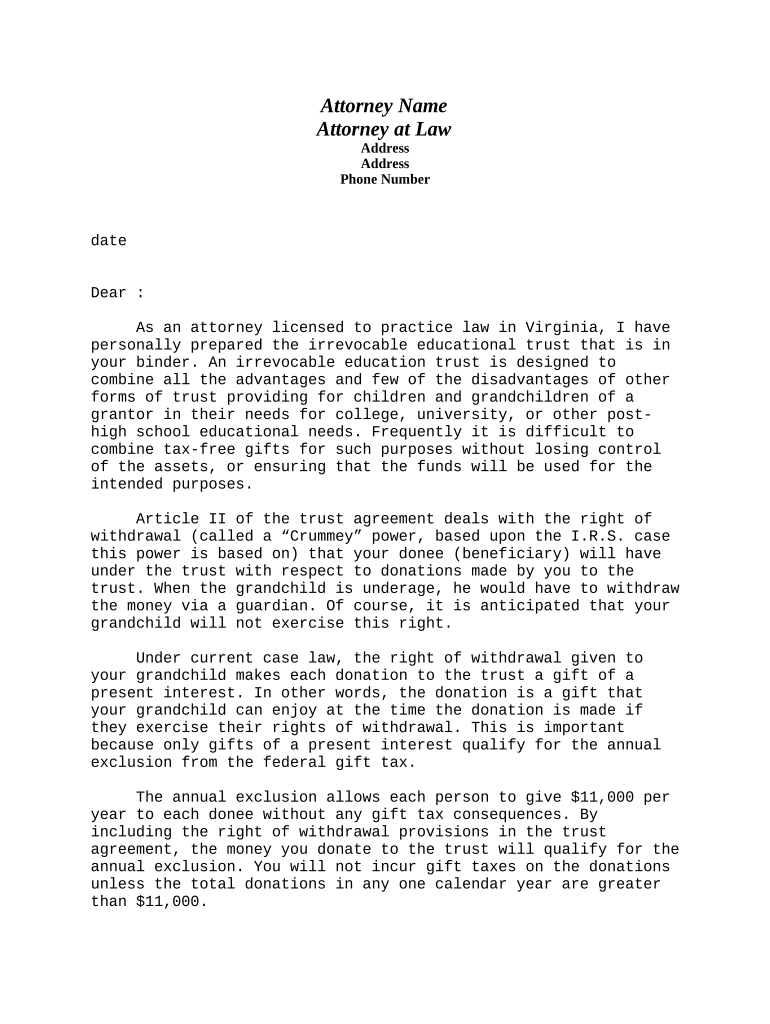
Begin by entering the attorney's name and contact information at the top of the form. This ensures that all parties are aware of who prepared the trust.
Fill in the date and address the letter appropriately, ensuring it is directed to the intended recipient.
In Article II, clearly outline the right of withdrawal for your grandchild. Specify how they can exercise this right through a guardian if they are underage.
Complete any necessary sections regarding annual gift exclusions, ensuring you understand how donations qualify for tax benefits.
Utilize our platform to draft and customize letters notifying both the Trustee and beneficiary about donations and their rights under the trust agreement.
Finally, ensure that all signatures are collected where indicated, and save copies of all documents for your records using our platform’s export feature.
Start filling out your educational trust today for free with our user-friendly editor!
Educational trust vs 529 planEducational trust vs education trustEducational trust fund for grandchildrenEducational trust californiaEducation trust for childEducational trust tax benefitsBenefits of educational trustEducational trust tax exemption
Security and compliance
At DocHub, your data security is our priority. We follow HIPAA, SOC2, GDPR, and other standards, so you can work on your documents with confidence.
The Trust funds are free money and considered the same as a scholarship or grant. If eligible for assistance, the Trust funds could reduce your loanRead more
Cookie consent notice
This site uses cookies to enhance site navigation and personalize your experience.
By using this site you agree to our use of cookies as described in our Privacy Notice.
You can modify your selections by visiting our Cookie and Advertising Notice.