






Understanding the Right of Way Agreement Sample
Definition and Purpose of a Right of Way Agreement
A right of way agreement is a legal document entered into by property owners, granting specific rights to another party to use a portion of their land for a designated purpose. This typically includes access for utilities, roadways, or other infrastructure projects. The agreement outlines the responsibilities, permissions, and compensatory aspects involved.
- Rights Granted: The agreement specifies the nature of the rights conveyed, such as the ability to construct and maintain infrastructure like pipelines or power lines.
- Consideration: Often includes provisions for financial compensation for any damages to property or crops.
- Duration: Specifies the length of time the agreement remains in effect, which may be indefinite or for a set period.
Essential Components of a Right of Way Agreement
A comprehensive right of way agreement sample should include the following key components:
-
Parties Involved:
- Identifies the granter (property owner) and grantee (individual or corporation receiving rights).
-
Property Description:
- Details the specific land area affected, often described using legal land descriptions.
-
Terms and Conditions:
- Outlines the exact rights granted to the grantee and any limitations on those rights.
-
Compensation Clauses:
- Secures the owner's right to payments or consideration for damages incurred due to the granted access.
-
Indemnification:
- Protects the granter against any liabilities arising from the use of the right of way by the grantee.
Steps to Creating a Right of Way Agreement Sample
Creating a right of way agreement involves a series of structured steps:
-
Consult Legal Expertise:
- Engaging with a real estate attorney ensures compliance with local laws and regulations.
-
Gather Information:
- Compile all property descriptions, maps, and proof of ownership documents.
-
Draft the Agreement:
- Include all essential components such as definitions, terms, and compensation.
-
Review with Stakeholders:
- Share the draft with involved parties to ensure mutual understanding and agreement before finalizing.
-
Sign and Notarize:
- Once agreed upon, the document should be signed and notarized to affirm its legal validity.
Common Use Cases for Right of Way Agreements
Right of way agreements are frequently utilized in various contexts:
-
Utility Construction:
- Allows companies to install and maintain utility lines, such as electric, telephone, or gas lines.
-
Road Development:
- Granting permission for public agencies to construct roads or highways that require property access.
-
Pipeline Installation:
- Used by energy companies to facilitate the laying down of pipelines across private property.
-
Access for Maintenance:
- Establishes ongoing access rights to maintain existing structures or services.
Legal Considerations Surrounding Right of Way Agreements
Understanding legal implications is crucial in real estate transactions involving right of way agreements:
-
State Laws:
- Each state may have specific requirements or interpretations affecting agreements, necessitating local legal support.
-
Easement Rights:
- Right of way agreements are often closely linked to easements, which detail the use of land without transferring ownership.
-
Dispute Resolution:
- Incorporating clauses for mediation or arbitration can help resolve conflicts amicably and avoid lengthy litigation.
Sample Right of Way Agreement Template
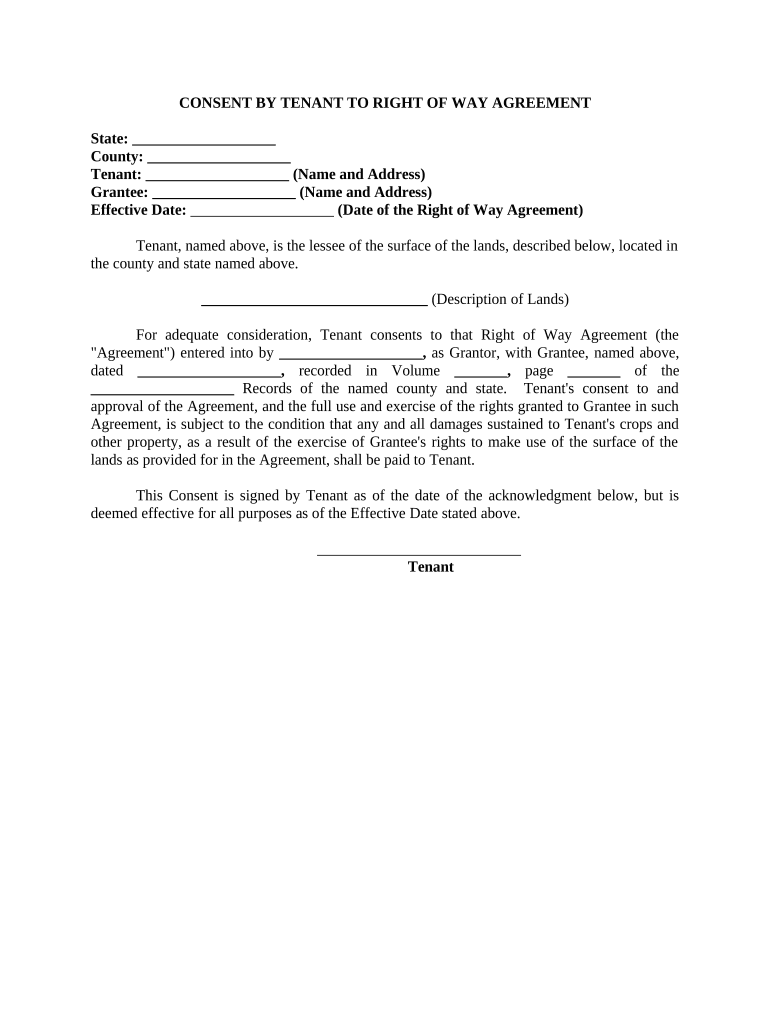
A template serves as a base for creating a right of way agreement. Important sections to include:
- Title of Agreement: Clearly state it's a Right of Way Agreement.
- Effective Date: Specify when the agreement becomes active.
- Description of Property: Include a legal description of the property affected.
- Scope of Rights: Define exactly what rights are being granted.
- Signatures: Space for both parties to sign and date the document.
Each section must be meticulously crafted to mirror the specific needs and legal standards pertinent to the parties involved in the agreement.
Variations of Right of Way Agreements
Different scenarios may necessitate unique adaptations of right of way agreements:
-
Temporary vs. Permanent Rights:
- Some agreements may be for temporary access during construction phases, while others grant permanent rights for ongoing use.
-
Specific Project Agreements:
- Tailored agreements for distinct projects, such as highways or utility trenches, may need specific terms reflecting project demands.
-
State-Specific Templates:
- Certain states may have official templates or specific legal language that must be adhered to for enforceability.
Each variation should maintain core elements while adapting to the specific requirements and legal environment, ensuring clarity and mutual benefit for all parties involved.