
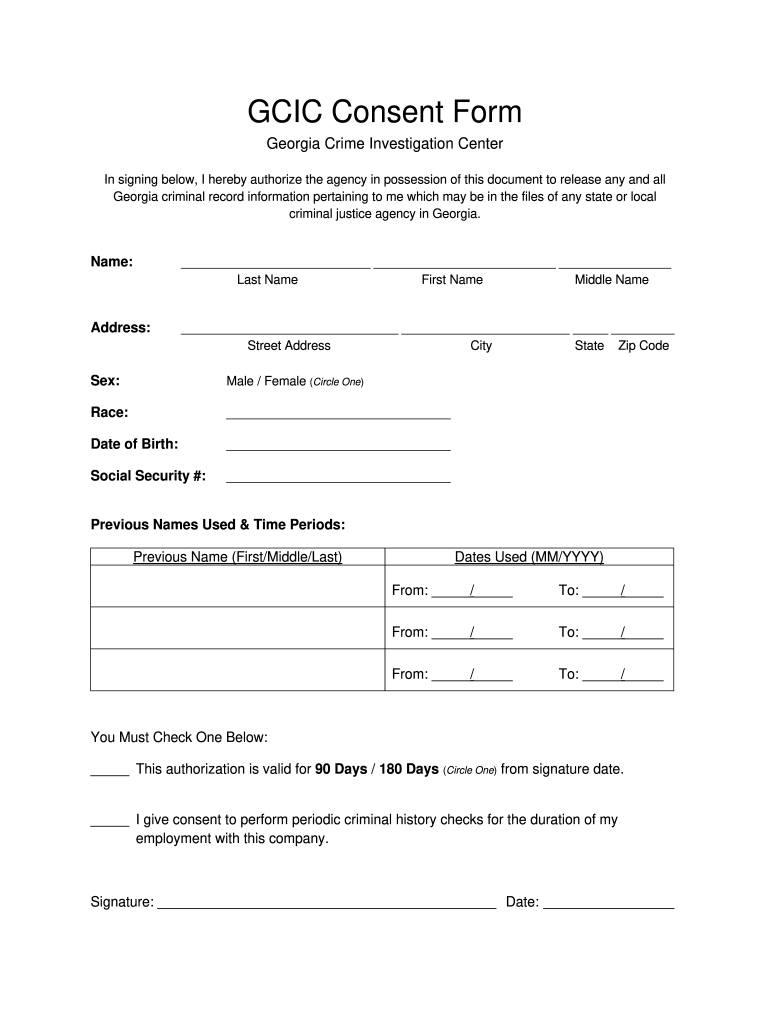







Definition and Purpose of the GCIC Consent Form
The GCIC consent form is a vital document used in Georgia that authorizes the release of an individual’s criminal history information from state or local criminal justice agencies. This form is commonly utilized in various contexts, such as employment, licensing, and volunteer activities where background checks are necessary. By completing the GCIC consent form, individuals provide permission to access their criminal record information, which can include arrests, convictions, and other pertinent details relevant to public safety and trustworthiness.
There are legal considerations that accompany the use of the GCIC consent form, particularly in relation to privacy. Individuals consent to the collection and sharing of their personal data, making it crucial to understand both the scope of the information being released and the purposes for which it will be used. The form itself is constructed to ensure that applicants make informed decisions regarding the release of their sensitive information.
How to Obtain the GCIC Consent Form
Obtaining the GCIC consent form is a straightforward process, aimed at ensuring individuals can quickly access the document for various needs.
- Online Access: The primary method to obtain the GCIC consent form is through the official Georgia CRIMES (GCIC) website. The form is typically available in PDF format for easy download and printing.
- Local Law Enforcement Agencies: Individuals may also request the GCIC consent form directly from local law enforcement agencies, who can provide physical copies and additional guidance on its completion and submission.
- Legal and HR Departments: Organizations that frequently conduct background checks may have the form readily available. This can streamline the process for applicants who need to provide consent for their criminal history checks as part of hiring or licensing procedures.
Familiarizing oneself with the GCIC consent form’s specifications and requirements is advisable to ensure accurate completion and timely processing.
Steps to Complete the GCIC Consent Form
Completing the GCIC consent form involves several critical steps to ensure accurate submission and compliance with state regulations.
- Personal Information: The form requires the individual’s name, address, sex, race, date of birth, and social security number. Accuracy in this section is vital to correctly identify the individual in the GCIC database.
- Previous Names: If applicable, the individual must list any previous names used. This detail helps in obtaining a comprehensive background history.
- Authorization Duration: The applicant must specify the duration for which the consent authorizes the release of information. Options typically include one-time checks or ongoing access for a defined period.
- Signature: Finally, the form must be signed and dated by the individual, affirming their consent for the release of their criminal history information.
After the form is completed, it can be submitted to the appropriate entity—such as an employer or agency—requesting the background check.
Key Elements of the GCIC Consent Form
The GCIC consent form contains several key elements that are essential for its validity and effectiveness. Among these are:
- Personal Identification Information: Including comprehensive personal details ensures that the correct individual’s record is accessed.
- Consent Statement: This clause outlines the individual’s explicit permission for their criminal background to be reviewed.
- Scope of Authorization: The form specifies whether the consent is for a single instance or for various potential checks within a designated timeframe.
- Signature Line: The applicant’s signature confirms their understanding and agreement to the terms outlined in the form.
- Date: The date of signing is crucial as it indicates the timeframe during which the consent applies.
Understanding these elements is essential, as any discrepancies or missing information may result in delays or the rejection of a background check request.
Legal Use of the GCIC Consent Form
The legal utilization of the GCIC consent form holds significant importance within the frameworks of Georgia law. Organizations and entities that conduct background checks must adhere strictly to both state and federal laws governing the use of such forms.
- Compliance with Fair Credit Reporting Act (FCRA): Employers and agencies must ensure their practices align with the FCRA, which mandates transparency and fairness in the use of background checks.
- Privacy Considerations: Individuals must be made aware of how their information will be used and stored. The GCIC consent form serves as a written acknowledgment of this.
- Record Keeping: Entities that obtain completed GCIC consent forms are typically required to maintain records for compliance purposes, safeguarding individual privacy while ensuring adherence to legal obligations.
Failure to follow these legal guidelines can lead to violations that may result in legal penalties or damages. Proper handling of the consent form remains essential for protecting both individuals and organizations.
Who Typically Uses the GCIC Consent Form?
Various stakeholders utilize the GCIC consent form across multiple sectors, reflecting its importance in ensuring safety and compliance.
- Employers: Companies often require this form to conduct background checks on potential hires, particularly in industries where trust and safety are paramount.
- Licensing Agencies: Professions that require state licensure—such as healthcare, education, and law enforcement—often necessitate the completion of the GCIC consent form.
- Volunteer Organizations: Nonprofits and community service groups may use the form to ensure the safety of their environments by conducting background checks on volunteers.
- Legal Professionals: Attorneys may request this form for clients who need their criminal history investigated for various legal matters.
Understanding the diverse applications of the GCIC consent form highlights its significance in promoting safety and responsibility within various contexts.






