Definition and Purpose of a Letter to Traffic Court
A letter to traffic court serves as a formal communication directed to a judge regarding a specific traffic violation. It may request a hearing, contest a ticket, seek leniency, or explain circumstances surrounding the incident. Understanding its definition is crucial for addressing the necessary requirements effectively.
Main Purposes of a Letter to Traffic Court
- Requesting a Hearing: Individuals may use the letter to formally request a court hearing to contest a traffic ticket.
- Explaining Circumstances: It provides a platform for individuals to explain why they deserve a reduced penalty or dismissal based on their situation, such as financial hardship or mitigating factors.
- Pleading Guilty: For those who choose to admit guilt but seek a lesser consequence, it serves as a formal notice to the court.
A well-structured letter can significantly influence the court's perception of the situation and lead to more favorable outcomes.
Steps to Complete a Letter to Traffic Court
Filing a letter to traffic court requires careful attention to detail and adherence to legal guidelines. The following steps outline the process for composing an effective letter.
Gather Relevant Information:
- Collect the ticket number, date of the violation, and any other pertinent details, such as the location of the incident.
Select the Appropriate Format:
- Address the court correctly, including the judge's title and the specific court name. Use a formal business letter format.
Draft the Letter Content:
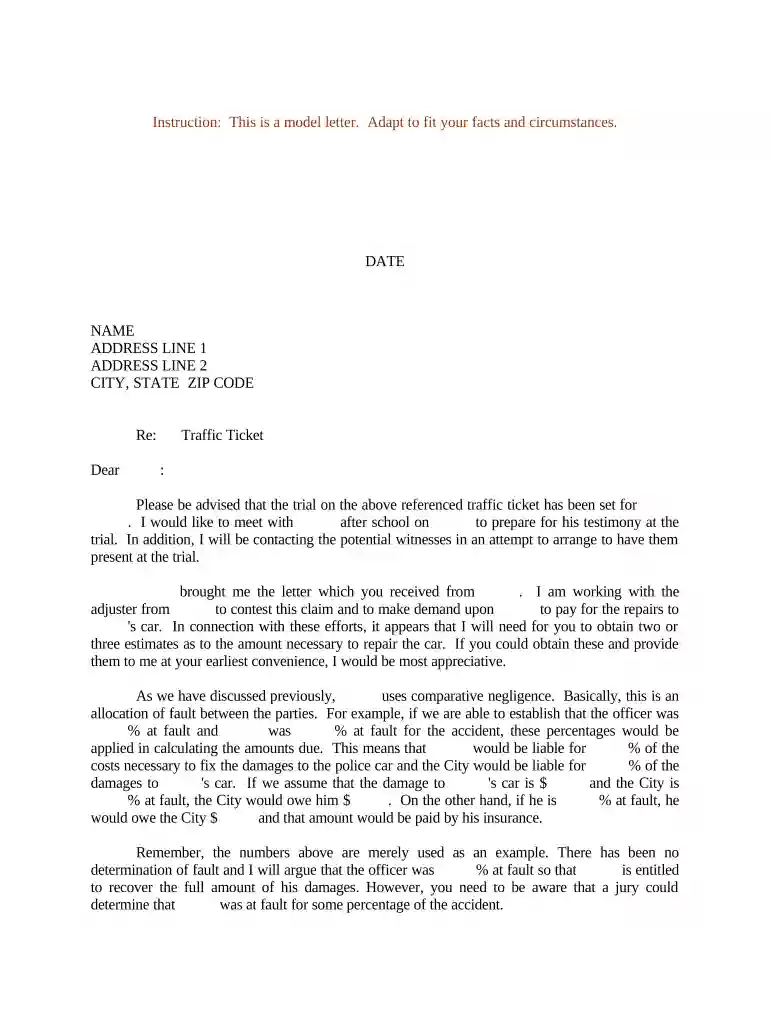
- Start with a clear subject line stating the purpose of the letter (e.g., "Request for Hearing Regarding Traffic Violation").
- Include an introduction that states who you are and the specific citation you are addressing.
- Use the body to outline your argument, including any evidence or mitigating factors supporting your case.
Review and Edit:
- Ensure that the content is free of grammatical errors and is formatted correctly. This enhances the professionalism of your letter.
Submit the Letter:
- Follow the specific submission guidelines provided by the court, whether that is online, by mail, or in person.
Tips for Effective Communication in the Letter
- Stay Respectful: Use a polite tone throughout your letter.
- Be Concise: Aim to present your case clearly without unnecessary details.
- Enclose Supporting Documents: If applicable, include copies of evidence relevant to your case, such as photographs or witness statements.
Key Elements to Include in Your Letter
When crafting a letter to traffic court, certain key elements must be present to ensure that it is effective and appropriately addresses the situation.
Essential Components
- Your Full Name and Contact Information: Clearly state your name, address, and phone number at the top of the letter.
- Court Information: Include the name and address of the traffic court where you are submitting the letter.
- Date: Add the date on which you are writing the letter.
- Salutation: Use a formal greeting, addressing the judge, such as "Dear Judge [Last Name]."
- Subject Line: A brief statement of intent, such as "Regarding Traffic Violation Notice Number [XXXXXX]."
Detailed Body Content
- Introduction: State your purpose for writing the letter, including specific details about the traffic ticket.
- Factual Background: Provide a brief description of the incident, emphasizing any extenuating circumstances.
- Legal Arguments or Justification: Present your arguments clearly, citing any relevant laws or regulations.
Closing Elements
- Request for Action: Specify what you are requesting, whether it is a reduction of fines, dismissal of the ticket, or permission for traffic school.
- Gratitude: Thank the judge for their time and consideration.
- Signature: End the letter with your signature and printed name.
Common Scenarios for Writing a Letter to Traffic Court
Understanding the diverse situations that might prompt someone to write a letter to traffic court can provide context for constructing the document. Here are common scenarios in which such letters are appropriate.
Situational Examples
- Disputing a Ticket: A driver believes they were wrongfully ticketed and wishes to contest the fine.
- Excessive Penalties: A motorist receives a particularly high fine and seeks a reduced penalty due to financial difficulties.
- Unforeseen Circumstances: An accident occurs due to factors such as sudden weather changes, prompting a driver to explain the circumstances surrounding their violation.
Preparing for Possible Outcomes
- Be ready for any response from the court, including a date for a hearing or a request for additional information.
- Anticipate the judge’s need for documentation or evidence supporting your case, especially in dispute scenarios.
Importance of an Accurate and Timely Submission
Ensuring that the letter to traffic court is both accurate and submitted on time is paramount. Failure to adhere to deadlines can hinder one's ability to contest a ticket or appeal a penalty.
Compliance with Deadlines
- Understand State Regulations: Different jurisdictions may have varied deadlines for filing a letter or responding to a summons. Familiarize yourself with these timelines to ensure compliance.
- Timely Updates: If circumstances change after submission, such as new evidence coming to light, communicate this to the court as soon as possible.
Consequences of Delinquency
- Missing deadlines can result in automatic penalties, including fines or loss of driving privileges.
By adhering to best practices for evaluation, drafting, and submission, individuals can navigate the complexities of traffic court more effectively.