
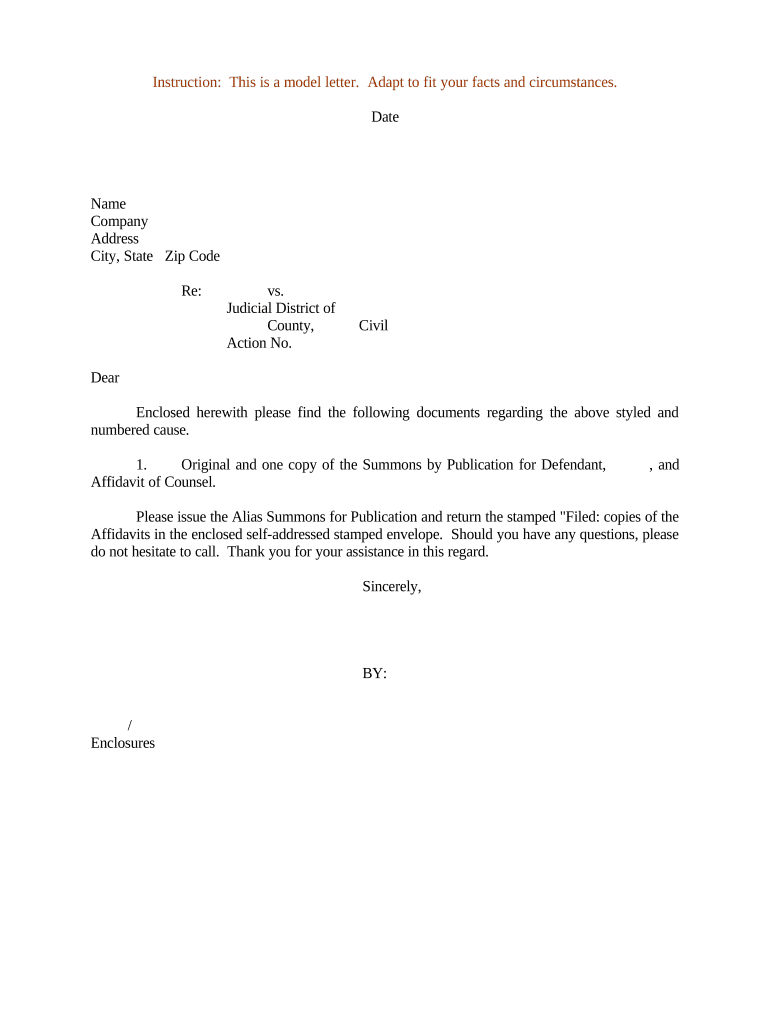







Definition and Meaning of Sample Letter Summons
A sample letter summons is a formal document used to notify an individual about a legal action being taken against them in court. It serves as a request for their presence in legal proceedings, usually requiring a response or action on their part. This letter can also outline relevant details regarding the case, such as the nature of the claims and the deadline for responding.
Several key elements typically comprise a sample letter summons:
- Court Details: Information regarding the court where the case is filed.
- Case Title: Name of the plaintiff and defendant.
- Nature of the Action: Description of what the legal action pertains to.
- Instructions: Directions on how the recipient should respond or appear.
Understanding the characteristics of a summons letter is crucial for ensuring that individuals comply with legal requirements and avoid potential penalties.
Steps to Complete the Sample Letter Summons
Completing a sample letter summons involves several steps to ensure it is legally sound and delivers the necessary information effectively. The process includes:
-
Determine the Relevant Information:
- Identify the parties involved (plaintiff and defendant).
- Outline the nature of the legal action.
-
Select a Template:
- Choose a professionally drafted summons letter template to start with, ensuring it meets legal standards.
-
Fill in Details:
- Include specific court information, case number, and contact details for both parties.
- Clearly state the defendant's obligations in relation to the case, such as court dates.
-
Review Legal Requirements:
- Ensure the summons complies with jurisdiction-specific legal requirements, including formatting and language.
-
Proofread and Edit:
- Check for any errors or omissions to maintain professionalism and clarity.
-
Sign and Date:
- Include the signature of the issuing authority to validate the document.
-
Disseminate the Document:
- Send the completed summons via the appropriate delivery method, either personally or through certified mail.
Following each of these steps is essential for the summons to be effective and legally enforceable.
Important Terms Related to Sample Letter Summons
Understanding key terminology associated with a sample letter summons is vital for clarity in legal contexts. Some common terms include:
- Plaintiff: The individual or entity initiating the lawsuit.
- Defendant: The individual or entity being accused or summoned.
- Jurisdiction: The legal authority under which a court operates.
- Service of Process: The delivery of the summons to the defendant, notifying them of the action being taken against them.
- Default Judgment: A ruling in favor of the plaintiff when the defendant fails to respond to the summons or appear in court.
Familiarity with these terms helps those involved in legal processes to navigate the system more effectively.
Legal Use of the Sample Letter Summons
The legal use of a sample letter summons is crucial in civil cases, ensuring that individuals are properly informed of legal actions against them. This document fulfills several important functions, such as:
- Notification: It formally notifies the defendant that a lawsuit is pending.
- Documentation: The summons serves as a record of legal proceedings, essential for court processes.
- Compliance: It outlines the actions required of the defendant and establishes deadlines for responses, ensuring compliance with court rules.
Proper usage of a sample letter summons is critical to uphold the integrity of legal procedures and protect the rights of all parties involved.
Who Typically Uses the Sample Letter Summons
Various parties may use a sample letter summons, including:
- Individuals: Litigants conducting personal legal matters, such as divorce or landlord-tenant disputes.
- Businesses: Companies involved in commercial litigation seeking to resolve disputes with other entities.
- Legal Professionals: Attorneys preparing documentation for their clients in the context of civil or criminal cases.
Recognizing the diverse users of a summons letter illustrates its broad applicability in the legal landscape.


State-Specific Rules for the Sample Letter Summons
Legal protocols vary by state, impacting how sample letter summonses are structured and utilized. Key considerations include:
- Format: Each state may have specific requirements for the formatting of summons documents.
- Filing Procedures: Different states dictate unique filing processes and associated fees for submitting a summons.
- Delivery Methods: States may require specific methods for delivering the summons, such as personal service or certified mail.
Understanding these state-specific rules is essential for ensuring compliance and legitimacy in the issuance of a summons. Parties should consult local laws or legal experts to ensure adherence to the proper guidelines.
Examples of Using the Sample Letter Summons
Real-world examples of a sample letter summons can help convey its application:
- Civil Lawsuits: A homeowner files a summons against a contractor for breach of contract, detailing required appearances in court.
- Family Law Cases: A spouse serves a summons related to divorce proceedings, outlining custody discussions and property division.
- Commercial Disputes: A business initiates a summons against another company for breach of trade agreements, demanding reparation through legal channels.
These examples highlight the practical use of summons letters in various legal situations, illustrating their importance in facilitating legal processes.
Filing Deadlines and Important Dates
Filing deadlines associated with a sample letter summons are critical to ensure parties respond in a timely manner. Common deadlines may include:
- Response Deadlines: Typically, defendants have a set period (often 20 to 30 days) to respond to the summons after receipt.
- Court Dates: Specific dates are established for hearings, mediations, or trials.
- Extension Requests: Defendants may need to apply for extensions in cases of necessity, subject to court approval.
Failure to meet these deadlines can result in negative consequences, including default judgments, underscoring the importance of adherence to all specified timelines.




