
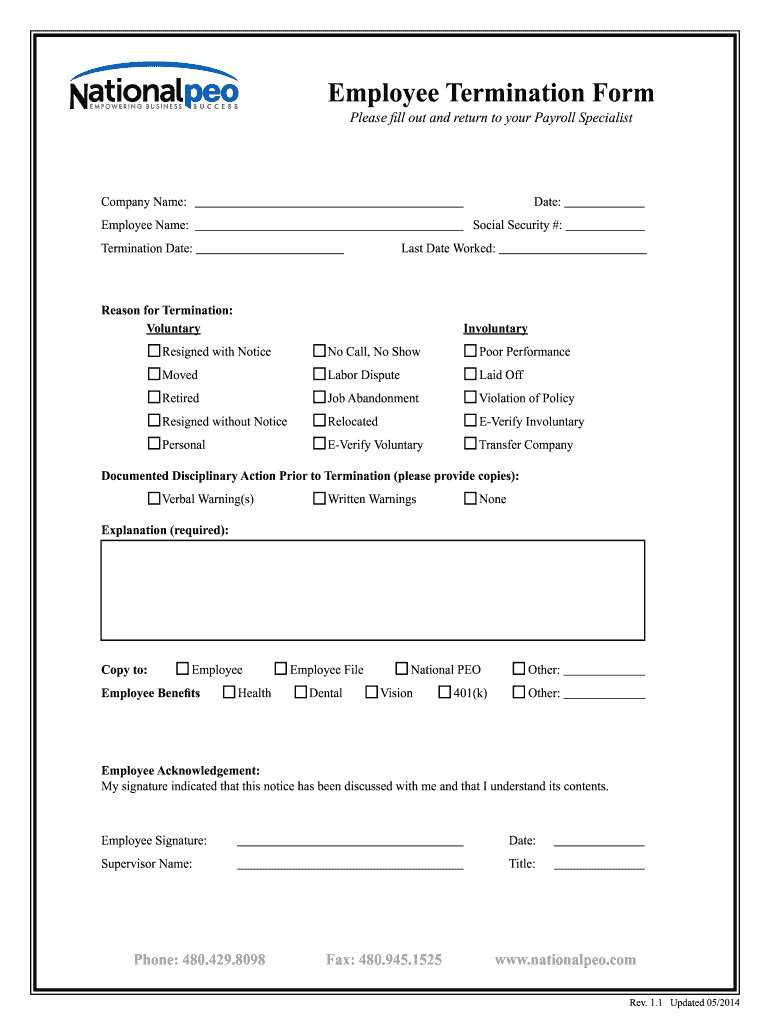







Definition and Meaning of the National Termination Form
The national termination form is a crucial document utilized primarily in employment and administrative contexts to formally record the end of an employee’s tenure with an organization. It serves as an official record of the termination process, encapsulating essential details needed for compliance with federal and state regulations. This form is pivotal for both the employer and the employee as it clarifies the reasons behind the termination, whether voluntary or involuntary.
Key Features of the National Termination Form
- Employee Information: The form typically requires the employee’s name, position, department, and employee identification number to ensure accurate identification.
- Termination Details: It should specify the last working day, the type of termination, and the reasons for the employee's departure, be it resignation, layoffs, or termination for cause.
- Documentation of Disciplinary Actions: Employers are often required to note any relevant disciplinary actions that led to the termination, providing a context for the decision.
- Acknowledgment by Employee: The employee is usually required to sign the form to acknowledge receipt and understanding of the termination, ensuring clarity and reducing potential disputes.
This form not only acts as a procedural necessity but also helps maintain proper records for human resources and payroll departments.
How to Use the National Termination Form
The process of using the national termination form involves several clear steps that ensure both compliance and proper documentation at the time of an employee's exit.
Step-by-Step Usage
- Filling Out the Form: Start by gathering all relevant information such as employee details, termination date, and reasons. Be thorough and accurate.
- Reviewing Company Policies: Ensure that all company policies regarding terminations are followed, including compliance with labor laws and any applicable union agreements.
- Obtaining Required Approvals: After completing the form, it should be reviewed and signed by relevant parties, such as the HR manager and the direct supervisor of the employee.
- Providing Copies to Employee: Provide a copy of the completed form to the departing employee, ensuring they understand the contents and implications.
- Retaining Documentation: Keep a copy of the completed national termination form in the employee's personnel file for future reference and audit purposes.
These steps ensure that the process is transparent and that both parties are clear on the terms of termination.
Important Terms Related to the National Termination Form
Understanding the terminology related to the national termination form can help clarify its usage and significance.
Common Terms Defined
- Termination Types: Includes voluntary (resignation) and involuntary terminations (firing due to performance issues).
- Disciplinary Action Documentation: Records of previous warnings or issues that may have led to the termination.
- Severance: Payments made to the employee upon termination, often documented in the termination form.
- Exit Interview: A meeting conducted to gather feedback from the departing employee and provide closure.
Recognizing these terms is essential for accurate and effective completion of the national termination form, particularly in ensuring that all necessary information is captured.
Legal Use of the National Termination Form
The national termination form serves not only as an internal document but also as a legally binding agreement that outlines the conditions of an employee's departure.
Compliance and Legal Considerations
- Adherence to Employment Laws: The form must comply with the Fair Labor Standards Act (FLSA) and other workplace regulations to ensure that neither party faces legal repercussions related to wrongful termination claims.
- Documentation as Evidence: In case of disputes, the national termination form may serve as a piece of evidence in employment-related litigation, validating the reasons and process of termination.
- State-Specific Law Considerations: Employers must be aware of laws in their specific state that may impact termination processes, including any required disclosures or notices.
Legal use ensures that the employer is protected and that the termination process is handled with integrity and transparency.
Examples of Using the National Termination Form
Real-world scenarios can illustrate the practical application of the national termination form and its importance in various workplace contexts.
Case Scenarios
- Voluntary Resignation: An employee decides to resign due to personal reasons. The national termination form is filled out to document their last day of work and notes any severance package offered.
- Involuntary Termination: An employee is let go due to poor performance. The completed national termination form includes previous disciplinary actions taken and is stored for HR purposes.
- Layoffs: In the case of a company restructuring, affected employees receive the national termination form as part of their exit process, ensuring they understand their rights and any severance.
These examples highlight how the national termination form can serve different purposes, from documenting voluntary exits to laying the groundwork for involuntary separations.
Required Documents for Completing the National Termination Form
Certain documents are essential to ensuring that the national termination form is completed accurately and comprehensively.
Necessary Documentation
- Employee Personnel File: Information regarding prior performance evaluations and any disciplinary actions must be reviewed and included.
- Company Policy Guidelines: These documents should be referenced to ensure compliance with company standards and labor laws during the termination process.
- Severance Agreements: If applicable, any severance agreements must be drafted and included alongside the termination form.
Having these documents readily available streamlines the process of completing the national termination form and helps eliminate any ambiguity regarding the termination decision.




