






Definition and Meaning of Confidential Informant List
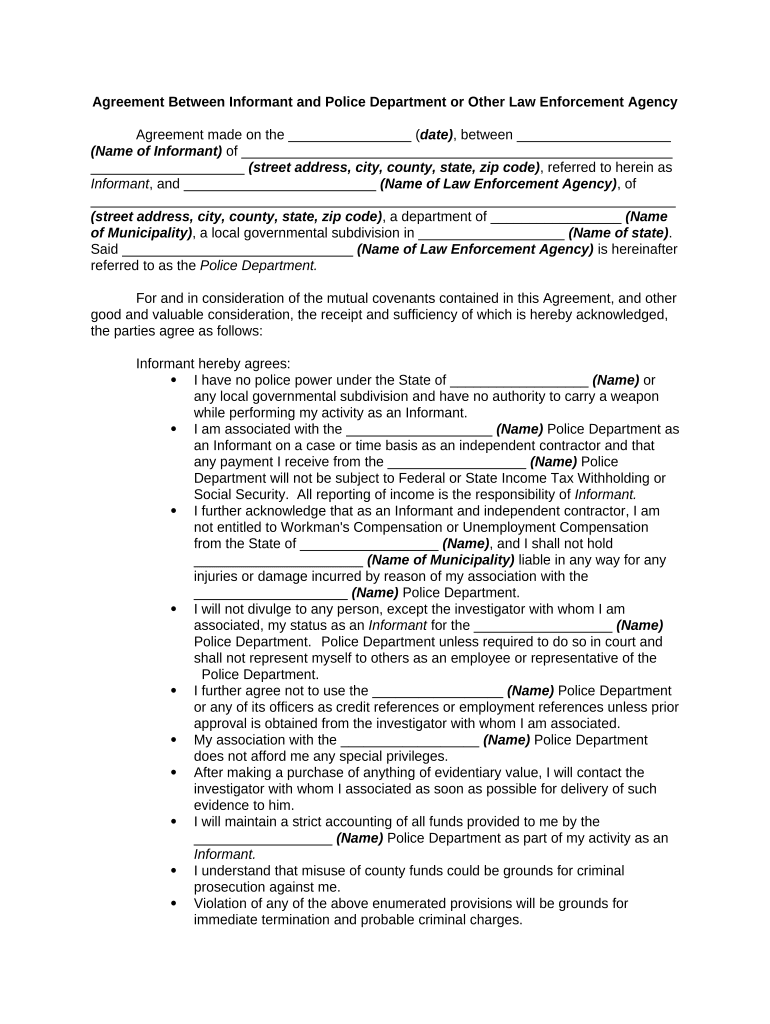
A confidential informant list is a documented compilation that contains the identities and details of informants who provide information to law enforcement agencies. These informants may assist in investigations by offering crucial information about criminal activities without revealing their identities. The document typically outlines the nature of the relationship between the informants and law enforcement, emphasizing that informants have no legal authority and do not represent law enforcement agencies. Instead, they are often independent contractors and accountable for their own legal liabilities.
Understanding the implications of being listed as a confidential informant is vital for both the informant and the agency. This classification allows law enforcement to track and manage information sources effectively. Such lists may vary significantly based on jurisdiction, the types of crimes being investigated, and agency guidelines regarding confidentiality and informant management.
How to Obtain the Confidential Informant List
Obtaining a confidential informant list is not straightforward due to the sensitive nature of the information involved. Generally, individuals cannot access these lists freely due to confidentiality rules designed to protect informants from potential harm or retaliation. However, legitimate parties, such as law enforcement officers and legal representatives, may access the information under strict guidelines.
Steps to Access the List
-
Identify the Relevant Law Enforcement Agency: Determine which local, state, or federal agency maintains the informant list relevant to your inquiry.
-
Request Access: Formal requests may need to be submitted, often requiring justification for accessing the information.
-
Follow Compliance Protocols: Ensure compliance with all legal requirements, including providing identification and explaining the relevance of the request.
-
Await Approval: Be prepared for potential delays. Law enforcement agencies may take time to review requests to safeguard sensitive information.
-
Review Agency Policies: Each agency may have differing policies regarding how informant information is handled, accessed, or disclosed.
Key Elements of the Confidential Informant List
Understanding the key elements that compose the confidential informant list is crucial. These elements provide context and functionality to how the list is operationalized within law enforcement frameworks.
-
Identity: The list will include pseudonyms or codes used to identify informants while protecting their anonymity.
-
Type of Information Provided: Details on the kind of information the informant is known to provide, whether it’s related to drugs, gang activities, or other criminal endeavors.
-
Activity Tracking: Notations on the activities that the informant has been involved in, including historical contributions to investigations.
-
Assessment of Reliability: Agencies may assess informants based on prior information's accuracy and usefulness, influencing their credibility.
-
Legal Considerations: Information about any legal agreements or confidentiality forms that informants were required to sign will also be present.
Legal Use of the Confidential Informant List
The legal use of confidential informant lists is carefully regulated. Law enforcement must ensure that the names and details included in such lists are protected from public access to uphold the integrity and safety of operations.
Regulations and Ethical Guidelines
-
Confidentiality: Maintaining the confidentiality of informants prevents exposure to risks from criminal enterprises linked to the information they provide.
-
Legal Framework: Different states may possess varying laws regulating how informant lists are created, updated, and utilized by law enforcement agencies.
-
Accountability: Agencies are responsible for ensuring that usage of the informant list adheres to legal standards.
Examples of Using the Confidential Informant List
Practical examples of how confidential informant lists are employed in law enforcement provide insight into their operational significance.
-
Drug Investigations: Law enforcement may utilize the list to gauge which informants have provided the most actionable intelligence regarding drug trafficking patterns in their areas.
-
Gang Activity Monitoring: Officers may refer to the informant list to inform strategies for gang suppression operations, as insights from reliable informants can provide critical context.
-
Testimony Preparation: In legal proceedings, informants listed can be prepared for potential testimony, ensuring that they are protected while their contributions are impactful.
Who Typically Uses the Confidential Informant List
The audience for the confidential informant list primarily consists of professionals working within law enforcement.
-
Officers and Investigators: Primary users who rely on the list for operational planning and to inform ongoing investigations.
-
Judicial Support Staff: Paralegals and legal assistants who may require access for trial preparation or case management.
-
Intelligence Analysts: Analysts who evaluate the effectiveness of informants and track trends based on the information received.
Understanding the target audience helps shape how the confidential informant list is managed and referenced in internal operations.