






Definition and Purpose of the Export Declaration Form in the Philippines
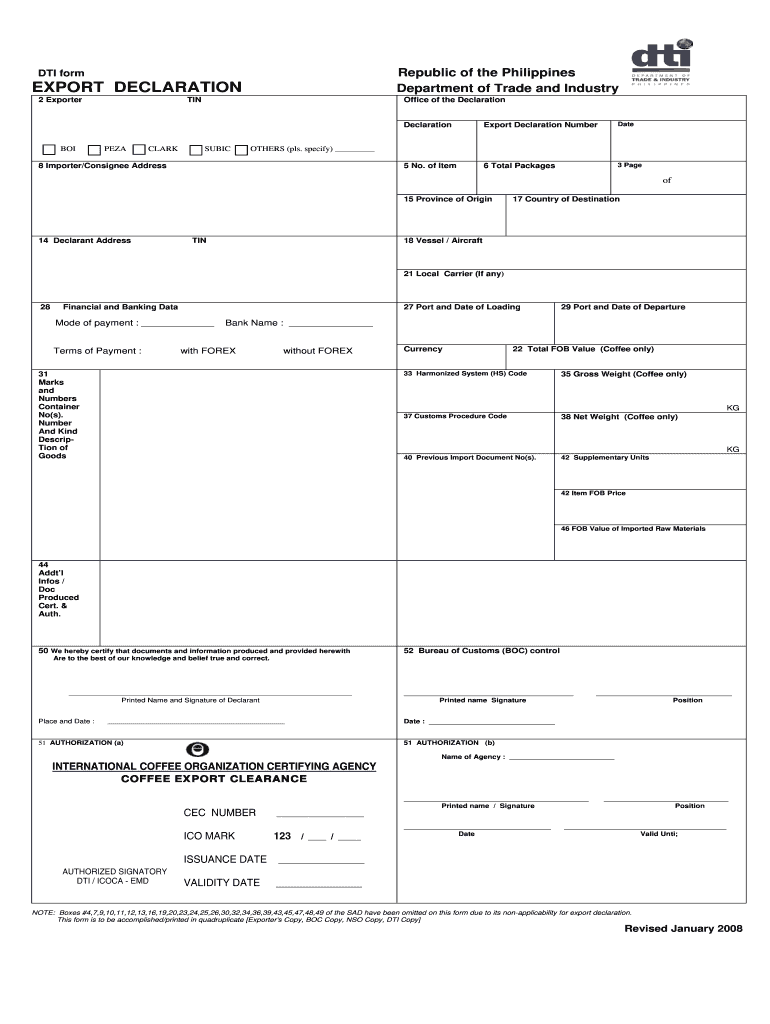
The export declaration form in the Philippines is an essential document that exporters must complete to facilitate the exportation of goods from the country. This form serves as a formal declaration to the Bureau of Customs (BOC) regarding the items being exported, ensuring compliance with the country's trade regulations. It includes critical information such as the exporter's details, descriptions of the goods, financial data, and certifications from relevant authorities. The primary purpose of the export declaration form is to streamline customs processing and verify the legality of the exported goods.
Key Components of the Export Declaration Form
- Exporter Information: Includes the name, address, and contact details of the exporter.
- Item Descriptions: Detailed descriptions of the goods being exported, including quantity and specifications.
- Financial Data: Price of the goods, currency used, and total value to ensure proper valuation for taxation and duties.
- Certification: Relevant authorities must certify the validity of the document, confirming that all information is accurate and compliant with local regulations.
By completing the export declaration form, exporters help facilitate international trade and ensure that their shipments comply with all legal requirements.
Steps to Complete the Export Declaration Form in the Philippines
Filling out the export declaration form requires attention to detail and adherence to specific guidelines. Here are the essential steps:
- Gather Required Information: Collect all necessary details, including exporter information, item descriptions, and financial data.
- Access the Form: Obtain the export declaration form, typically available as a PDF or through customs offices.
- Fill in the Exporter Information: Include your business name, address, and any other required identification information.
- Describe the Goods: Clearly describe each item, including its quantity, price, weight, and any specific customs classifications.
- Include Financial Details: Indicate the total value of the goods in the specified currency to ensure accurate assessment for duties.
- Obtain Required Signatures: Ensure that the necessary authorities sign the form as required, which may include customs officials or industry regulators.
- Make Copies: Complete the form in quadruplicate to provide extra copies for various agencies involved in the export process.
- Submit the Form: Deliver the completed forms to the Bureau of Customs or relevant authorities for processing.
Common Mistakes to Avoid
- Incomplete Information: Ensure all fields are adequately filled out; missing data can cause delays.
- Incorrect Value Declaration: Accurately declare the value of goods to avoid penalties.
- Failure to Secure Certifications: Obtain necessary signatures to validate the document.
Important Terms Related to the Export Declaration Form
Understanding key terminology can enhance compliance and efficiency during the export process. Here are some vital terms associated with the export declaration form:
- Bureau of Customs (BOC): The Philippine government agency responsible for enforcing customs laws, including the processing of export declarations.
- Exporters: Individuals or businesses engaged in the exportation of goods to foreign countries.
- Customs Classification: The categorization of goods for customs purposes, which determines applicable tariffs and regulations.
- Value Declaration: The process of stating the total monetary value of goods as required by customs authorities.
Familiarity with these terms can help exporters navigate the complexities of international trade more effectively.
Who Typically Uses the Export Declaration Form in the Philippines
The export declaration form is utilized mainly by various stakeholders involved in international trading. The following groups typically use this form:
- Business Exporters: Companies or individual entrepreneurs who export goods for commercial purposes.
- Freight Forwarders: Service providers who manage the logistics of exporting goods and often assist exporters in completing the form.
- Customs Brokers: Professionals who represent exporters in interactions with customs authorities and ensure compliance with their regulations.
Understanding the primary users can help clarify the form's relevance and significance in facilitating successful international transactions.

Legal Use of the Export Declaration Form in the Philippines
The export declaration form holds legal significance as it serves as an official document recognizing the legality of exported goods. Its proper usage ensures compliance with the laws of the Philippines, including:
- Trade Agreements: Compliance with international trade agreements that govern imports and exports.
- Tax Regulations: Accurate reporting of the exported goods ensures that applicable taxes and duties are correctly assessed and paid.
- Legal Protection: In case of disputes regarding exports, having a correctly filled-out declaration form serves as evidence of legal compliance.
Non-compliance in this context can lead to penalties and legal repercussions, making it crucial for exporters to understand the legal framework surrounding the export declaration process.
Common Examples of Export Declaration Forms in Use
Export declaration forms come in various contexts depending on the nature of goods being exported. Here are some practical examples:
- Coffee Exports: A Filipino coffee exporter fills out the export declaration form detailing the type, quantity, and value of coffee being shipped to a foreign distributor.
- Electronics: An electronics manufacturer completes the form for exporting electronic devices, including specifications required for customs.
- Agricultural Products: A farmer exporting fruits must declare the exact weight, variety, and price to ensure compliance with food safety regulations.
These examples demonstrate the versatility and necessity of the export declaration form in different industry sectors.