Transfer deed beneficiary 2026

Get Form
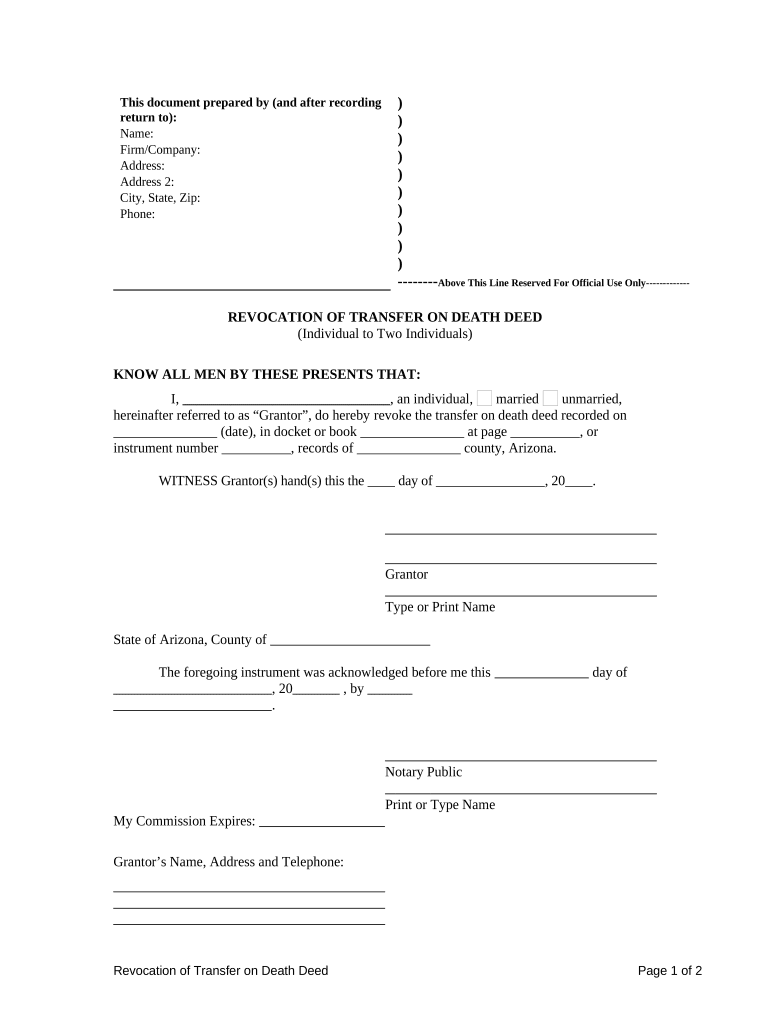
transfer deed beneficiary Preview on Page 1

Here's how it works

01. Edit your form online
Type text, add images, blackout confidential details, add comments, highlights and more.
02. Sign it in a few clicks
Draw your signature, type it, upload its image, or use your mobile device as a signature pad.
03. Share your form with others
Send it via email, link, or fax. You can also download it, export it or print it out.

How to use or fill out transfer deed beneficiary with our platform

Form edit decoration
9.5
Ease of Setup
DocHub User Ratings on G2
9.0
Ease of Use
DocHub User Ratings on G2
  1. Click ‘Get Form’ to open the transfer deed beneficiary document in the editor.
  2. Begin by filling in your name as the Grantor. Indicate your marital status by selecting either 'married' or 'unmarried'.
  3. Next, provide the date of the original transfer on death deed you wish to revoke. This is crucial for accurate record-keeping.
  4. Fill in the docket or book number, page number, and instrument number associated with the original deed. This information can typically be found in your property records.
  5. Sign and date the document where indicated, ensuring that all details are correct before proceeding.
  6. Lastly, have a notary public acknowledge your signature. Fill in their name and commission expiration date as required.

Start using our platform today to easily complete your transfer deed beneficiary form for free!

be ready to get more

Complete this form in 5 minutes or less

Get form

Got questions?

We have answers to the most popular questions from our customers. If you can't find an answer to your question, please contact us.
Contact us
Generally, the most efficient way for the transfer to happen is at death via a trust. The deed is titled within your family trust or transfer on death deed. The trust transfers the assets to the children at passing. Skips probate.
A Revocable Living Trust offers several advantages over a TOD Deed, including greater control over your assets, the ability to manage and distribute a wider range of assets, and protection from probate. Transfer on Death Deed vs. Revocable Trust: Risks for Heirs Masterly Legal Solutions the-estate-planning-shor Masterly Legal Solutions the-estate-planning-shor
A transfer on death deed does not stop you from selling your house. A transfer on death deed does not stop you from selling your house. - YouTube YouTube shorts YouTube shorts
The Transfer on Death Affidavit must be recorded at the Recorders Office where the property is located before the grantor dies. Used to revoke TOD before grantor dies. Grantor may then file another TOD. Beneficiary (ies) must record after grantor dies.
TOD Deeds Open the Door to Unintended Consequences Without careful coordination, TOD deeds can also disinherit heirs you intended to provide for, result in unnecessary taxes, complicate matters for a surviving spouse, or cause other negative ripple effects. Once recorded, the deed is very difficult to undo.

Security and compliance

At DocHub, your data security is our priority. We follow HIPAA, SOC2, GDPR, and other standards, so you can work on your documents with confidence.

Learn more
ccpa2
pci-dss
gdpr-compliance
hipaa
soc-compliance