Definition and Meaning of a Springing Power of Attorney Form
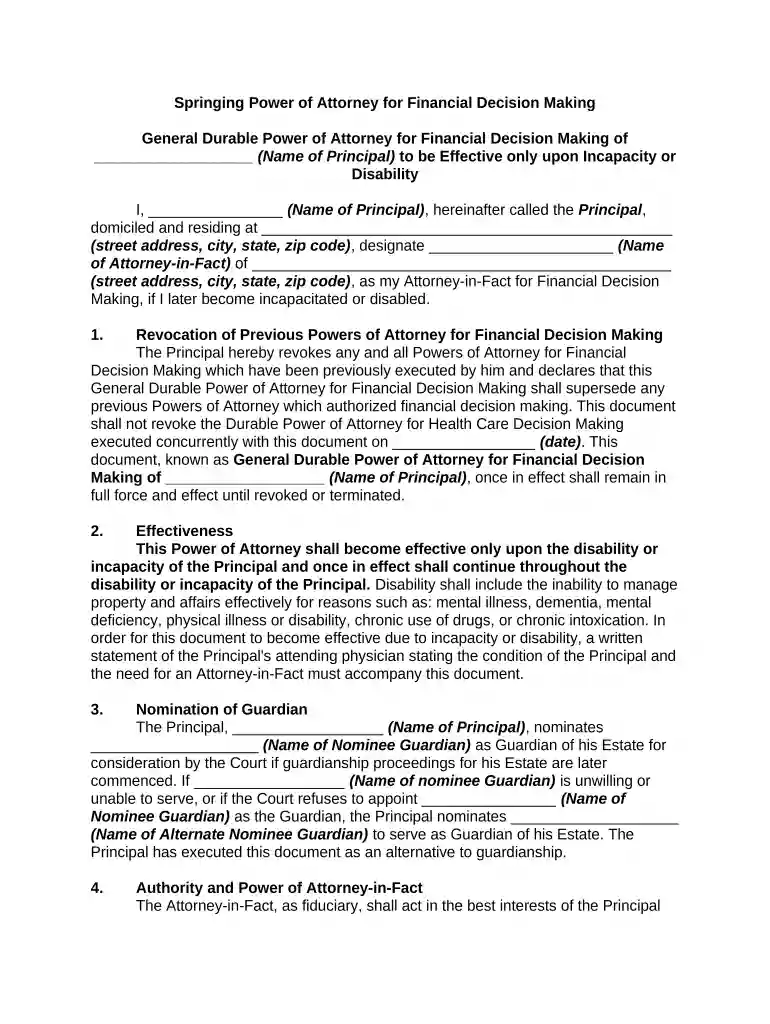
A springing power of attorney form is a legal document that grants an appointed individual, known as the Attorney-in-Fact, the authority to act on behalf of another person, referred to as the Principal, specifically when the Principal becomes incapacitated or unable to manage their own affairs. This type of power of attorney becomes effective only upon the occurrence of a triggering event, often a medical condition that certifies the Principal's inability to make decisions.
Key Features of a Springing Power of Attorney
- Conditional Activation: The power granted in this document is not immediate; it springs into action based on predetermined conditions, most commonly regarding medical incapacity.
- Broad or Limited Authority: The scope of authority can vary, allowing the Attorney-in-Fact to handle specific tasks like managing financial affairs or making medical decisions.
- Duration: The duration of the power of attorney can be defined within the document, specifying if it remains in effect until the Principal recovers or until a designated time period has elapsed.
- Revocation Terms: Provisions can be established for how the Principal can revoke the power of attorney if circumstances change.
Comparison to Other Power of Attorney Types
- Unlike a general power of attorney, which gives immediate authority, a springing power of attorney is contingent and designed for specific future scenarios.
- A durable power of attorney remains in force even when the Principal becomes incapacitated, but it becomes effective immediately, without waiting for a triggering event.
How to Use the Springing Power of Attorney Form
Utilizing a springing power of attorney form involves several clear steps to ensure that it functions as intended under legal circumstances. Effective usage helps clarify the authority granted to the Attorney-in-Fact and sets specific parameters under which that authority is activated.
Steps to Effectively Use the Document
- Identify the Need: Consider the scenarios in which you may require someone to manage your affairs. This could include prolonged illness or an unexpected accident.
- Choose an Attorney-in-Fact: Select a trustworthy individual who understands your values and wishes. This person will need to act in your best interest when you are unable to do so.
- Draft the Form: Use a reliable template to draft the document, ensuring all critical information is included, such as the names of the Principal and the Attorney-in-Fact, the specific powers granted, and any relevant triggering conditions.
- Establish Witness and Notary Requirements: Depending on state laws, you may need one or more witnesses and a notary public to sign and acknowledge the form to enhance its legal validity.
Legal Considerations
- Understand state-specific laws regarding the form's effectiveness, as requirements may differ across jurisdictions.
- Ensure you fully disclose your decisions regarding triggers and authority to your Attorney-in-Fact to avoid confusion during operations.
Steps to Complete the Springing Power of Attorney Form
Filling out a springing power attorney form requires careful attention to detail to ensure all aspects comply with legal standards. Proper completion involves various components that guide the Attorney-in-Fact’s future actions.
Detailed Completion Steps
- Title the Document: Clearly label the document as a "Springing Power of Attorney."
- Principal and Attorney-in-Fact Information: Include full names, addresses, and contact information for the Principal and the Attorney-in-Fact. This helps avoid ambiguity later.
- Define the Triggering Event: Clearly state the conditions that must be met for the powers granted to become effective. This can be a written certification from a qualified medical professional.
- Outline Granted Powers: Specify the powers bestowed upon the Attorney-in-Fact. This is where you can be broad or narrow, including handling finances, property management, and medical decisions.
- Sign and Date: Execute the document in accordance with your state’s requirements, typically involving witnesses and notarization.
- Distribute Copies: After the document is signed, provide copies to relevant parties, including the Attorney-in-Fact and any medical professionals aware of the arrangement.
Why Should You Use a Springing Power of Attorney Form?
Employing a springing power of attorney form is a prudent choice for individuals who want to ensure their wishes are honored in times of incapacity. This document provides a structured approach to managing decisions when you cannot act on your own behalf.
Reasons for Using This Document
- Peace of Mind: Knowing that someone you trust will manage your affairs during incapacitation can alleviate anxiety about the future.
- Customization: You can tailor the powers granted and conditions for activation to fit your personal and financial needs.
- Protection Against Mismanagement: A springing power of attorney acts as a safeguard against irresponsible handling of your affairs, as it only activates when deemed necessary.
Suitable Scenarios for Implementation
- Elder Care Planning: Older adults often prepare these forms as they plan for possible health declines.
- Chronic Illness Management: Individuals with chronic illnesses might utilize this form to prepare for unpredictable flare-ups that could impair their decision-making capabilities.
Important Terms Related to the Springing Power of Attorney Form
Understanding the terminology associated with a springing power of attorney form is crucial for anyone considering its use, as terminology can vary significantly within legal contexts.
Terminology Breakdown
- Principal: The individual who grants authority to another (the Attorney-in-Fact) to manage their affairs.
- Attorney-in-Fact: The individual granted power to act on behalf of the Principal, also known as an agent.
- Incapacity: Refers to a state where the Principal is unable to make informed decisions due to health issues or mental incapacity.
- Triggering Event: The specified conditions under which the power of attorney becomes activated, often requiring a medical assessment.
- Durable: Refers to the nature of powers retained, meaning they remain valid even in cases of incapacity, but activation conditions vary in springing powers.
Through this comprehension of terms, individuals can navigate the intricacies of springing powers of attorney more confidently.
State-Specific Rules for the Springing Power of Attorney Form
Each state has unique laws that govern the execution and use of a springing power of attorney form. Understanding these regulations is critical to ensuring that the document is enforceable when needed.
Key State Variations
- Witness Requirements: Certain states may require one or more witnesses to the execution of the power of attorney. These rules vary significantly between jurisdictions.
- Notarization: Some states may mandate notarization for the document to be legally recognized, whereas others might not.
- Specific Language: States may have specific wording that must be included in the document, especially regarding triggering events and powers granted.
- Durability and Effectiveness: Depending on the state, laws may dictate how long the springing provision remains effective, or if it can be revoked or amended.
Checking State-Specific Regulations
- It is advisable to consult local legal resources or professionals to understand the specific requirements in your state.
- Online resources and templates can vary in compliance; ensuring state adherence is essential for the document's effectiveness.
Incorporating legal knowledge and careful planning ensures that a springing power of attorney form effectively meets the unique needs of each individual involved.