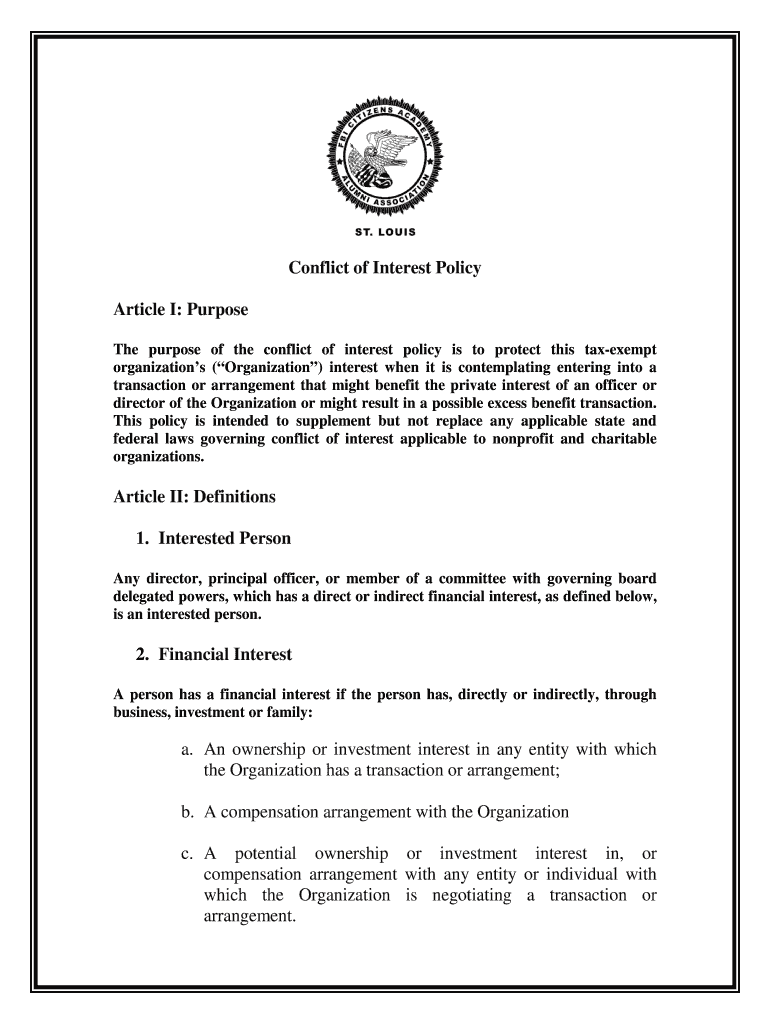







Key Elements of the Sample Nonprofit Conflict of Interest Policy Template for 501c3
The Sample Nonprofit Conflict of Interest Policy Template for 501c3 is designed to help organizations maintain integrity and transparency. Key elements include:
-
Definition of Conflict of Interest: The policy typically begins with a clear explanation of what constitutes a conflict of interest, which can include financial, personal, or professional interests that might compromise the nonprofit's mission.
-
Disclosure Requirements: It mandates that board members and key personnel disclose any potential conflicts. This might involve completing an annual disclosure form or announcing any new interests at meetings.
-
Procedures for Handling Conflicts: The template outlines specific steps for dealing with potential conflicts. This often includes the individual with the conflict recusing themselves from decision-making processes related to the conflict.
-
Review and Resolution Processes: Nonprofits must have a defined process for reviewing disclosures and determining appropriate actions, which might involve a designated committee or board review.
-
Documentation and Record-Keeping: Maintaining records of disclosures and the organization’s responses is crucial for legal compliance and transparency.
These elements are foundational to preserving the nonprofit’s trustworthiness and adherence to its ethical guidelines.
How to Use the Sample Nonprofit Conflict of Interest Policy Template for 501c3
Implementing this policy template involves several critical steps:
-
Customization: Tailor the template to fit your unique organizational structure and specific needs. This may involve consulting legal professionals to ensure compliance with state and federal regulations.
-
Approval: Present the customized policy to the board of directors for formal approval. Ensure it aligns with both the organization's bylaws and governance practices.
-
Communication: Communicate the policy to all stakeholders, including board members, employees, and volunteers. Use workshops or meetings to provide a thorough understanding.
-
Implementation: Put systems in place for collecting and reviewing disclosures. This could include digital platforms that streamline data collection and storage.
-
Periodic Review: Regularly revisit and update the policy to reflect any changes in laws or organizational practices.
Using this approach ensures the policy remains relevant and effective.
Steps to Complete the Sample Nonprofit Conflict of Interest Policy Template for 501c3
Completing the template involves detailed steps:
-
Identify Relevant Positions: Determine which roles within your organization require disclosure and adherence to the policy. Typically, this includes board members and executives.
-
Compile Necessary Information: Gather all relevant organizational documents, such as bylaws or existing conflict of interest policies.
-
Draft Specific Sections: Fill out sections related to disclosures, procedures, and resolutions. Ensure clear and concise language is used for every section to eliminate misunderstandings.
-
Review Legal Compliance: Consult with legal experts to ensure the policy complies with IRS guidelines for 501c3 organizations and state laws.
-
Finalize and Approve: Present the final draft to the board for approval and document the decision in meeting minutes.
These meticulous steps ensure the policy template is correctly completed and legally compliant.
Important Terms Related to the Sample Nonprofit Conflict of Interest Policy Template for 501c3
Understanding specific terminology is crucial:
-
Interested Person: Any individual with decision-making power or significant influence over the organization’s operations, typically board members and executives.
-
Financial Interest: A situation where a person benefits financially due to a decision made by the nonprofit.
-
Duty of Loyalty: This legal obligation ensures that board members prioritize the nonprofit’s interests over personal gains.
-
Rebuttable Presumption of Fairness: Provides a standard that agreements are fair unless significant evidence suggests otherwise.
Familiarity with these terms enhances understanding and effective implementation of the policy.
Disclosure Requirements for the Sample Nonprofit Conflict of Interest Policy Template for 501c3
Disclosure is a central component of the policy:
-
Annual Disclosure Forms: Board members and key personnel are required to complete these forms to disclose any potential conflicts.
-
Immediate Reporting: Any new conflict that arises during the year should be reported immediately to maintain transparency.
-
Content of Disclosure: The forms should document any business, investment, or family interests that could potentially conflict with the nonprofit’s activities.
Ensuring comprehensive disclosure helps maintain trust and integrity.
Legal Use of the Sample Nonprofit Conflict of Interest Policy Template for 501c3
Legal adherence is imperative:
-
IRS Compliance: The policy helps maintain compliance with IRS requirements, safeguarding the organization’s tax-exempt status.
-
State Laws: Ensure the policy also adheres to specific state regulations, which might vary regarding conflict handling and documentation.
-
Organizational Governance Documents: Align the policy with existing governing documents to prevent conflicts between policies.
Adhering to these legal principles is critical to a nonprofit’s successful operation.
Examples of Using the Sample Nonprofit Conflict of Interest Policy Template for 501c3
Real-world application scenarios include:
-
Decision-Making: A board member with a financial interest in a vendor must recuse themselves from discussions involving contract allocations.
-
Fundraising Events: Employees must disclose if family members’ companies sponsor or participate in nonprofit events.
-
Grant Awards: Individuals responsible for grant distributions need to disclose relationships with potential grantees to ensure impartiality.
These examples illustrate practical applications of the policy in maintaining organizational integrity.
Who Typically Uses the Sample Nonprofit Conflict of Interest Policy Template for 501c3
Different entities benefit from this policy:
-
Nonprofit Organizations: Ensures ethical governance and protection of tax-exempt status.
-
Educational Institutions: Assists in managing potential conflicts in donations or partnerships.
-
Healthcare Organizations: Helps navigate complex relationships between board members, suppliers, and healthcare networks.
These general examples demonstrate the template's versatility across various sectors, providing tailored ethical frameworks.