




01. Edit your motion to consolidate immigration court sample online
Type text, add images, blackout confidential details, add comments, highlights and more.

Type text, add images, blackout confidential details, add comments, highlights and more.

Draw your signature, type it, upload its image, or use your mobile device as a signature pad.

Send sample motion for consolidation immigration court via email, link, or fax. You can also download it, export it or print it out.
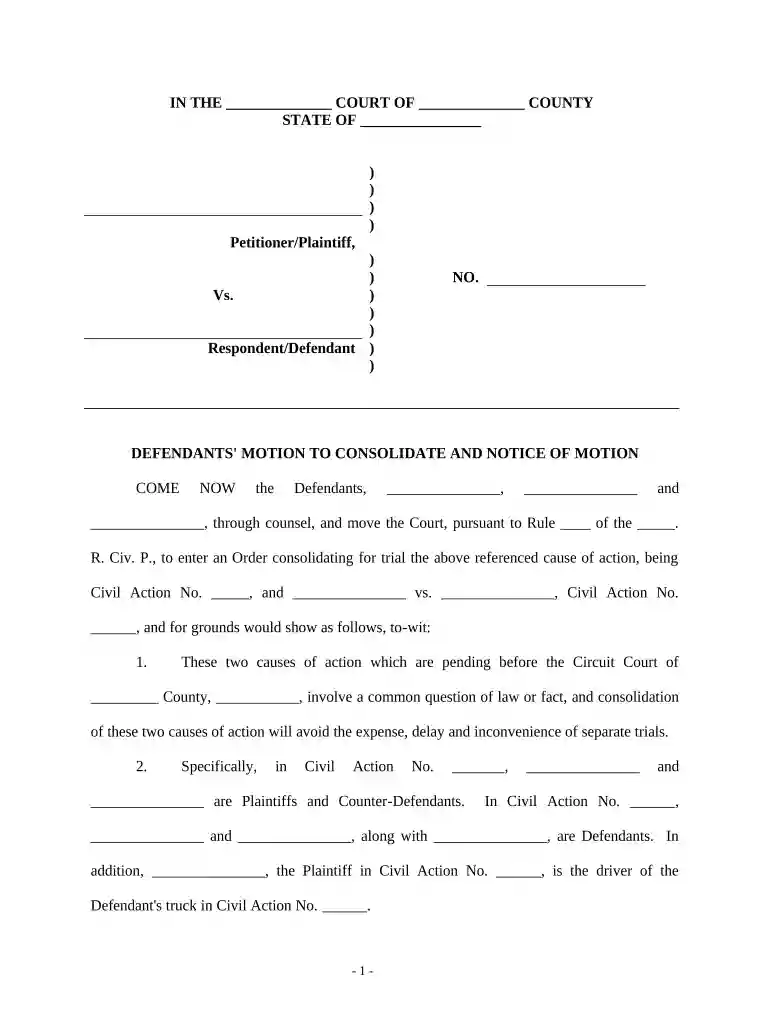
The motion to consolidate form is a legal document filed in court requesting that multiple cases be combined into one trial or hearing. This consolidation is often invoked when the cases share common questions of law or fact, which can benefit judicial efficiency and reduce litigation costs. The primary aim of this form is to streamline the legal process, ensuring that similar matters are resolved collectively to avoid the complications of separate trials.
This form is typically used in civil litigation where multiple parties are involved, such as in personal injury cases, contract disputes, or immigration matters. When filed, it must clearly outline the reasons for consolidation, demonstrating that handling the cases separately would result in unnecessary duplication of efforts and resources.
To effectively use the motion to consolidate form, parties must follow a structured approach:
Identifying Applicable Cases: Begin by identifying the cases to be consolidated. These should involve similar legal issues, facts, or parties involved. For instance, multiple lawsuits arising from a single automobile accident can be consolidated for efficiency.
Gathering Required Materials: Collect relevant documents such as the original pleadings of each case, which provide background and context necessary for the consolidation argument.
Drafting the Motion: The motion should articulate the grounds for consolidation, referencing legal precedents if applicable, and explaining how consolidation serves judicial efficiency without compromising any party's rights.
Filing the Motion: Submit the completed motion along with any required fees to the appropriate court. Ensure adherence to local court rules regarding filing procedures.
Notification of Parties: After filing, notify all parties involved in the cases of the motion. This ensures transparency and allows them the opportunity to respond to the consolidation request.
Completing the motion to consolidate form involves several critical steps:
Determine Jurisdiction: Clearly state the court in which the motion is being filed and confirm that it has jurisdiction over the cases involved.
Case Identification: List all case numbers and involved parties. This includes plaintiffs and defendants in each case.
Provide Background Information: Offer a succinct summary of each case, including the nature of the claims and key dates such as filing dates and any significant developments.
State Grounds for Consolidation:
Propose a Joint Hearing Date: Suggest a timeline for a consolidated hearing date to facilitate the court’s scheduling.
Signature and Date: Conclude the document with the signature of the filing party or their legal representative, along with the filing date.
Understanding key terms associated with the motion to consolidate form is essential for its effective use:
Recognizing these terms aids in navigating the legal language associated with the motion and enhances the clarity of the arguments presented in the form.
The legal application of the motion to consolidate form is primarily governed by the rules established in each jurisdiction. In the United States, federal and state courts provide specific guidelines on when and how to file such motions. Here are crucial legal considerations:
Court Rules: Each court may have tailored rules regarding consolidation, outlining specific requirements for the motion, such as need for notice, responses from involved parties, and deadlines for filing.
Grounds for Consolidation: The motion must demonstrate that the cases are not only related but that consolidating them promotes justice and does not infringe on any party's rights.
Rulings on Consolidation: Courts hold discretion on granting or denying consolidation. They might consider factors such as the complexity of the cases, the number of parties involved, and the potential impact on witness testimony.
The motion to consolidate form can be employed in various legal contexts. Here are some practical examples:
Personal Injury Cases: In scenarios where multiple injury claims arise from a single event, such as a multi-car accident, plaintiffs can file a motion to consolidate their lawsuits.
Immigration Proceedings: Individuals facing similar immigration challenges, such as deportation or asylum requests, may file motions to consolidate their cases for collective adjudication in immigration court.
Commercial Disputes: Businesses involved in numerous related litigations can seek consolidation to handle overlapping issues, which can save time and reduce legal costs.
Each example illustrates the utility of the motion to consolidate in promoting efficiency and unity in legal proceedings.
At DocHub, your data security is our priority. We follow HIPAA, SOC2, GDPR, and other standards, so you can work on your documents with confidence.




The court may order a separate trial of one or more separate issues, claims, crossclaims, counterclaims, or third-party claims.Read more
You can file a Motion to Consolidate if: you have two open cases; the cases involve the same issue; the cases involve the same people; the cases involve theRead more


