Definition & Meaning
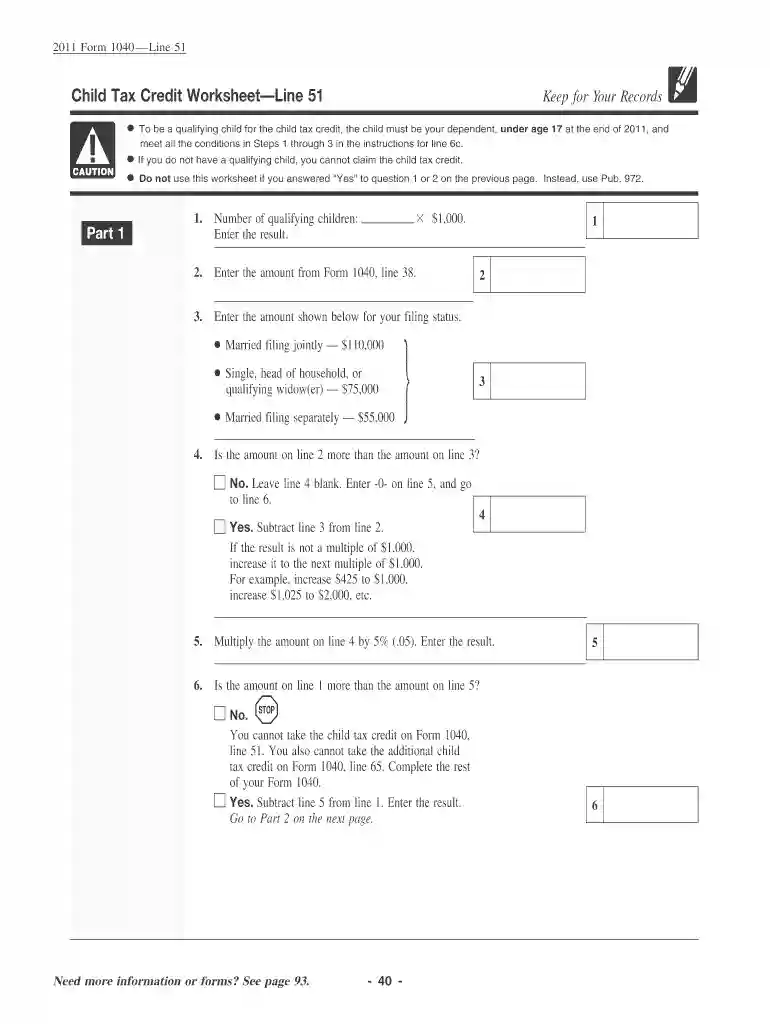
The 2019 Child Tax Credit Worksheet serves as a tool for taxpayers to calculate their eligibility for the Child Tax Credit, a tax benefit designed to help families with dependent children. The primary purpose of this worksheet is to guide users through the various elements required to assess their eligibility based on different criteria, including the number of qualifying children and income thresholds.
The Child Tax Credit can significantly reduce the amount of tax owed, and any unused credit may also be refundable, allowing families to receive a direct payment from the IRS. This makes the worksheet essential for families aiming to optimize their tax benefits and ensure accurate filing. It's important to understand that specific definitions of qualifying children depend on several factors, such as age, relationship to the taxpayer, residency, and support provided by the taxpayer.
Steps to Complete the 2019 Child Tax Credit Worksheet
Completing the 2019 Child Tax Credit Worksheet involves several critical steps that help taxpayers determine their eligible credit.
- Gather Required Information: Make sure to have all necessary documentation, including your tax return, Social Security numbers for all qualifying children, and income details.
- Determine Qualifying Children:
- Age Requirements: A child must be under age 17 at the end of 2019.
- Relationship: The child must be your son, daughter, stepchild, foster child, or a descendant of any of them.
- Residency: The child must live with you for more than half of the year.
- Support: Ensure you provide more than half of the child's total support during the year.
- Calculate Adjusted Gross Income (AGI): Refer to line seven of Form 1040 to find your AGI.
- Complete the Worksheet: Follow the line-by-line instructions carefully, entering data collected from your AGI and qualifying children.
- Determine the Credit Amount: Using your worksheet results, calculate the maximum Child Tax Credit available based on the number of qualifying children and your income level.
Each step is crucial in ensuring accurate completion of the worksheet while also confirming eligibility for the credit, which can provide significant tax savings.
How to Obtain the 2019 Child Tax Credit Worksheet
There are a few straightforward ways to obtain the 2019 Child Tax Credit Worksheet:
- IRS Website: Visit the official IRS website where you can download and print the worksheet. Search for Form 1040 or the Child Tax Credit worksheet directly for easy access.
- Tax Preparation Software: Many tax preparation programs, including TurboTax and H&R Block, automatically include the worksheet as part of their filing process.
- Tax Professional: If you're working with a tax preparer, they can provide you with the worksheet and assist you in completing it correctly.
- Local Libraries and Post Offices: Some public libraries and post offices have printed tax forms available, including the 2019 Child Tax Credit Worksheet.
By obtaining the worksheet through one of these channels, taxpayers can ensure they have the right tools to accurately assess their eligibility for the Child Tax Credit.
Important Terms Related to the 2019 Child Tax Credit Worksheet
Familiarizing yourself with key terms related to the 2019 Child Tax Credit Worksheet can enhance understanding and efficiency in tax preparation.
- Qualifying Children: Dependents who meet specific age, relationship, residency, and support criteria necessary for claiming the Child Tax Credit.
- Adjusted Gross Income (AGI): The total gross income minus specific deductions, determining eligibility for certain credits, including the Child Tax Credit.
- Nonrefundable Credit: A tax credit that can reduce your tax liability to zero but does not result in a refund if it exceeds the tax owed.
- Refundable Credit: This allows taxpayers to receive a portion of the credit as a refund if it surpasses their total tax obligation.
- Dependent: A qualifying child or relative who relies on the taxpayer for financial support, impacting various tax credits.
Understanding these terms helps streamline the process of completing the worksheet and enhances comprehension of how the Child Tax Credit impacts overall tax obligations.
Eligibility Criteria for the Child Tax Credit
To qualify for the Child Tax Credit, certain eligibility criteria must be satisfied:
- Age Requirements: The child must be younger than 17 years old at the end of the tax year.
- Relationship: The child must be your child, stepchild, adopted child, or a descendant of any of these.
- Residency: The child must have lived with you for more than half the year, fostering a familial connection.
- Support Test: The taxpayer must have provided more than half of the child’s financial support during the year.
- Citizenship: The child must be a U.S. citizen, U.S. national, or a resident alien.
Meeting these criteria is crucial for not only calculating the Child Tax Credit but also for ensuring compliance with IRS regulations.
Examples of Using the 2019 Child Tax Credit Worksheet
Using the 2019 Child Tax Credit Worksheet can yield various scenarios impacting tax calculations:
- Family of Four: A family with two children under 17 years can claim up to $4,000 in credits if they meet all required criteria.
- Single Parent: A single parent with one qualifying child who is a citizen may claim a refundable credit if their AGI is below $200,000.
- Multiple Dependents: A couple with three qualifying children might receive an additional child credit for the third child, enhancing their total tax savings.
These examples illustrate the diverse scenarios in which the worksheet can be beneficial, demonstrating the importance of accurately completing it to maximize potential tax credits.
IRS Guidelines for the Child Tax Credit
Understanding IRS guidelines for the Child Tax Credit is essential for accurate tax filing:
- Filing Status: Taxpayers must choose the correct filing status that corresponds to their situation—Single, Married Filing Jointly, etc.—as this affects eligibility and credit amounts.
- Income Limitations: The Child Tax Credit phases out for taxpayers with an AGI above certain thresholds, specifically $200,000 for single filers and $400,000 for married couples filing jointly.
- Documentation: Taxpayers should retain necessary documents, including Social Security cards for dependents, to substantiate claims made on the worksheet.
Adhering to these guidelines not only ensures compliance but also optimizes tax returns, reducing potential issues with the IRS during the filing process.