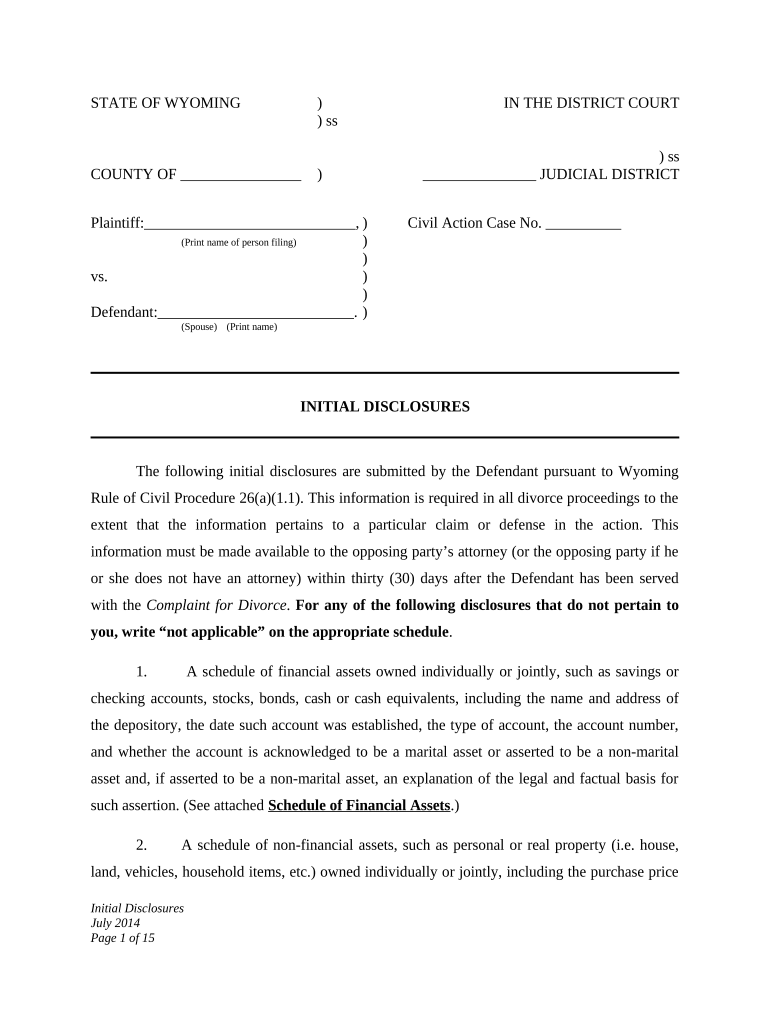







Definition & Meaning of Initial Disclosures
Initial disclosures are a critical component within the legal framework, particularly in civil litigation. They refer to the required sharing of certain information and documents between parties involved in legal proceedings. Initially mandated by specific rules, such as Texas Rule 194, these disclosures are intended to facilitate transparency in the discovery process. Each party must provide information about their claims and defenses, which may include financial statuses, relevant documents, and data related to witnesses. The purpose is to ensure all parties are adequately informed, reducing surprises during litigation and promoting more effective case resolutions.
Key Elements of Initial Disclosures
The key elements of initial disclosures provide a structured approach to the information-sharing process in legal cases. Generally, these elements include:
- Identification of Persons and Documents: Parties must disclose names and contact details of individuals who may have information relevant to the case, along with documents that support their claims or defenses.
- Financial Information: This can encompass anything from income statements, bank account details, to evidence of assets and liabilities that may impact financial judgments.
- Evidence of Claims or Defenses: Parties are required to provide information supporting their contentions or arguments, which may include prior communications or related case documentation.
- Expert Witness Disclosures: In some cases, parties may need to disclose any experts they plan to call upon, alongside a summary of their expected testimonies.
These elements not only outline what needs to be shared but also set expectations for timelines and formats, ensuring legal processes remain systematic.
Steps to Complete the Initial Disclosures
Completing initial disclosures can be streamlined into several key steps, guiding parties through the preparation and submission process:
- Gather Necessary Information: Collect all documents, lists of witnesses, and other relevant materials that pertain to your case.
- Review Applicable Rules and Regulations: Determine the specific requirements as outlined by relevant law, such as those from Texas Rule 194, to comply with state mandates.
- Prepare the Disclosure Document:
- Use templates or guidelines as needed.
- Clearly label sections for each required detail, such as financial disclosures and witness identification.
- Check for Completeness and Accuracy: Ensure all information is accurate and comprehensive. Consider consulting legal counsel if needed to verify compliance.
- Submit by the Deadline: Deliver your disclosures according to the stipulated timeline, whether that be through electronic means or traditional mail.
Following these steps can substantially enhance clarity and reduce potential disputes among parties involved in litigation.
Examples of Initial Disclosures in Texas
In Texas, initial disclosures serve to provide a clear picture of the positions of both parties before a case proceeds further. Here are a couple of practical examples:
- Divorce Proceedings: In a divorce case, initial disclosures might involve a spouse providing information about financial accounts, property ownership, debts, and child custody matters. Each spouse would need to provide documentation to support their claims about income and asset distribution.
- Personal Injury Cases: A plaintiff may be required to disclose medical records, any eyewitness accounts, accident reports, and evidence of lost wages. The defendant might also need to provide information about any insurance policies applicable to the case.
These examples underline how initial disclosures can vary widely based on context while emphasizing their fundamental role in ensuring fairness in litigation.
Important Terms Related to Initial Disclosures
Understanding the terminology associated with initial disclosures can aid parties in navigating the legal landscape more efficiently:
- Discovery: The legal process through which parties obtain information and evidence from each other. This includes initial disclosures and further evidence gathering.
- Witness List: A list of individuals who may provide testimony or relevant information during the trial process. This must be shared as part of the initial disclosures.
- Privilege: Certain documents or communications may be protected from disclosure due to legal protections, such as attorney-client privilege.
- Sanctions: Legal consequences for failing to comply with disclosure requirements or for withholding necessary information.
Being familiar with these terms enhances comprehension and assists parties in effectively managing their disclosure responsibilities.
State-Specific Rules for Initial Disclosures
State-specific rules regarding initial disclosures can differ significantly, thus understanding the local context is essential. For instance, in Texas, Rule 194 outlines specific disclosure obligations, such as the types of information required and deadlines for submissions.
- Variation in Deadlines: Some states may require disclosures to be submitted within a certain number of days following the filing of a lawsuit, while others may have different timelines.
- Additional Documents: Certain jurisdictions may mandate additional types of disclosures, such as providing an expert witness's qualifications at the initial stage.
Understanding these nuances is crucial for compliance and can prevent unnecessary complications during legal proceedings.