Type text, add images, blackout confidential details, add comments, highlights and more.
02. Sign it in a few clicks
Draw your signature, type it, upload its image, or use your mobile device as a signature pad.
03. Share your form with others
Send it via email, link, or fax. You can also download it, export it or print it out.
How to use or fill out Findings and Recommendation of Commissioner - Governmental - California
Ease of Setup
DocHub User Ratings on G2
Ease of Use
DocHub User Ratings on G2
Click ‘Get Form’ to open it in the editor.
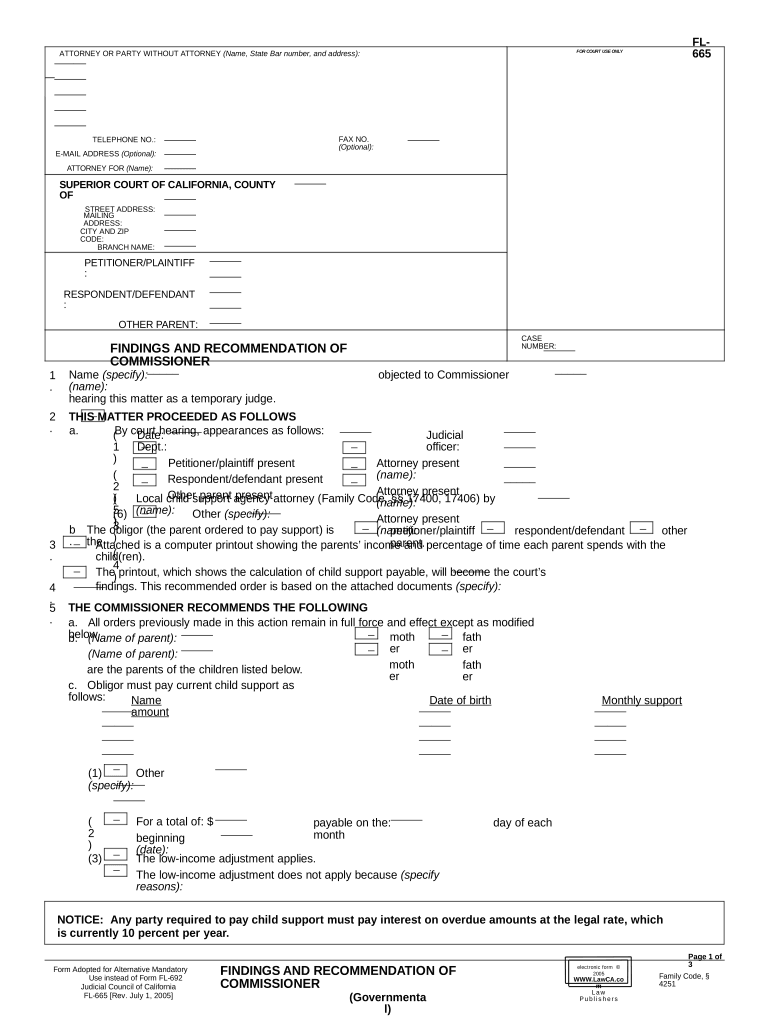
Begin by entering your information in the 'Attorney or Party Without Attorney' section. Include your name, state bar number, address, telephone number, and email address if applicable.
Fill in the details for the 'Superior Court of California' section, including the county, street address, mailing address, city, and zip code.
In the 'Respondent/Defendant' and 'Petitioner/Plaintiff' sections, provide the names of all parties involved in the case.
Complete the 'Findings and Recommendation' section by detailing any objections and summarizing appearances at the hearing. Ensure to specify any recommendations made by the commissioner regarding child support payments.
Review all entries for accuracy before saving or exporting your completed form. Utilize our platform's features to sign electronically if required.
Start using our platform today to streamline your document editing experience for free!
Fill out Findings and Recommendation of Commissioner - Governmental - California online It's free
Another Look: Trial Court Unification in California in the Post
by A Schepard Cited by 4 54. Indeed, the California Commission on Government Reform, established by Governor. Brown to make recommendations on government structure in the wake ofRead more
Cookie consent notice
This site uses cookies to enhance site navigation and personalize your experience.
By using this site you agree to our use of cookies as described in our Privacy Notice.
You can modify your selections by visiting our Cookie and Advertising Notice.