Type text, add images, blackout confidential details, add comments, highlights and more.
02. Sign it in a few clicks
Draw your signature, type it, upload its image, or use your mobile device as a signature pad.
03. Share your form with others
Send it via email, link, or fax. You can also download it, export it or print it out.
How to use or fill out adoption biological with our platform
Ease of Setup
DocHub User Ratings on G2
Ease of Use
DocHub User Ratings on G2
Click ‘Get Form’ to open the adoption biological in the editor.
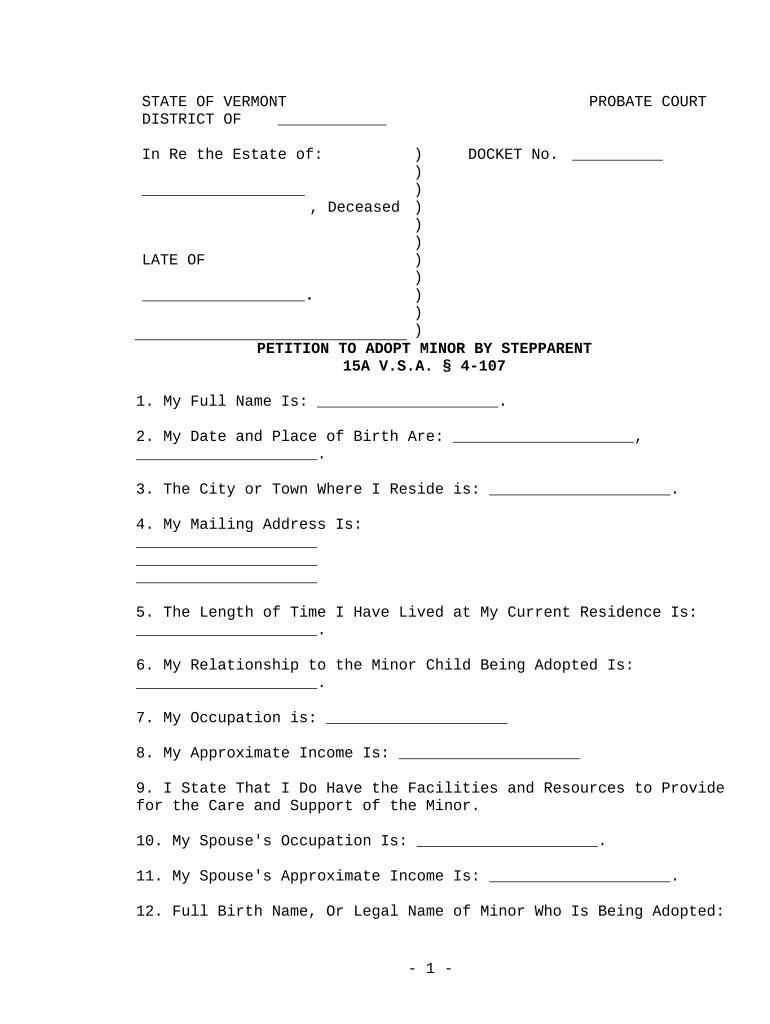
Begin by entering your full name, date and place of birth, and current residence details in the designated fields. This information establishes your identity as the petitioner.
Provide your mailing address and how long you have lived there. This helps verify your stability and commitment to adopting.
Fill in your relationship to the minor child being adopted, along with your occupation and approximate income. This section assesses your ability to provide for the child.
Complete the sections regarding the minor child, including their full birth name, name after adoption, sex, date of birth, and place of birth. Ensure accuracy as this is crucial for legal documentation.
List any known property of the minor and provide details about biological parents. This information is essential for legal considerations surrounding parental rights.
Finally, review all entries for completeness before submitting. Use our platform’s features to save or share your completed form easily.
Start filling out your adoption biological form today for free using our platform!
Adoption biological parentsAdoption when you have a biological childAdoption biological redditAdoption biological rightsBiological child and adopted childAdoption vs biological child RedditAdoption with one biological childBiological vs adoptive relatives Psychology
Security and compliance
At DocHub, your data security is our priority. We follow HIPAA, SOC2, GDPR, and other standards, so you can work on your documents with confidence.
Adoption: biological and social processes linked to
by HD Grotevant 2014 Cited by 184 Adopted children are at higher risk than the general population for problems with adaptation, especially externalizing, internalizing, and attention problems.Read more
Nature versus Nurture: A Study of Adopted and Biological
by CJ Grenke 2012 Cited by 3 The adoptive parents legally become the parents of the adoptee and are granted all the rights that biological parents are bestowed (Adoption, 2010). Page 5Read more
Cookie consent notice
This site uses cookies to enhance site navigation and personalize your experience.
By using this site you agree to our use of cookies as described in our Privacy Notice.
You can modify your selections by visiting our Cookie and Advertising Notice.