



Paternity Law and Procedure Handbook - Kansas 2026

Get Form
Paternity Law and Procedure Handbook - Kansas Preview on Page 1

Here's how it works

01. Edit your form online
Type text, add images, blackout confidential details, add comments, highlights and more.
02. Sign it in a few clicks
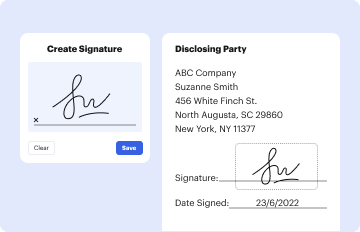
Draw your signature, type it, upload its image, or use your mobile device as a signature pad.
03. Share your form with others
Send it via email, link, or fax. You can also download it, export it or print it out.

How to use or fill out Paternity Law and Procedure Handbook - Kansas with our platform

Form edit decoration
9.5
Ease of Setup
DocHub User Ratings on G2
9.0
Ease of Use
DocHub User Ratings on G2
  1. Click ‘Get Form’ to open the Paternity Law and Procedure Handbook - Kansas in the editor.
  2. Begin with the 'Introduction' section, which outlines the importance of establishing paternity. Familiarize yourself with the key concepts presented.
  3. Move to the 'Definitions' section. Here, you can highlight terms like 'Biological Father' and 'Voluntary Establishment of Paternity' for easy reference.
  4. In the 'Frequently Asked Questions' section, utilize our platform's comment feature to jot down any personal notes or clarifications needed for your understanding.
  5. Proceed to the 'Paternity Laws' section. Use text boxes to annotate important laws relevant to your situation, ensuring you have a clear understanding of your rights and responsibilities.
  6. For sections on court actions and genetic testing, consider using checkboxes or bullet points to summarize steps you may need to take if pursuing legal action.
  7. Finally, review the 'Conclusion' and ensure all your notes are organized. Save your document for future reference or share it directly from our platform.

Start editing your Paternity Law and Procedure Handbook - Kansas today for free on our platform!

be ready to get more

Complete this form in 5 minutes or less

Get form

Got questions?

We have answers to the most popular questions from our customers. If you can't find an answer to your question, please contact us.
Contact us
If the child does not have a mans name on his or her birth certificate, you are and were unmarried at the time of the birth, and no man is stepping forward to claim the child, then the child has no legal father.
Fathers on the birth certificate have the right to receive child support from the mother as determined by the court and to have their assets fairly assessed to decide on their solvency in matters of child support allocation.
You cannot refuse, neither parent can refuse to submit to a paternity test, in any states. Should you refuse to take a paternity test, you will be found in contempt of court., and the judge will issue a court order to get you to supply your dna.
Paternity is a prerequisite to these parental rights. Once paternity is established, a father may pursue child custody and visitation rights. Many states offer simultaneous filing for paternity recognition and visitation and custody rights.
Under Kansas law, married couples assume the role of presumptive parents to any children they have. Unmarried couples, however, must pursue the legal establishment of paternity because the childs father is not automatically considered the legal father.

Security and compliance

At DocHub, your data security is our priority. We follow HIPAA, SOC2, GDPR, and other standards, so you can work on your documents with confidence.

Learn more
ccpa2
pci-dss
gdpr-compliance
hipaa
soc-compliance

People also ask

Fathers of unborn children have limited rights. To have any decision-making authority for an unborn child, you must first establish paternity. Before birth, this can only be done through the Department of Child Support Services. Only then you will have rights as the father of the unborn child.
Unmarried fathers have zero enforceable custody rights until theyve established paternity. Once a successful paternity suit is made, a judge can decide on a custody schedule, whether joint custody is allowed, who has to pay child support, and how much that amount will be.
Once paternity is established legally, a child gains legal rights and privileges. Among these may be rights to inheritance, rights to the fathers medical and life insurance benefits, and rights to social security and possibly veterans benefits.

Related links