






Definition and Meaning of Landboard Forms
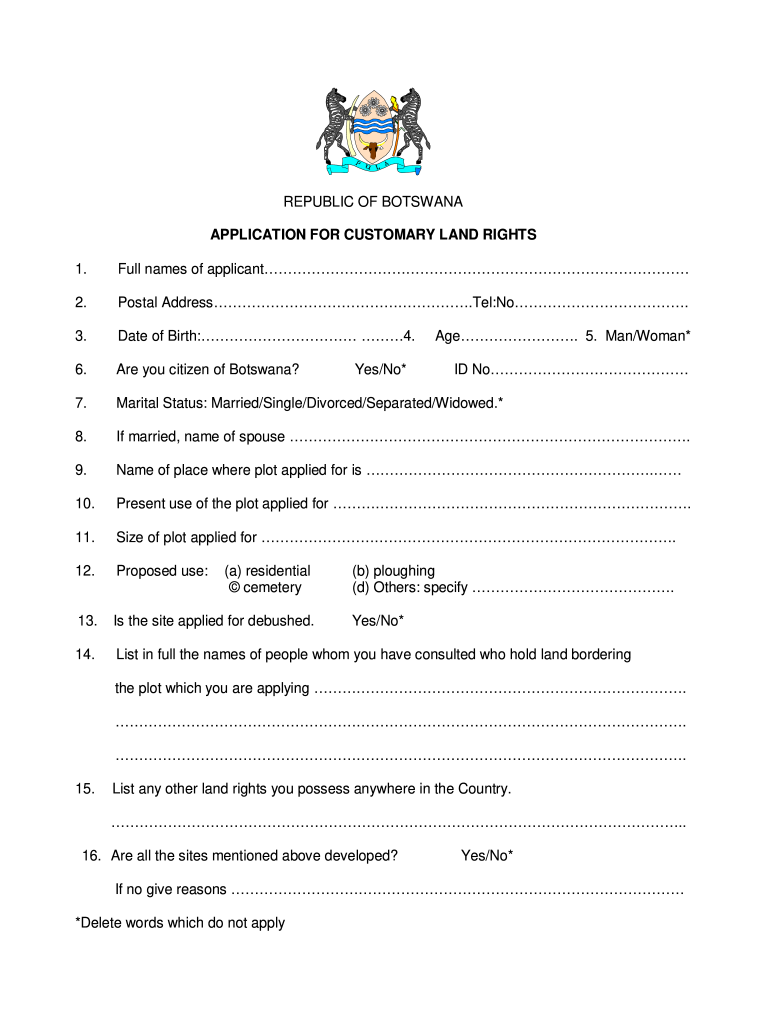
Landboard forms are official documents used in Botswana to manage land applications, related transactions, and status confirmations. These forms are essential for individuals and entities seeking rights to customary land. The primary purpose is to systematically gather necessary information regarding the land being requested, including ownership details, intended use, and compliance with local regulations. Each form typically includes sections for the applicant's personal information, plot specifics, and any consultations conducted with nearby landholders.
Types of Landboard Forms
Landboard forms can encompass a variety of types, including:
- Application for Land Rights: This form is essential to initiate the process of acquiring land rights.
- Affidavit Forms: Such as the land board affidavit form PDF, which serves to affirm the authenticity of information provided by the applicant.
- Transfer Forms: Used for the transfer of land rights from one party to another.
- Consent Forms: Required for specific transactions and activities involving land usage.
Understanding these different types is crucial for applicants to ensure they are using the correct form for their needs.
How to Use Landboard Forms Effectively
Using landboard forms involves several steps that applicants must follow to ensure compliance and completeness.
Step-by-Step Instructions for Usage
- Gather Required Information: Collect personal identification details, plot descriptions, and information regarding land usage intentions.
- Select the Appropriate Form: Depending on whether you are applying for land rights, transferring ownership, or submitting an affidavit, ensure that you have the exact form required for your purpose.
- Complete the Form Accurately: Follow the form’s instructions closely to fill in required fields. Ensure that all personal and land information is accurate and up to date.
- Consult Local Authorities: If needed, consult with nearby landholders or local authorities for additional insights or necessary endorsements.
- Submit the Form: After verifying that all sections are complete and accurate, submit the form as per the instructions outlined, either online, by mail, or in-person at the relevant land board office.
Importance of Attention to Detail
Detailed attention is critical when completing landboard forms. Incorrect or incomplete submissions can lead to delays or rejections. Each section of the form often serves to verify the validity of the request or application.
How to Obtain Landboard Forms
Acquiring landboard forms in Botswana can be done through various channels to ensure accessibility.
Sources for Obtaining Forms
- Online Access: Documents can often be downloaded from official government websites or specific land board portals that offer PDF versions, such as the Botswana land board application forms PDF.
- Local Land Board Offices: Visiting local land board offices allows potential applicants to gather physical copies directly and receive assistance.
- Community Centers or Legal Aid Clinics: These establishments sometimes provide forms and guidance on completing them.
The choice of how to obtain the forms may depend on the urgency and preference for physical or digital documentation.
Steps to Complete Landboard Forms
Completing landboard forms must be approached with thoroughness. Each form typically contains multiple sections that require precise information.
Key Elements to Address
- Personal Information: Full name, contact details, and identification numbers.
- Details of the Land: A comprehensive description of the plot, including size, location, and current status.
- Consultation Records: Evidence of discussions with nearby landowners or stakeholders, if applicable.
- Declaration Section: A signed declaration affirming that information provided is true and complete.
Navigating Complexities
Certain forms may have additional requirements, such as charts for land measurements or supplementary documents verifying land boundaries. It is beneficial to refer to guidelines provided with each form to understand specific documentation needs fully.
Who Typically Uses Landboard Forms
Landboard forms are typically utilized by a broad range of individuals and entities involved in land transactions in Botswana.
Common Users of Landboard Forms
- Individuals: Those applying for customary land rights, often for residential or agricultural purposes.
- Businesses: Companies looking to secure land for development or commercial use must comply with land application protocols.
- Legal Representatives: Lawyers representing clients in land disputes or applications often deal with landboard forms on behalf of their clients.
- Government Officials: Local authorities who oversee land transactions, ensuring that applications comply with regulatory standards.
Recognizing the range of users helps in tailoring the forms and processes to meet diverse needs and improve overall document management.


Important Terms Related to Landboard Forms
Being familiar with the terminology associated with landboard forms is crucial for effective communication and understanding.
Key Terminology to Know
- Customary Land Rights: Rights pertaining to land traditionally used by community members, often governed by local customs rather than formal legal frameworks.
- Affidavit: A written statement confirmed by oath or affirmation, used as evidence in court or in support of applications.
- Consent Form: Document required to signify agreement or approval related to land use or transfer activities.
- Delineation: The process of marking or defining the boundaries of the plot to avoid disputes.
Importance of Terminology
Understanding these terms can enhance the clarity of discussions and documentation when dealing with landboard forms, ensuring compliance with both legal and customary regulations.
Legal Use of Landboard Forms
The legal framework surrounding landboard forms is essential for ensuring that applications and transactions are legitimate.
Compliance Requirements
- Adherence to the Tribal Land Act: Applications and submissions must comply with the regulations stipulated in the Tribal Land Act of Botswana, ensuring that customary laws are respected during the application process.
- Legally Binding Signatures: Any signatures on landboard forms need to meet specific legal standards to ensure enforceability.
Understanding the legal context helps applicants recognize the importance of following procedures strictly to prevent potential legal issues in the future.