




Here's how it works
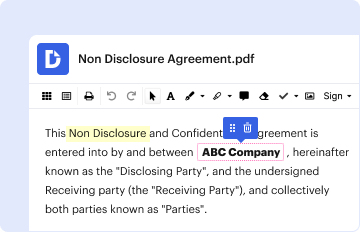
01. Edit your sba form 3502 online
Type text, add images, blackout confidential details, add comments, highlights and more.
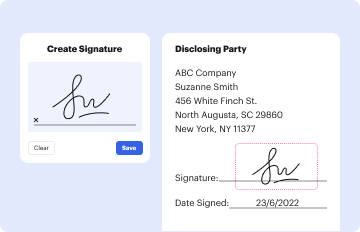
02. Sign it in a few clicks
Draw your signature, type it, upload its image, or use your mobile device as a signature pad.
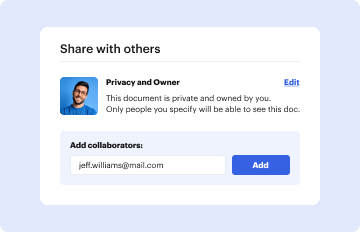
03. Share your form with others
Send sba form 3502 pdf via email, link, or fax. You can also download it, export it or print it out.
How to use or fill out SBA Form 3502 with Our Platform

- Click ‘Get Form’ to open SBA Form 3502 in the editor.
- Begin by filling out Part I, which requires your business name, address, and contact information. Ensure all details are accurate to avoid delays.
- In Part II, provide information about your employees. Enter the current number of employees and the average number over the past twelve months.
- Move to Part III and report your gross sales or receipts for the last three fiscal years. This is crucial for revenue-based size standards.
- Complete Part IV by detailing any affiliates of your business. Include their names, addresses, and ownership interests as required.
- Finally, review all sections for completeness and accuracy before submitting. Use our platform’s tools to sign and save your document securely.
Start using our platform today to fill out SBA Form 3502 easily and for free!
Fill out sba form 3502 online
It's free
It's free
Got questions?
We have answers to the most popular questions from our customers. If you can't find an answer to your question, please contact us.
Contact us
What paperwork do I need for an SBA loan?
Legal documents, such as franchise agreements, business licenses, proof of incorporation or organization (for Corps and LLCs), leases, and third-party contracts. You may also be asked to document the collateral you are willing to offer to help secure the loan.
What is the easiest SBA loan to get approved for?
The SBA Microloan is generally the easiest to get due to flexible requirements, ideal for startups needing up to $50k through non-profit lenders, while SBA Express Loans offer faster approval (often within 36 hours) for up to $500k by leveraging lender authority, making them great for speed if you meet slightly higher credit scores (around 640+), according to sources like Clarify Capital. Easiest for Startups Low Credit: SBA Microloan Amount: Up to $50,000 (average is around $13,000). Why its easy: Designed for underserved businesses, flexible requirements, lower credit score needed (around 620+). How it works: Provided by non-profit intermediary lenders who offer management/technical help. Easiest for Speed: SBA Express Loan Amount: Up to $500,000. Why its easy: Lenders have delegated authority to approve quickly (as fast as 36 hours). How it works: A faster version of the 7(a) loan with quicker processing. Other Options to Consider SBA Community Advantage: For underserved communities, similar to 7(a) but for low-income/minority-owned businesses. SBA 7(a) Loan: Most popular, versatile, but higher standards for credit and financials. Key Takeaway If youre a startup or have lower credit, start with the Microloan. If speed is your priority and you have decent credit (640+), the Express Loan is your best bet, says. AI can make mistakes, so double-check responsesLoans | U.S. Small Business Administration - SBA.govMicroloans. Loans of $50,000 or less to help businesses and certain non-profit childcare centers. Microloans are provided by interSmall Business Administration (.gov)Types of 7(a) loans | U.S. Small Business Administration - SBA.govSep 5, 2025 SBA Express. The SBA Express allows certain lenders to generally use their own processes and procedures in exchange forSmall Business Administration (.gov)
Can you have two SBA loans at the same time?
Yes, you can have multiple SBA loans at the same time. As long as youre in good standing with your current lender(s) and the funding request meets program requirements, you can apply for and receive more than one SBA loan.
Is the SBA form 1624 required?
Who is required to file SBA 1624? Small business contractors receiving SBA 8(a) program assistance or those under federal contracts that require performance and financial reporting must file SBA 1624.
Who completes the SBA form 1919?
It is also important to note that, if an Applicant Business is owned by an Entity Owner (in whole or in part), any individual owner of the Entity Owner who is also an officer or director of the Applicant Business must complete, and execute, a Form 1919, Section II.
Security and compliance
At DocHub, your data security is our priority. We follow HIPAA, SOC2, GDPR, and other standards, so you can work on your documents with confidence.
Learn more


Related forms

Tax.ohio.govothermailingaddressesMailing Addresses - Ohio Department of Taxation
The document is an application form for the International Fuel Tax Agreement (IFTA) License issued by the Ohio Departmen ...

Tax.ohio.gov static forms2022 Ohio IT 1040ES Voucher 1 Due April 18, 2022 Electronic ...
The document provides instructions for making estimated income tax payments in Ohio for the tax year 2022. It includes d ...
Inst 2290 (sp)
The document provides instructions for Form 2290(SP), which is used to calculate and pay the Heavy Highway Vehicle Use T ...

R-1048 (1/21) - Louisiana Department of Revenue
The document is an application form for nonprofit organizations in Louisiana to request exemption from state sales tax o ...
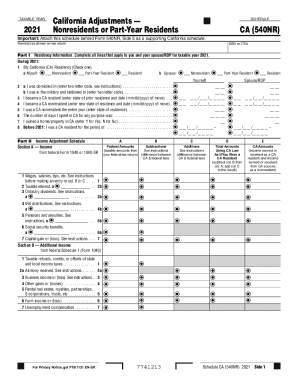
2021 Schedule CA (540NR) California Adjustments - Nonresidents or Part-Year Residents. 2021 Schedule CA (540NR) California Adjustments - Nonresidents or Part-Year Residents
2021 Schedule CA (540NR) California Adjustments - Nonresidents or Part-Year Residents. 2021 Schedule CA (540NR) California Adjustments - Nonresidents or Part-Year Residents
The document is the Schedule CA (540NR) for the 2021 taxable year, specifically designed for nonresidents or part-year r ...
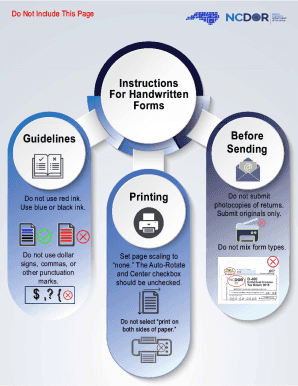
North carolina 1200 motor nonprofit form pdf
The document provides instructions for completing the GAS-1200 Motor Fuels Claim for Refund form for nonprofit organizat ...
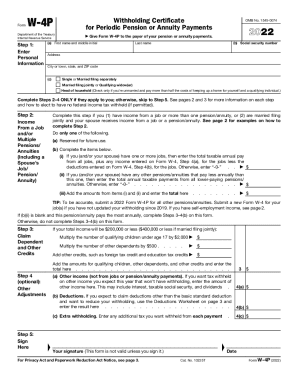
2022 Form W-4P. Withholding Certificate for Periodic Pension or Annuity Payments
The document is the Form W-4P, a Withholding Certificate for Periodic Pension or Annuity Payments issued by the IRS. It ...
Business Reporting (Personal Property) - East Baton Rouge Parish ...
The document is a Personal Property Tax Form (LAT 5) used in Louisiana for reporting inventory, merchandise, and other p ...
People also ask
What is the 20% rule for SBA?
The SBA 20% rule primarily mandates that any individual or entity owning 20% or more of a small business seeking an SBA loan must provide an unconditional personal guarantee, pledging their personal assets for the loan, and must also meet financial requirements and disclosure rules, effectively putting their DocHub equity stake at risk for the loans repayment. This rule also factors into affiliation rules, determining relationships between businesses for program eligibility, and a Personal Resource Test for 504 loans, requiring owners to use liquid assets for down payments. Key Aspects of the 20% Rule Personal Guaranty: Owners with 20%+ ownership must provide a full, unlimited personal guaranty, covering the loan, interest, and costs. Disclosure: This extends to indirect ownership; if a corporation owns 20% of the applicant, the individuals owning 20%+ of the corporation must also guarantee. Personal Financial Statement (PFS): Required from these guarantors to assess their financial capacity. Start-up Equity (Personal Resource Test): For 504 loans, owners with 20%+ ownership must contribute their available liquid assets (cash, stocks, etc.) towards the down payment. Affiliation Rules: A business owning 20% or more of another business (in the same industry) can trigger affiliation, impacting eligibility for certain programs like 8(a). Change of Ownership: Rules also define changes of ownership, such as at least 20% stock transfer, impacting PPP loan forgiveness, as noted in this Taft Law article. Why It Matters Risk to Owners: Puts personal assets (home equity, savings) on the line for the business loan. Capital Infusion: Forces DocHub owner investment, especially for startups. Loan Qualification: Can be a major hurdle for business buyers or owners needing capital, requiring creative structures like options or staged purchases. AI can make mistakes, so double-check responsesUnconditional Guarantee | U.S. Small Business Administration - SBASep 21, 2020 Individuals who own 20% or more of a small business applicant must provide an unlimited personal guaranty.Small Business Administration (.gov)How to get around SBAs 20% rule - SearchfunderFeb 27, 2020 How to get around SBAs 20% rule * Investor receives 30% but splits it between himself and his wife, so 15% each on tSearchfunder
What disqualifies you from an SBA loan?
Disqualifications for an SBA loan include poor credit/financial history (defaults, recent bankruptcies, tax liens), insufficient cash flow/ability to repay, involvement in illegal or ineligible industries, being able to get credit elsewhere easily, unresolved federal debt, and owners being incarcerated or on parole/probation, along with a lack of owner equity in the business and certain lender conflicts. Financial Credit Issues Past loan defaults: Especially on federal loans or prior SBA loans. Poor credit: Low personal or business credit scores. Tax delinquency: Unresolved federal, state, or local tax issues. Insufficient cash flow: Not enough income to cover debt payments. Excess liquid assets: Having DocHub personal funds to self-finance. Unresolved federal debt: Delinquent student loans or other government debts. Business Owner Character Incarceration/Criminal History: Owners incarcerated, on parole, or indicted for certain felonies. Illegal Activities: Business involved in gambling, lending, or other illegal ventures. Ineligible Industries: Non-profits, speculative businesses, real estate investment, etc. Lender Conflict: Lender or CDC having equity in the borrowing business. Lack of Equity: Owner not investing personal funds/time into the business. Loan Business Purpose Issues Not Unbankable: Being able to get financing easily from other sources. Weak Business Plan: Poor market standing, lack of experience, or no sound purpose for funds. Not meeting size standards: Business is too large. AI can make mistakes, so double-check responsesTerms, conditions, and eligibility | U.S. Small Business AdministrationDec 5, 2024 Be an operating business. Operate for profit. Be located in the U.S. Be small under SBA size requirements. Not be a typSmall Business Administration (.gov)SBA Loan Automatic Disqualifications - NerdWalletOct 1, 2025 Perhaps a clearer way to think about it is that you shouldnt be able to reasonably get the credit elsewhere. Your persNerdWallet