
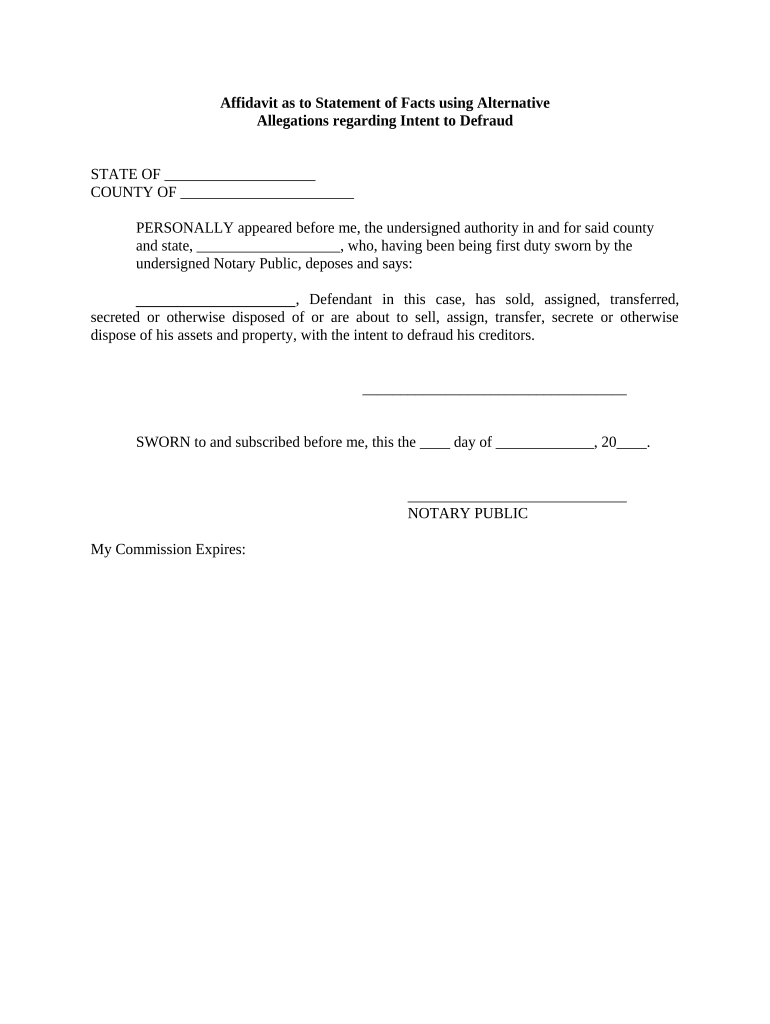







Definition and Meaning of Statement Facts
The statement of facts serves as a formal document designed to present specific information clearly and succinctly. It outlines significant events, circumstances, and actions relevant to a case or legal context, typically summarizing key information that supports legal arguments or claims. In many instances, it is used in legal and administrative matters to provide clarity and accuracy regarding specific situations, particularly in court filings or DMV processes.
Key characteristics of a statement of facts include:
- Clarity: The document emphasizes clear language to convey complex information.
- Brevity: While it should provide sufficient details, it avoids unnecessary elaboration to maintain focus.
- Relevance: All information included pertains directly to the issue at hand, ensuring its applicability.
In legal contexts, a statement of facts often involves critical details that must be presented in a straightforward manner, ensuring all parties involved have an accurate understanding of the situation.
How to Use the Statement Facts
Utilization of a statement of facts involves a few essential steps to ensure it serves its intended purpose effectively. Whether you're addressing a legal issue or administrative needs, the following points outline the general approach to using such a document:
-
Identify the Purpose: Determine why you need the statement of facts, e.g., court proceedings or DMV requirements.
-
Gather Relevant Information: Collect all necessary details related to the case or issue, ensuring they are factual and precise.
-
Organize Information Logically: Structure the statement to flow in a logical order, beginning with an introductory summarization, followed by chronological details and key points.
-
Review and Edit: Ensure the document is clear, free of jargon, and contains only relevant facts. Proofreading is crucial to avoid inaccuracies.
-
Submit to Relevant Authorities: Depending on the context, submit the statement of facts as required, whether to a court, DMV, or other official entities.
The clarity and coherence of the statement will enhance its acceptance in various legal and administrative processes.
Steps to Complete the Statement Facts
Completing a statement of facts requires methodical attention to detail. Follow these steps to develop a comprehensive document:
-
Title the Document: Clearly label it as a "Statement of Facts" to indicate its purpose.
-
Date the Document: Include the date of writing at the top for reference.
-
Article Structure: Divide the content into easily navigable sections:
- Introduction: Briefly state the purpose.
- Body: Describe the events or circumstances in chronological order, including specific dates, names, and locations where applicable.
-
Include Supporting Evidence: Where necessary, reference or append documents that support the facts presented.
-
Conclude with a Declaration: State that the information provided is true to the best of your knowledge, followed by signatures if required.
Implementing these steps ensures a well-organized and legally sound statement of facts.
Important Terms Related to Statement Facts
Understanding the terminology associated with the statement of facts is essential for navigating legal and administrative contexts effectively. Some crucial terms include:
- Affidavit: A sworn statement of facts, typically confirmed by a notary, which can hold legal weight in various proceedings.
- Declarations: Written statements, under penalty of perjury, that affirm the truthfulness of the facts presented.
- Exhibits: Supporting documents or evidence listed in conjunction with a statement of facts, providing proof of the claims made.
- Jurisdiction: The legal authority of a court or agency to make decisions regarding a particular case.
Familiarity with these terms enhances comprehension and application of the statement of facts within legal frameworks.
Legal Use of the Statement Facts
The statement of facts is often integrated into various legal documents and procedures, playing a crucial role in the judicial process. Its legal implications include:
- Evidence Presentation: Used to summarize facts pertinent to a case, offering a concise overview for judges and juries.
- Clarity in Filings: Essential for ensuring that petitions, motions, and other legal documents provide clear and factual accounts supporting claims or defenses.
- Regulatory Compliance: Frequently required when dealing with DMV procedures, ensuring compliance with state laws and regulations.
Legal professionals rely on the accurate condensation of complex narratives into easily digestible statements of facts to facilitate legal arguments and clarify intentions.
Examples of Using the Statement Facts
To illustrate the practical application of the statement of facts, consider the following examples:
-
Court Proceedings: A litigant may submit a statement of facts summarizing the relevant events surrounding a contract dispute, detailing negotiations and communications between parties.
-
DMV Applications: When addressing issues like vehicle registration discrepancies, individuals may file a statement of facts with the DMV to clarify ownership or prior registrations, supported by evidence such as bills of sale.
-
Legal Defense: In a criminal case, a defendant might present a statement of facts to outline their version of events leading to an arrest, supporting their claims of innocence with time-stamped witness accounts.
These examples demonstrate the versatility of the statement of facts across different contexts and its role in providing clear, factual support for various claims and defenses.




