
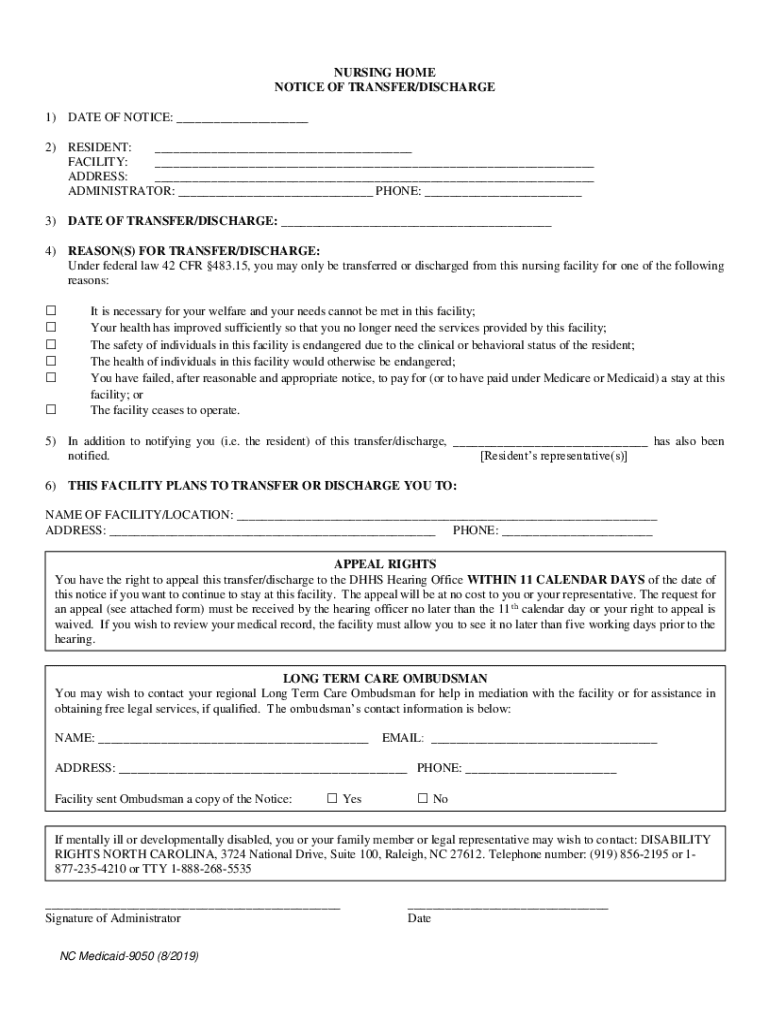







Definition & Meaning of the Adult Care Home Notice of Transfer/Discharge
The Adult Care Home Notice of Transfer/Discharge is a formal document used to inform residents, their families, and caretakers about a resident’s impending transfer or discharge from an adult care home. This notice is crucial for ensuring that all parties are aware of important changes in the resident's care situation. Under federal regulations, this document must clearly outline the reason for transfer or discharge and must provide essential details such as the effective date, resident information, and any steps the resident can take to appeal the decision if applicable.
This form serves multiple functions, including:
- Ensuring legal compliance with federal and state laws regarding nursing home operations.
- Informing residents about their rights, particularly their right to dispute the decision.
- Standardizing the transfer and discharge process across facilities, ensuring clear communication.
- Offering relevant contact information for the Long Term Care Ombudsman, who can assist in advocating for the resident's rights.
Steps to Complete the Adult Care Home Notice of Transfer/Discharge
Completing the Adult Care Home Notice of Transfer/Discharge requires careful attention to detail while ensuring compliance with applicable laws. Here’s a structured approach to properly filling out the notice:
-
Gather Necessary Information
Collect all pertinent information including the resident's full name, current address, and the name of the adult care facility. Ensure you have the reason for transfer or discharge clearly defined. -
Fill in the Date of Notice
Clearly write the date on which the notice is being issued. This date is critical as it starts the timeline for any appeals the resident may wish to pursue. -
Specify the Effective Date
Indicate the effective date of the transfer or discharge. This helps provide clarity on when the resident will officially be transferred or discharged. -
Detail the Reasons for Transfer/Discharge
List the specific reasons for the transfer or discharge. Common reasons may include medical needs that cannot be accommodated, a move to a different level of care, voluntary discharge by the resident, or non-payment. -
Include Resident Appeal Rights
Inform the resident of their right to appeal the decision. This section should outline the process for filing an appeal, including timelines and necessary contacts. -
Provide Contact Information
Include relevant contact information for facility administration and the Long Term Care Ombudsman, which can aid the resident during the transition. -
Obtain Necessary Signatures
Ensure that the notice is signed by an authorized staff member of the adult care home. This adds an extra level of legitimacy to the document.
Important Terms Related to the Adult Care Home Notice of Transfer/Discharge
Understanding key terminology associated with the Adult Care Home Notice of Transfer/Discharge can enhance clarity for users:
- Transfer: A relocation of a resident from one care facility to another due to various factors such as changes in medical needs or residence preferences.
- Discharge: The act of ending a resident's stay at a facility, which may occur under voluntary or involuntary circumstances.
- Appeal Rights: The rights that residents have to challenge a transfer or discharge decision, thereby ensuring due process and protection of their rights.
- Long Term Care Ombudsman: An independent advocate who helps residents address concerns regarding their care, rights, and needs.
- Effective Date: The specific date on which the transfer or discharge will occur, critical for the timing of notifications and any potential appeals.
Who Typically Uses the Adult Care Home Notice of Transfer/Discharge
The Adult Care Home Notice of Transfer/Discharge is utilized by various stakeholders in the adult care environment:
- Facility Administrators and Staff: They are responsible for issuing the notice when a transfer or discharge is necessary and must ensure all legal requirements are met.
- Residents: The primary audience of the notice, who must receive this information to understand their rights and future housing options.
- Family Members and Caregivers: These individuals often aid residents in navigating their care options and may need to advocate on the resident's behalf.
- Legal Representatives: In cases where a resident disputes a transfer or discharge, legal representatives use the notice to understand the legal framework surrounding the situation and advise appropriately.


Legal Use of the Adult Care Home Notice of Transfer/Discharge
The Adult Care Home Notice of Transfer/Discharge is a legally binding document that must be generated in compliance with applicable federal and state laws. Compliance ensures that residents are protected under the law and understand their rights in the care environment. Several legal considerations include:
- Federal Regulations: Regulations from the Centers for Medicare & Medicaid Services (CMS) dictate how and when this notice must be issued to ensure transparency and safeguard resident rights.
- State Laws: Different states may have additional requirements regarding notice periods and documentation. Understanding state-specific laws is critical for compliance.
- Documentation for Appeals: The notice serves as critical documentation in any potential appeals process initiated by the resident. It outlines the grounds for the transfer or discharge, which is essential for any legal review.
- Audit Trails: Facilities may be required to maintain detailed records of all transferred or discharged residents for regulatory audits, making accurate notices necessary for legal accountability.




