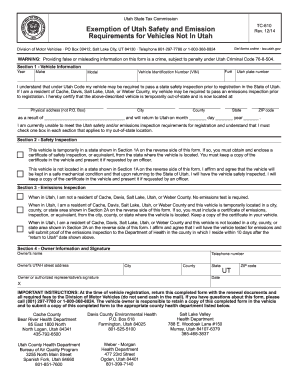


Molarity worksheet 1 2025

Get Form
molarity worksheet 1 Preview on Page 1

Here's how it works

01. Edit your molarity worksheet 1 online
Type text, add images, blackout confidential details, add comments, highlights and more.
02. Sign it in a few clicks
Draw your signature, type it, upload its image, or use your mobile device as a signature pad.
03. Share your form with others
Send molarity worksheet w331 via email, link, or fax. You can also download it, export it or print it out.

How to use or fill out molarity worksheet 1 with our platform

Form edit decoration
9.5
Ease of Setup
DocHub User Ratings on G2
9.0
Ease of Use
DocHub User Ratings on G2
  1. Click ‘Get Form’ to open the molarity worksheet 1 in the editor.
  2. Begin by entering your name, date, and period at the top of the worksheet. This personalizes your document and helps keep track of submissions.
  3. Proceed to question 1, where you will define 'molarity'. Use the text box provided to type your answer clearly.
  4. For questions 2 through 12, carefully read each problem. Utilize the input fields to calculate and enter your answers. Ensure that you show all necessary calculations if required.
  5. Once all questions are answered, review your work for accuracy. You can easily edit any section using our platform’s editing tools.
  6. Finally, save your completed worksheet. You can download it or share it directly from our platform for free.

Start using our platform today to effortlessly complete your molarity worksheet!

See more molarity worksheet 1 versions

We've got more versions of the molarity worksheet 1 form. Select the right molarity worksheet 1 version from the list and start editing it straight away!
Versions Form popularity Fillable & printable
2014 4 Satisfied (20 Votes)
be ready to get more

Complete this form in 5 minutes or less

Get form

Got questions?

We have answers to the most popular questions from our customers. If you can't find an answer to your question, please contact us.
Contact us

Electronic signatures are an excellent replacement for traditional signing, as they save time, effort, and costs people spend on printing, scanning, and paper delivery. You can electronically sign your molarity worksheet utilizing a reliable and powerful online document management services like DocHub. It complies with major eSignature regulations (ESIGN and UETA), so all documents approved there are legally binding and have the same validity as physically signed ones.

If you edit your worksheet molarity with DocHub, you simply will not need to look for other applications or solutions to eSign it. An electronic signature is part of DocHub’s comprehensive editing toolset, which allows you to apply changes in your form without switching between websites. Just complete your form, double-check the correctness of the data and put your electronic signature at the end to make it submission-ready quickly.

To prepare a 0.5 M solution weight out 0.5 moles of glucose. One mole of glucose is 180 grams, so 0.5 moles of glucose would be 90 grams (180 g/mole X 0.5 mole = 90 g). Then, add water until you have 1 liter of solution (0.5 moles/liter).
A solution that is 1.00 molar (written 1.00 M) contains 1.00 mole of solute for every liter of solution.
Molar solutions To prepare a 1 M solution, slowly add 1 formula weight of compound to a clean 1-L volumetric flask half filled with distilled or deionized water. Allow the compound to dissolve completely, swirling the flask gently if necessary.

People also ask

concentrations and amounts. So, if you dissolve 0.5 mol of a compound in one litre of solvent the concentration of the compound is 0.5 mol/l, or 0.5 M. 100ml of the solution contains 0.05 mol.
Answer and Explanation: In chemistry M stands for molarity, a measure of the concentration of a solution. Molarity is the number of moles solute in one liter of solvent. For example a solution that has 5 moles of sugar in one liter solution has a concentration of 5M, or 5 molar.
2 molar solution means 2 M. given moles of solute = 0.5 mole.
A 1 molar (M) solution will contain 1.0 GMW of a substance dissolved in water to make 1 liter of final solution. Hence, a 1M solution of NaCl contains 58.44 g. Example: HCl is frequently used in enzyme histochemistry.
If you dissolve 58.44g of NaCl in a final volume of 1 litre, you have made a 1M NaCl solution. To make a 0.1M NaCl solution, you could weigh 5.844g of NaCl and dissolve it in 1 litre of water; OR 0.5844g of NaCl in 100mL of water (see animation below); OR make a 1:10 dilution of a 1M sample.

sign for molarity