



Definition & Meaning
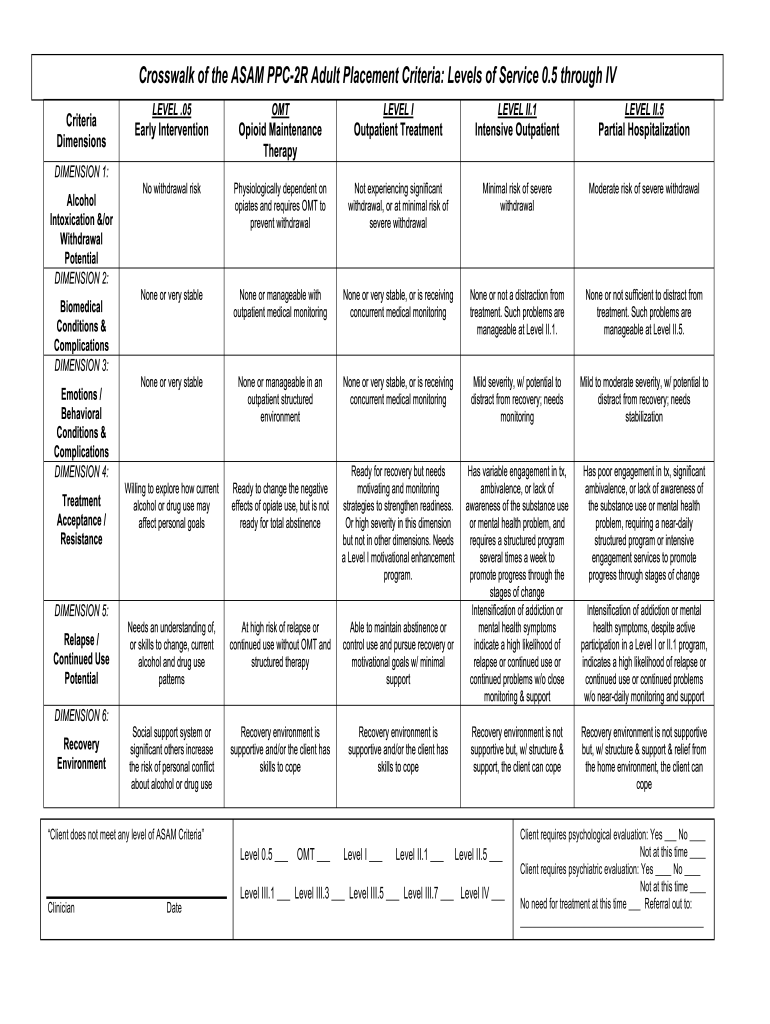
The Crosswalk of the ASAM PPC-2R Adult Placement Criteria: Levels of Service 0 serves as a standardized tool used in the substance use disorder treatment field. This document outlines the specific requirements and criteria for Level 0 services, which typically focus on early intervention and prevention. Level 0 is crucial for individuals who have not yet entered the formal treatment system but are at risk or experiencing milder substance use challenges.
In this context, the term "crosswalk" refers to the mapping of criteria from the ASAM (American Society of Addiction Medicine) PPC-2R framework to practical applications in various treatment settings. This aids clinicians, decision-makers, and treatment providers in understanding the severity of a patient's condition and the appropriate step for intervention without unnecessarily escalating treatment.
Key Components of Level 0:
- Early Intervention: Targeted actions aimed at reducing substance use or preventing progress to more severe levels of use.
- Brief Counseling: Sessions designed to provide information about substance use, motivational enhancement, and life-skills training.
- Community Resources: Facilitating connections to community services that reinforce healthy choices and offer support.
How to Use the Crosswalk of the ASAM PPC-2R Adult Placement Criteria: Levels of Service 0
Utilizing the Crosswalk of the ASAM PPC-2R requires familiarity with its underlying framework and practical applications within treatment settings.
Steps for Effective Use:
-
Assess the Patient: Begin with a thorough assessment using the ASAM dimensions, which include:
- Biological aspects
- Psychological issues
- Social environment
- Substance use history
-
Determine Risk Level: Evaluate the patient's risk factors, such as:
- History of substance use disorders
- Current stressors that may exacerbate use
- Family history of addiction
-
Select Appropriate Level: Based on assessed risk and needs, reference the Crosswalk to identify Level 0 interventions. This might include:
- Brief motivational interventions
- Referral for additional services
- Client education programs
-
Document Findings: Maintain comprehensive documentation of assessments and decisions made, ensuring all interventions align with outlined criteria.
-
Follow Up: Regularly check in with the patient to assess any changes in their substance use patterns and adjust recommendations accordingly.
How to Obtain the Crosswalk of the ASAM PPC-2R Adult Placement Criteria: Levels of Service 0
Acquiring the Crosswalk of the ASAM PPC-2R is straightforward and can be accomplished through various channels.
Methods of Acquisition:
- ASAM Website: The official ASAM website frequently provides downloadable resources, including the Crosswalk. Users can explore data on the latest revisions and criteria.
- Professional Associations: Many state and regional addiction treatment associations may also distribute updated crosswalk documents.
- Training Programs: Participating in training or certification programs focused on substance use disorder treatment often includes access to critical documentation, including the Crosswalk.
Steps to Complete the Crosswalk of the ASAM PPC-2R Adult Placement Criteria: Levels of Service 0
Completing the Crosswalk effectively involves a methodical approach to ensure all relevant domains are considered.
Detailed Steps:
-
Gather Necessary Data: Collect comprehensive assessments from the patient covering all six ASAM dimensions.
-
Map Criteria to Patient Needs: Align assessment findings with the Level 0 criteria to understand the recommended services.
-
Review Community Resources: Identify available local resources that can complement Level 0 services.
-
Develop an Action Plan: Create a tailored plan integrating the findings from your crosswalk mapping, identifying specific interventions, and ensuring they match with community services.
-
Implement Interventions: Put the plan into action, beginning the process of early intervention as outlined by the Crosswalk.
Important Terms Related to the Crosswalk of the ASAM PPC-2R Adult Placement Criteria: Levels of Service 0
Understanding the terminology associated with the Crosswalk is essential for effective communication and application within the treatment context.
Key Terms:
- ASAM: American Society of Addiction Medicine, which establishes evidence-based criteria for substance use disorders.
- PPC-2R: Patient Placement Criteria, Second Revision, providing structured guidelines for placement in treatment services.
- Intervention: Actions taken to modify a patient’s behaviors, substance use patterns, or related services.
- Dimensions: The six areas in ASAM criteria used to assess patient needs, including withdrawal potential, biomedical conditions, emotional/behavioral issues, treatment acceptance, relapse potential, and recovery environment.
Each term has a specific role in understanding how to navigate the treatment landscape effectively and communicate treatment decisions collaboratively with patients and colleagues.
Examples of Using the Crosswalk of the ASAM PPC-2R Adult Placement Criteria: Levels of Service 0
Orchestrating the practical application of the Crosswalk can enhance patient care and ensure services meet individual needs.
Practical Scenarios:
-
Scenario One: A young adult exhibits mild substance use and has family history related to addiction. The clinician uses the Crosswalk to implement a Level 0 intervention focusing on prevention and educational counseling.
-
Scenario Two: An individual in recovery faces a stressful life event. The clinician leverages the Crosswalk to identify support services aimed at managing stress without resorting to substance use.
-
Scenario Three: A clinician evaluates an individual who expresses reluctance to engage in full treatment. By utilizing Level 0 criteria, the clinician develops a brief intervention strategy that addresses ambivalence and provides resources for support.
Each of these scenarios highlights how effectively applying the Crosswalk can enhance patient outcomes through tailored intervention strategies.