
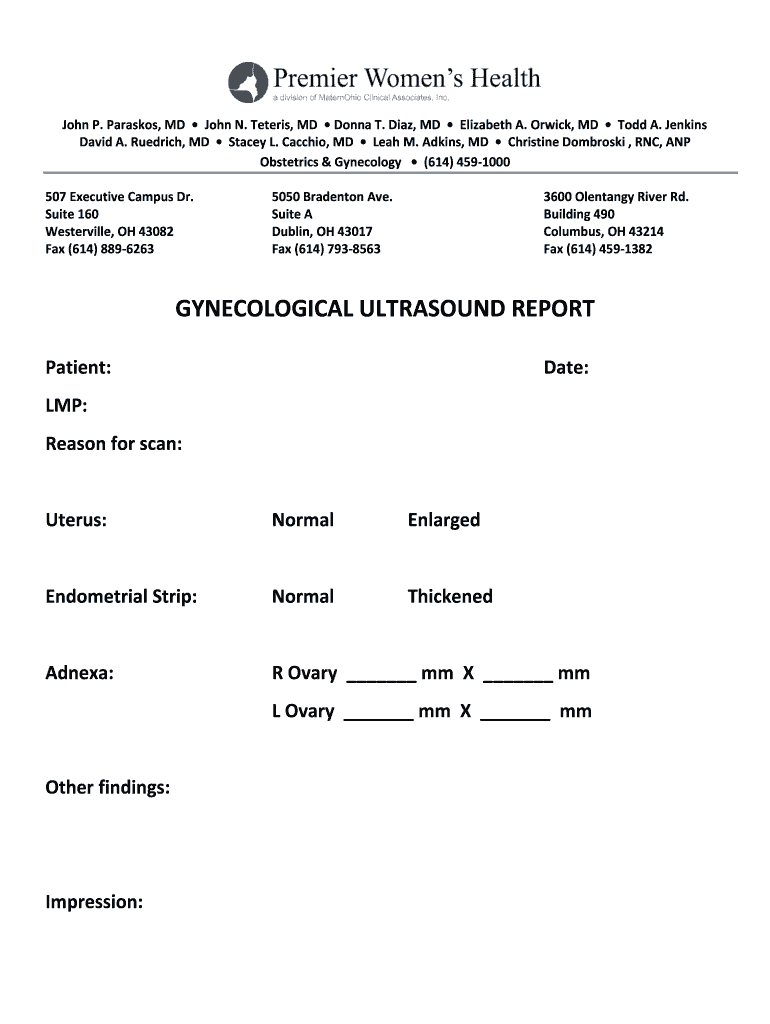







Overview of an Ultrasound Template
A blank ultrasound template serves as a foundational document used in various healthcare settings to standardize and streamline the process of recording ultrasound results. It provides healthcare practitioners with a structured format to document patient information and scan findings, ensuring comprehensiveness and clarity in communication. While it can vary somewhat based on the type of ultrasound being performed—e.g., obstetric, gynecological, or abdominal—the core components remain consistent across templates.
Key Sections in an Ultrasound Template
An effective ultrasound template typically includes several key sections:
- Patient Information: Details such as the patient's name, date of birth, and medical record number.
- Clinical History: Background information relevant to the ultrasound, including symptoms and prior medical history.
- Indication for Study: The reason for the ultrasound examination, which clarifies the clinical question being addressed.
- Technical Information: Notes on the equipment used, settings, and the date and time of the examination.
Documenting Findings and Impressions
The findings section forms the crux of any ultrasound report. This area is where detailed observations regarding the anatomy being scanned are documented. Factors to consider include:
- Normal Findings: Observations that indicate standard anatomical appearances and conditions.
- Abnormal Findings: Anomalies or signs of pathology that require further investigation or action.
- Impressions and Recommendations: A summary of the findings and suggestions for follow-up, including further imaging or consultation.
These components help ensure that healthcare providers can make informed decisions based on ultrasound images.
Utilizing the Ultrasound Editor
An ultrasound editor is a digital tool used to fill out and manage ultrasound templates. Its functionalities enhance both accuracy and efficiency in the reporting process. Key features include:
- Intuitive Interface: A user-friendly design allows healthcare professionals to navigate the tool with ease, minimizing the learning curve.
- Customization Options: Practitioners can tailor the generic ultrasound template to fit specific needs or specialties.
- Real-Time Data Entry: Immediate input capabilities for entering observations during the examination improve accuracy.
This tool not only streamlines documentation but also ensures that reports maintain a consistent format, which is crucial for patient care continuity and record-keeping.
Steps for Using an Ultrasound Editor
- Open Template: Load the blank ultrasound template from the software.
- Enter Patient Information: Fill out the sections with relevant details prior to the exam.
- Document the Examination: During the procedure, record findings directly into the template.
- Review Entries: Check for completeness and accuracy before finalizing the report.
- Save and Share: Export the completed report in the required format for distribution and storage.
This process enhances collaboration and expedites the workflow within a healthcare team.
Examples of Typical Ultrasound Reports
Real-world examples of ultrasound reports help illustrate the application of a blank ultrasound template.
Normal Ultrasound Report Sample
- Patient Name: Jane Doe
- Date of Examination: January 1, 2023
- Indication: Routine obstetric scan at 20 weeks gestation.
- Findings: Fetal heart rate within normal limits, normal anatomy present, amniotic fluid levels adequate.
- Impression: Normal fetal scan; routine follow-up recommended at 28 weeks.
Abnormal Ultrasound Report Sample
- Patient Name: John Smith
- Date of Examination: February 15, 2023
- Indication: Evaluation for abdominal pain.
- Findings: Enlarged liver with hypoechoic lesion noted; gallbladder appears normal.
- Impression: Possible hepatic lesion; recommendation for MRI for further evaluation.
These examples demonstrate how structured reporting aids in effective communication among healthcare professionals, thereby improving patient outcomes.
Compliance and Legal Considerations
When using a blank ultrasound template, compliance with legal and ethical standards is paramount. This includes:
- Patient Confidentiality: Safeguarding sensitive patient information in compliance with HIPAA regulations.
- Document Accuracy: Ensuring that entries in ultrasound reports are truthful and reflect the findings accurately to prevent misdiagnosis or inappropriate treatment.
Maintaining high standards in reporting via the ultrasound template not only promotes trust but also protects against potential legal repercussions.
Conclusion on Ultrasound Reporting Templates
Incorporating a blank ultrasound template into practice enhances the quality and efficiency of ultrasound reporting. It standardizes documentation, ensures critical details are captured with precision, and ultimately improves patient care by fostering clarity in communication among healthcare providers. Adopting structured reporting methods can lead to better health outcomes and an overall enhanced workflow process in medical settings.




